
How to Reduce High Call Abandonment Rates with AI Voice Agents
Key takeaways:
Call abandonment is a fixable process issue driven by long wait times, confusing IVRs, and repetitive questions.
AI voice agents eliminate hold times through instant pickup, smart routing, and CRM context integration.
Effective AI voice agents complement human support by seamlessly escalating complex issues when necessary.
Every dropped call is a small, quiet loss. A customer waits on hold, gets frustrated, and hangs up before ever speaking to anyone. Multiply that across hundreds or thousands of calls a month, and you're looking at lost revenue, damaged trust, and customers who quietly go somewhere else.
This is call abandonment and for most businesses running a call center or support line, it's one of the most persistent (and fixable) problems in customer experience. A high call abandonment rate doesn't usually mean your product or service is failing customers. It usually means your call handling process is failing them before they even get to talk to a human.
That's exactly where AI voice agents come in. By picking up instantly, understanding context, and routing or resolving issues without a customer ever sitting in a queue, AI voice agents for call centers directly attack the root causes of abandonment. So, we'll break down what call abandonment rate actually measures, why customers hang up in the first place, and how to reduce call abandonment with AI voice agents, with a practical, implementation-focused view of what actually works.
What Is Call Abandonment Rate (and How Is It Calculated)?
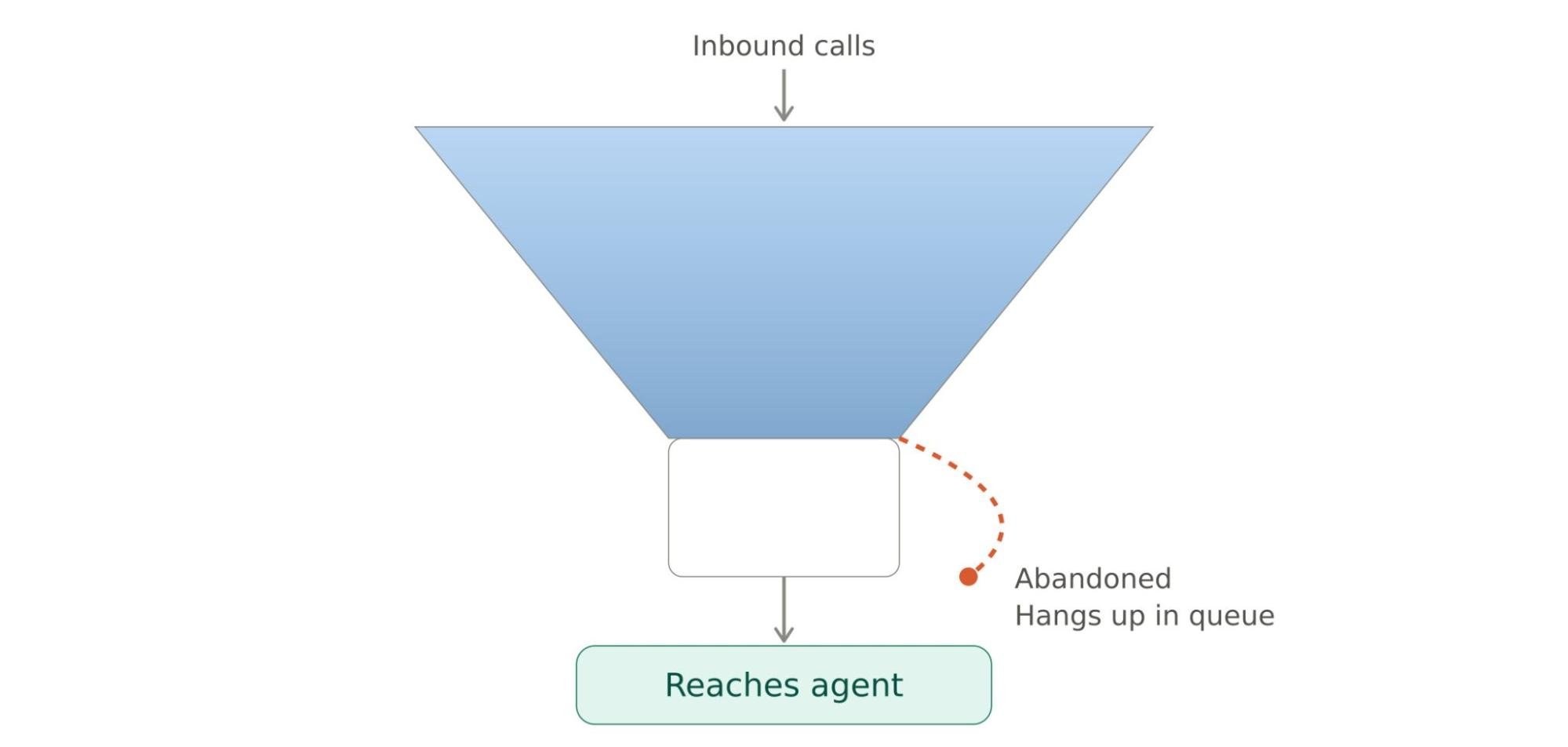
Call abandonment rate is the percentage of inbound calls where the caller hangs up before reaching an agent (human or AI). The standard formula is straightforward:
Call abandonment rate = (Abandoned calls ÷ Total inbound calls) × 100
Not every short call counts as abandoned, though. A call that's answered within a few seconds and then disconnected accidentally isn't the same as a customer who sat in a queue for eight minutes and gave up. Most call center platforms let you set a minimum wait-time threshold (often 5-10 seconds) before a hang-up is logged as a true abandonment, filtering out noise from accidental disconnects.
Benchmark abandonment rates vary by industry, but general guidance looks like this:
Well-run call centers: 2-5% is considered healthy
Average call centers: 5-8% is common
Struggling operations: anything above 10% signals a serious problem
If your numbers are creeping toward the higher end, it's worth digging into why, which brings us to the root causes.
Why Do Customers Abandon Calls? The Root Causes
Call abandonment rarely comes down to one single issue. It's usually a combination of friction points stacking up until the customer decides waiting isn't worth it.
1. Long hold times and queue backups. This is the single biggest driver of call abandonment. The longer someone waits, the more likely they are to hang up, and the drop-off accelerates sharply after the two-to-three-minute mark.
2. Poor or confusing IVR menus. Legacy phone trees ("Press 1 for sales, press 2 for support...") often send customers down the wrong path entirely, forcing them to start over or get transferred multiple times before reaching the right person.
3. Agent unavailability during peak hours. Staffing is built around average call volume, not spikes. When call volume increases during a product launch, an outage, or a seasonal rush, wait time increases.
4. Repetitive information requests. When a customer has to repeat their account number, issue, or previous conversation history every time they're transferred, frustration builds fast.
5. No callback or self-service option. If the only choice is "wait in the queue or hang up," a meaningful number of customers will choose to hang up.
6. Frustration from previous bad experiences. Once a customer has had one bad call, they're more likely to abandon future calls faster, expecting the same outcome.
The Real Cost of High Call Abandonment
A high call abandonment rate isn't just an operational inconvenience, it has a direct, measurable business cost.
Lost sales and missed conversions. A prospective customer who abandons a sales call rarely calls back; they move to a competitor instead.
Damaged CSAT and brand trust. Long waits and dropped calls are among the fastest ways to decrease customer satisfaction scores.
Increased support costs from repeat contacts. Abandoned callers often call back later, sometimes more than once, multiplying the total workload for the same unresolved issue.
Negative reviews and churn risk. In an era where customers openly share bad support experiences online, a pattern of abandoned calls compounds into reputational damage.
The good news: because abandonment is largely a systems and process problem, it's one of the more solvable issues in customer experience. And AI call center automation is proving to be one of the most effective solutions available.

6 Ways to Reduce High Call Abandonment With AI Voice Agents
This is where the shift from traditional call handling to voice AI agents makes the most measurable difference. Here's how AI voice agents help reduce call abandonment rate.
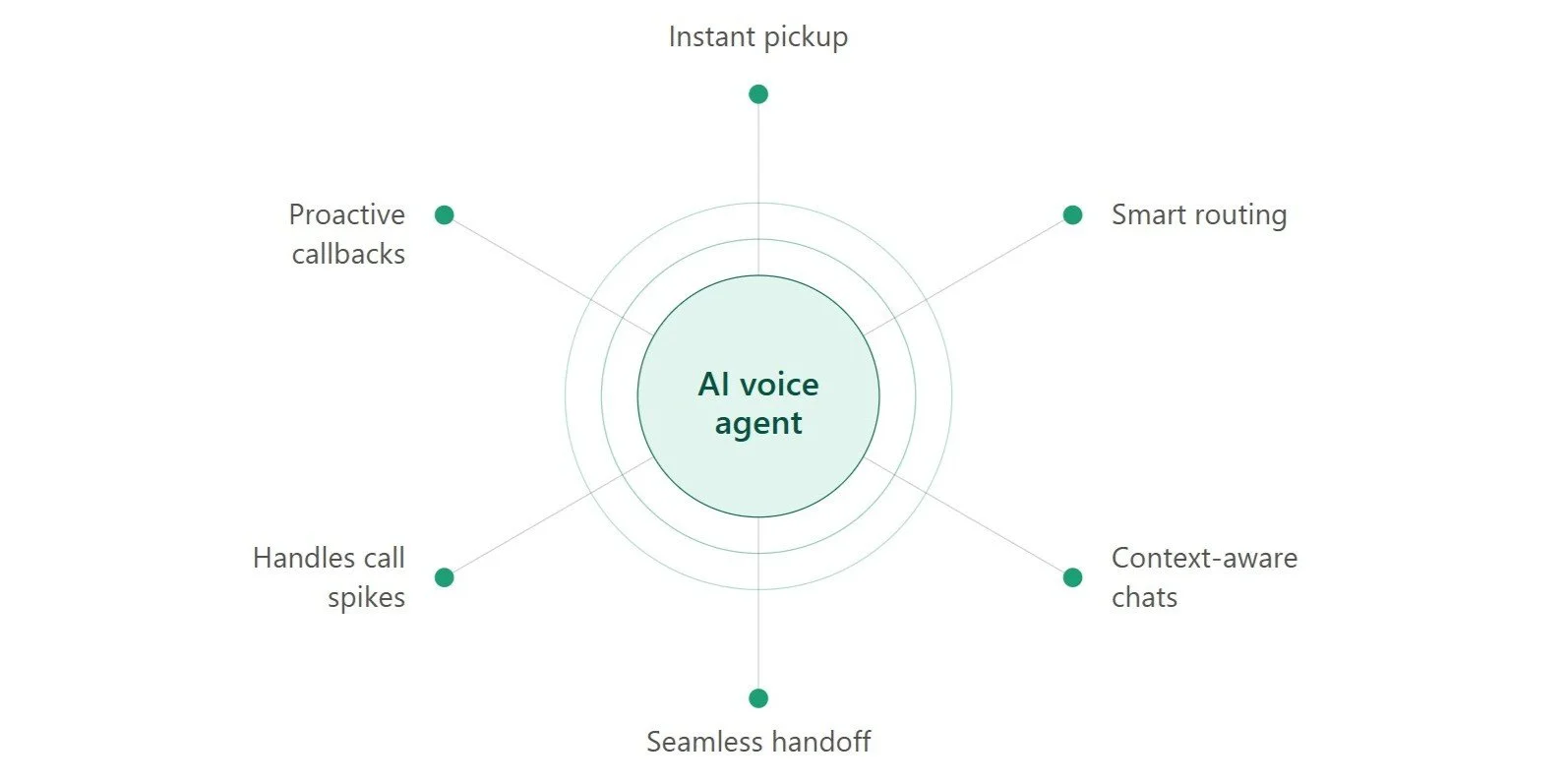
1. Instant Call Pickup, Eliminating Hold Time
An AI voice agent doesn't put callers in a queue. It picks up immediately, every time, 24/7. No lunch breaks, no shift changes, no overnight gaps. Since long hold times are the number one cause of abandonment, simply removing the wait entirely is often the single biggest lever for reducing call abandonment.
2. Smarter Call Routing and Triage
Rather than forcing customers through a rigid, multi-layered IVR tree, a conversational AI assistant can understand what a caller actually needs in plain language and route them accordingly or resolve the issue outright without a transfer at all. This cuts down the back-and-forth that frustrates callers and shortens time-to-resolution dramatically.
3. Context-Aware Conversations
When an AI voice agent is integrated with your CRM and support systems, it already knows who's calling, what their account status is, and what they've contacted you about before. That means no repeating account numbers or explaining the same issue twice. A major source of caller frustration that AI customer service voice agents are particularly well-suited to eliminate.
4. Seamless Human Handoff and Escalation
Not every call should be fully automated, and a well-designed AI voice agent knows when to step aside. When a conversation calls for empathy, judgment, or a complex resolution outside its scope, the agent should hand off to a human seamlessly, passing along the full conversation context so the customer never has to repeat themselves. This handoff design is one of the most important (and most overlooked) parts of reducing abandonment, because a poor or clunky escalation experience can undo all the goodwill an AI voice agent built up in the first place.
5. Handling Call Spikes Without Extra Staffing
Unlike a human team, an AI voice agent can handle hundreds or thousands of concurrent calls without additional hiring. During peak periods (a flash sale, a service outage, an open enrollment window), this scalability alone can prevent the queue backups that drive abandonment rates up.
6. Proactive Callback and Queue Management
Even with AI in place, there will be moments where a caller needs a human specialist who's currently busy. Instead of leaving that caller in a queue, a voice AI agent can proactively offer a scheduled callback, freeing the customer from waiting on the line at all. As a result, this turns what would have been an abandoned call into a resolved one on the business's terms.
Key Features to Look for in an AI Voice Agent (to Reduce Abandonment)
Not all AI voice agents are built the same, and the difference shows up exactly where it matters, i.e., in abandonment rates. When evaluating a platform or partnering with an AI agent development company, prioritize:
Low-latency, natural conversation flow. If the AI pauses awkwardly or responds slowly, customers disengage just as they would with a slow human agent.
CRM and telephony integration. The agent needs to pull real customer context and connect properly through your phone system. This is where the underlying SIP, WebRTC, and CRM integration architecture actually matters (see our guide on connecting AI voice agents to real-world systems).
Multilingual support. For businesses serving diverse customer bases, language barriers are their own abandonment driver.
Real-time analytics and monitoring. You need visibility into call abandonment rate, resolution rates, and where in the flow customers are dropping off, so you can keep refining the system.

Real-World Use Cases and Scenarios
Customer support: Instead of sitting in a queue for a password reset or billing question, customers get instant resolution from an AI voice agent, freeing human agents for more complex cases.
Sales: Inbound sales calls that would otherwise go unanswered during busy hours get captured and qualified immediately, instead of the lead hanging up and calling a competitor.
Appointment booking and healthcare: Scheduling and rescheduling calls (often high-volume and repetitive) are handled instantly by AI, reducing both call abandonment and appointment no-shows tied to scheduling friction.
E-commerce: During high-traffic periods like holiday sales, order status and shipping inquiries spike dramatically. AI call center automation absorbs that surge without customers ever hitting a busy signal or long hold.
How to Measure the Impact of AI Voice Agents on Abandonment Rate
Once an AI voice agent is live, track these metrics before and after deployment to quantify the actual impact:
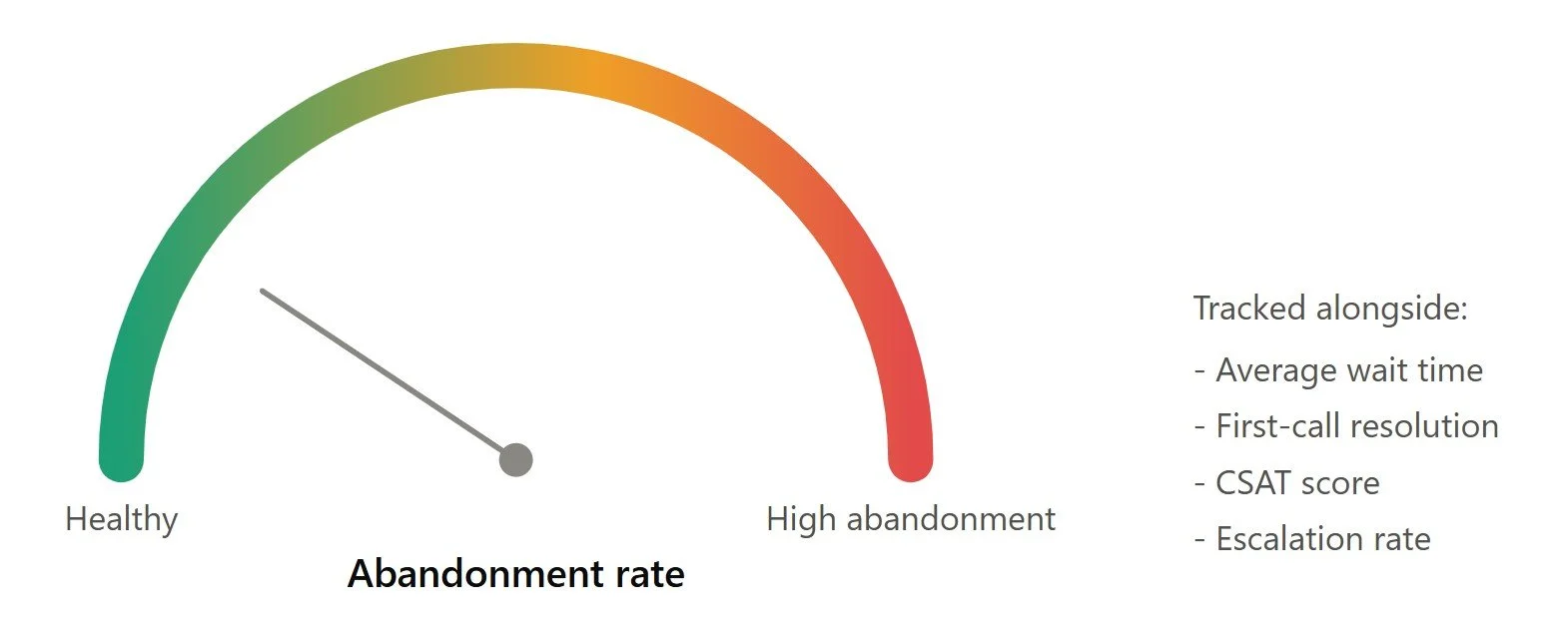
Call abandonment rate: the core metric you're trying to move
Average wait time: should trend toward zero for AI-handled calls
First-call resolution rate: a sign that AI is actually solving problems, not just answering
CSAT scores: the downstream effect of reduced friction
Escalation rate and handoff quality: how often calls need a human, and how smoothly that handoff happens
Set up a simple before/after dashboard segmented by call type, so you can see exactly which categories of calls saw the biggest improvement and which might need further tuning.
Common Mistakes When Implementing AI Voice Agents for Call Abandonment Reduction
Here are some of the common mistakes to avoid when implementing AI voice calling agents.
Fully replacing human agents without an escalation path. Customers with complex or emotionally sensitive issues need a clear route to a person. Cutting this out entirely backfires.
Ignoring conversation design. A robotic, overly scripted AI voice agent can create its own new source of frustration and abandonment.
Not integrating with CRM or telephony systems properly. Without real context and reliable call routing, the AI ends up feeling like a smarter IVR rather than a genuine improvement.
Failing to test under real call volume. A voice AI agent that works well in a demo can behave very differently under a real, high-volume, noisy call environment. Make sure to test before a full rollout.
Best Practices for Getting Started
Start with your highest-abandonment call types, often tier-1 support, order status checks, or appointment scheduling, where the ROI is fastest and easiest to measure.
Pilot before a full rollout. Run the AI voice agent alongside your existing process for a defined period, comparing abandonment and resolution metrics directly.
Continuously refine based on analytics. Treat the agent as a living system, not a one-time deployment. Conversation flows should improve as you learn where customers get stuck.
Maintain a clear human handoff strategy. This is non-negotiable for both customer trust and long-term success with AI customer service voice agents.
Wrapping Up
A high call abandonment rate isn't inevitable. It’s usually a systems problem hiding behind long wait times. Long queues, clunky IVRs, and repetitive information requests all push customers toward hanging up, and every one of those root causes can be directly addressed with the right AI voice agent strategy.
If you're looking at your own numbers and wondering where to start, the answer is usually simpler than it seems. Identify your highest-abandonment call types, and evaluate how a conversational AI assistant could pick up where your current process is losing customers. Don't let the first ten seconds cost you another customer. Partner with an AI agent development company to build your AI voice agent and fix call abandonment from the ground up.
Related Readings
Let’s Talk
Drop us a note, we’re happy to take the conversation forward 👇🏻