
Key takeaways:
Voice AI is becoming more natural. Advances in real-time voice AI, speech recognition, and multilingual translation are improving conversational experiences.
With business system integrations, AI voice agents can automate tasks, retrieve information, and support workflows.
Reliability and safety remain essential. Businesses need monitoring, access controls, and human oversight to deploy voice AI responsibly.
AI voice technology has evolved from basic voice commands and automated phone menus to systems that can hold natural conversations, understand context, and complete tasks. Users can interrupt AI systems, ask follow-up questions, and receive more relevant responses.
These advancements in voice AI are changing how businesses communicate with customers and automate everyday operations. Modern AI voice agents can retrieve information, connect with business applications, and take action during conversations. Let's explore the latest advancements in AI voice technology in 2026 and how they are shaping business communication.
What Is AI Voice Technology?
AI voice technology uses artificial intelligence to understand spoken language and generate spoken responses. It combines several technologies:
AI speech recognition: Converts spoken language into text or machine-readable information.
Natural language processing (NLP): Helps systems interpret language and understand requests.
Text-to-speech (TTS): Converts text into spoken audio.
Conversational AI: Enables systems to manage dialogue and respond to follow-up questions.
Modern AI-powered voice assistants go beyond answering questions. They can connect to external tools, access business data, and perform tasks such as scheduling appointments or updating CRM records.
Top Latest Advancements in AI Voice Technology
1. Real-Time Voice Conversations With Lower Latency
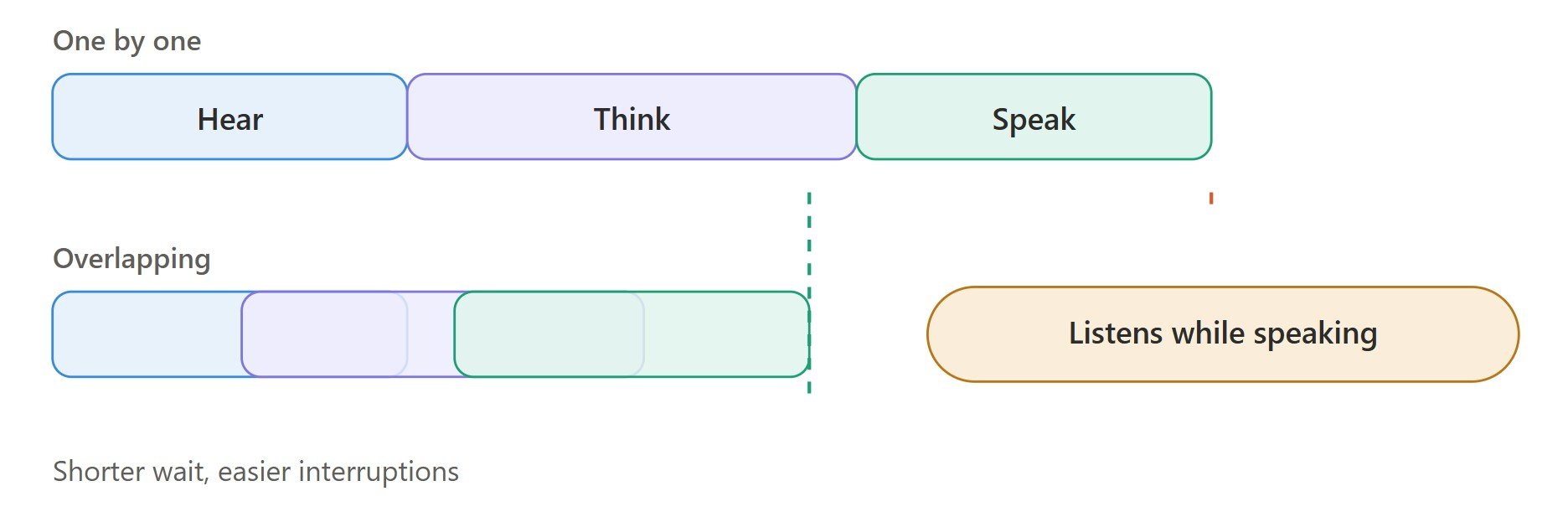
Modern voice AI systems are becoming faster and more responsive. Earlier systems often processed speech, generated text responses, and converted them into audio in separate steps, creating noticeable delays.
Advances in real-time voice AI let systems respond faster, handle interruptions, and support natural follow-up questions. For example, a customer can correct information midway through a conversation without waiting for the AI to finish its entire response.
OpenAI's GPT-Live-1, introduced through its API in September 2026, supports full-duplex conversations, allowing the model to listen and speak simultaneously while delegating complex tasks to a backend agent.
Why it matters: Faster responses make AI voice agents more useful for customer support, appointment scheduling, and lead qualification.
2. More Natural and Expressive AI-Generated Speech
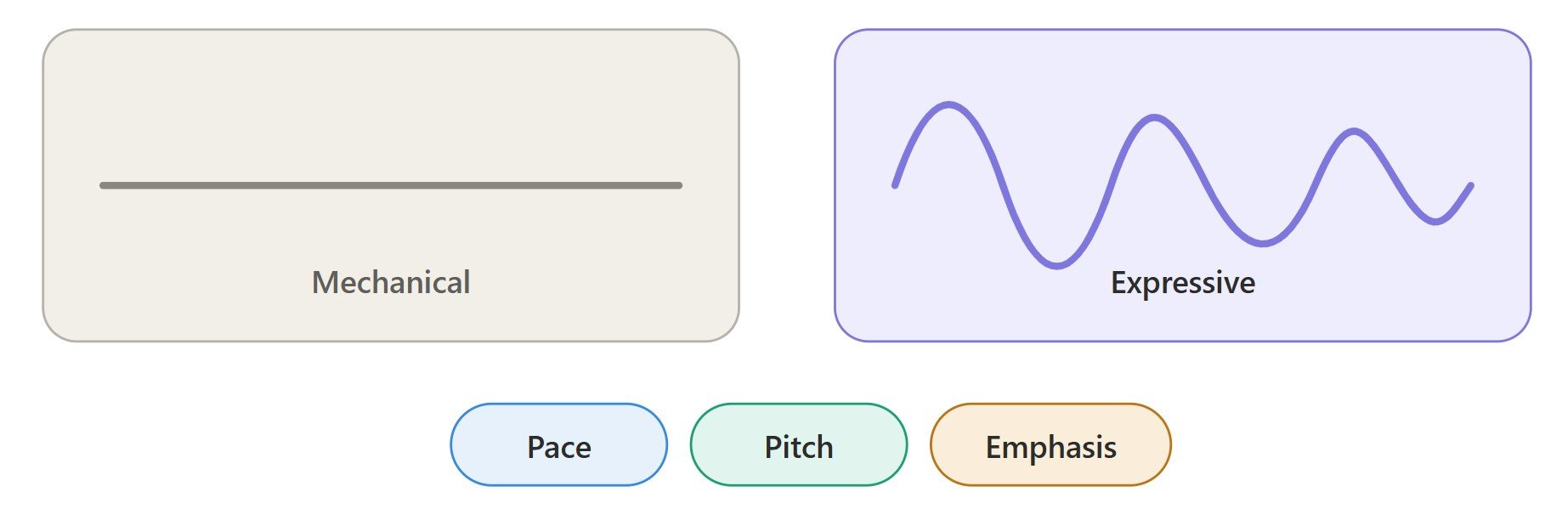
Advances in text-to-speech technology are making synthetic voices sound more natural. Modern systems can improve pronunciation, pacing, intonation, and emphasis to create more engaging conversations.
These capabilities allow businesses to create voice experiences suited to different situations, from customer support to interactive learning. However, a natural-sounding voice alone does not guarantee a good experience. The system must also understand requests accurately and provide relevant responses.
Why it matters: More natural speech makes automated interactions easier to follow and less mechanical.
3. More Accurate AI Speech Recognition
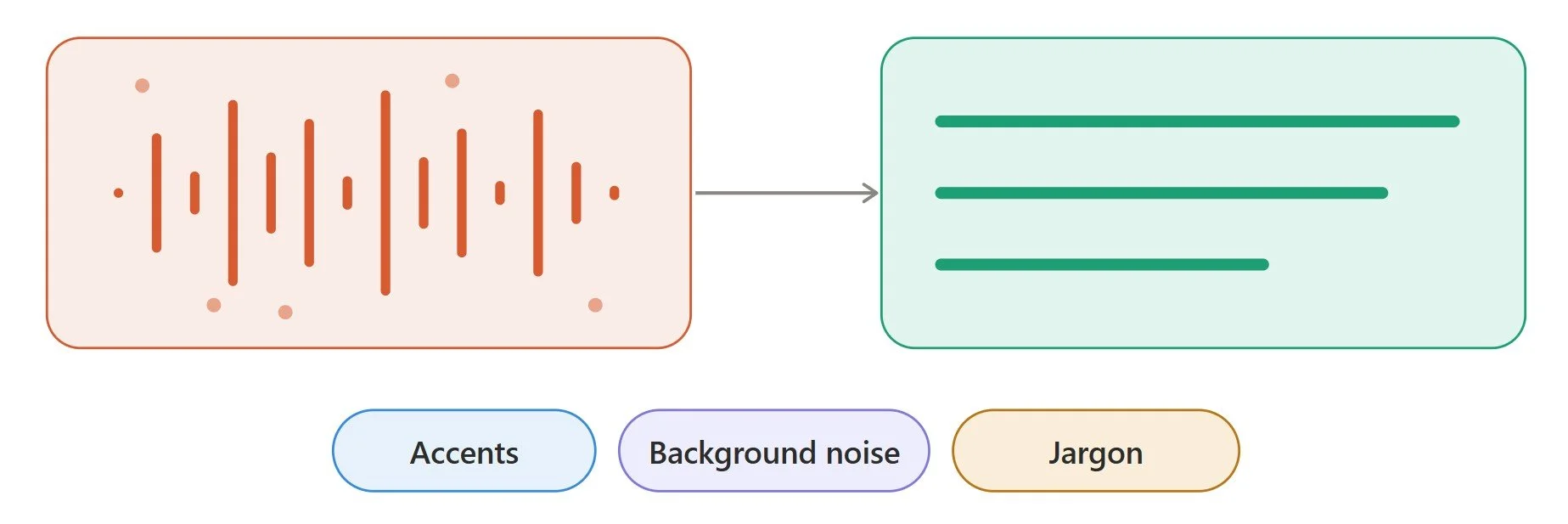
AI speech recognition is improving at handling different accents, conversational speech, and multiple languages. This matters because real conversations often include pauses, informal expressions, background noise, and industry-specific terminology. Misunderstanding a request can lead to incorrect responses.
Google introduced Gemini 3.5 Transcribe in September 2026 as a speech-to-text model designed for transcription across more than 85 languages.
Improved recognition can support:
Automated call transcription and summaries.
Voice-based customer support.
Spoken data entry and documentation.
More accurate understanding of customer requests.
Actual performance still depends on audio quality, language, and the deployment environment.
4. Multilingual Voice AI and Real-Time Translation
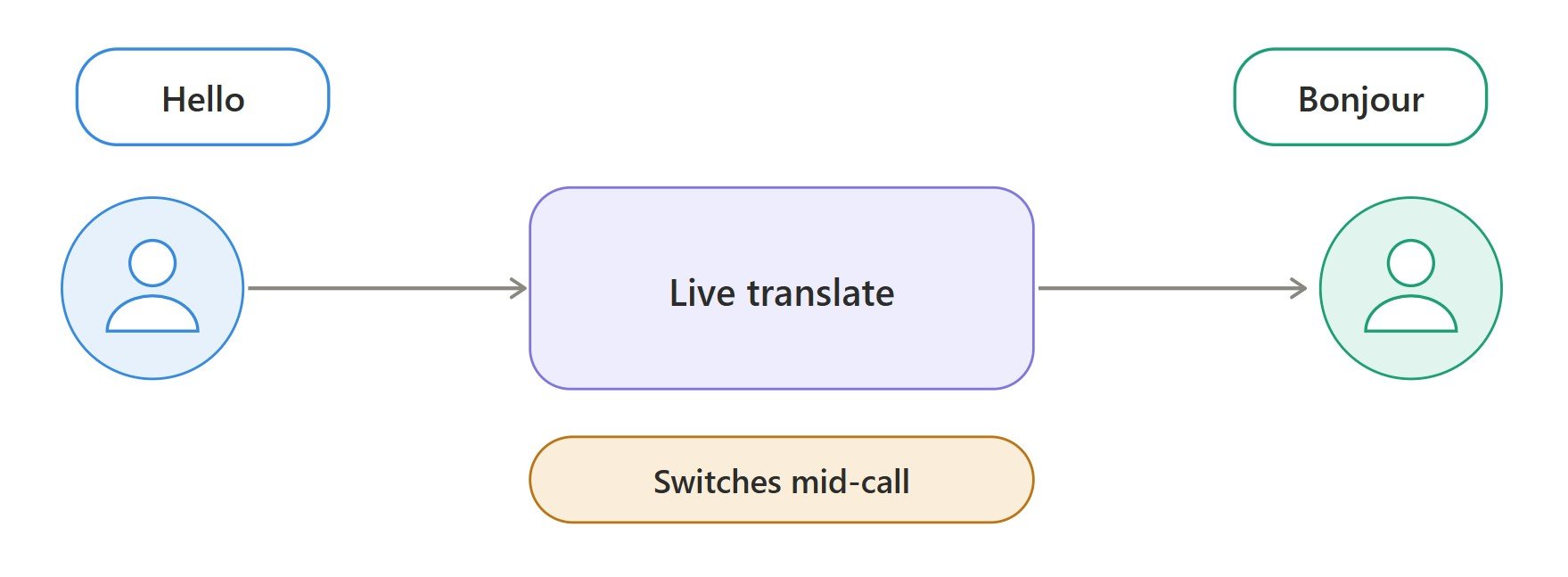
Multilingual AI voice technology helps businesses communicate with customers across language barriers. Modern systems can recognize speech, translate requests, and generate spoken responses in different languages. Some can also handle conversations where speakers switch between languages.
In May 2026, OpenAI announced GPT-Realtime-Translate for live speech translation across more than 70 input languages and 13 output languages.
Businesses can use these capabilities for:
Multilingual customer support.
International sales conversations.
Global contact centers.
Voice-based services across different markets.
Translation accuracy remains important, especially when conversations involve technical terms, regional expressions, or sensitive information.
5. Speech-to-Speech Models and Unified Voice Processing
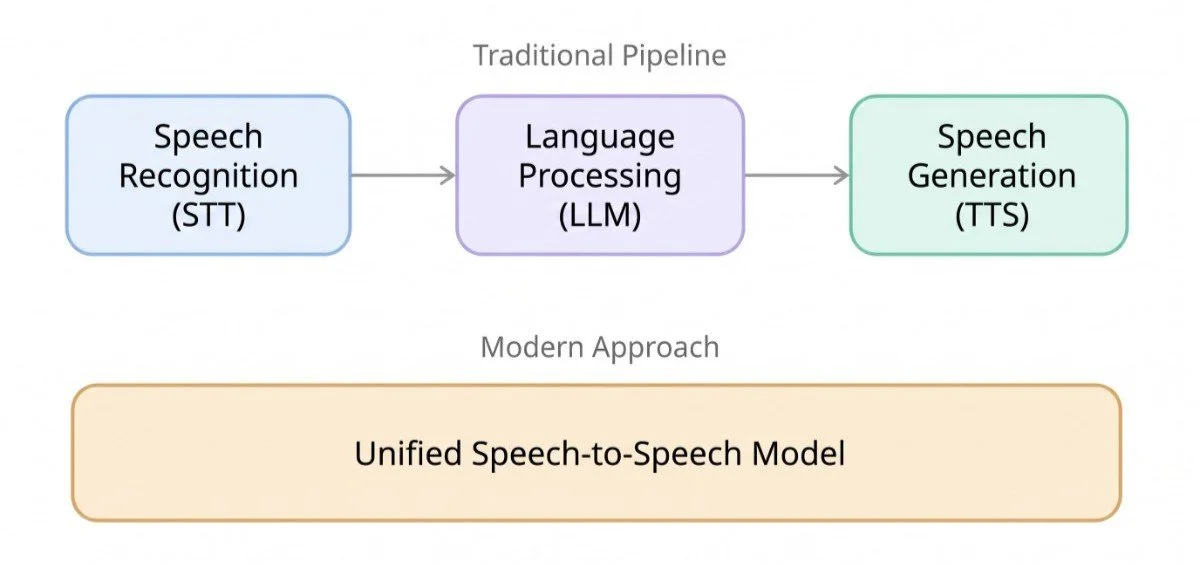
Traditional voice systems often use separate components for speech recognition, language processing, and speech generation. Speech-to-speech models can process spoken input and generate spoken responses more directly.
This approach can reduce processing delays and preserve conversational cues such as timing and pauses. Amazon Nova 2.5 Sonic, announced in October 2026, combines real-time speech-to-speech interaction with reasoning, instruction following, and tool-calling capabilities for voice agents. These models can support more fluid conversations, but they still need to be evaluated for accuracy, reasoning quality, and reliability.
6. Multimodal AI Combining Voice, Text, and Visual Input
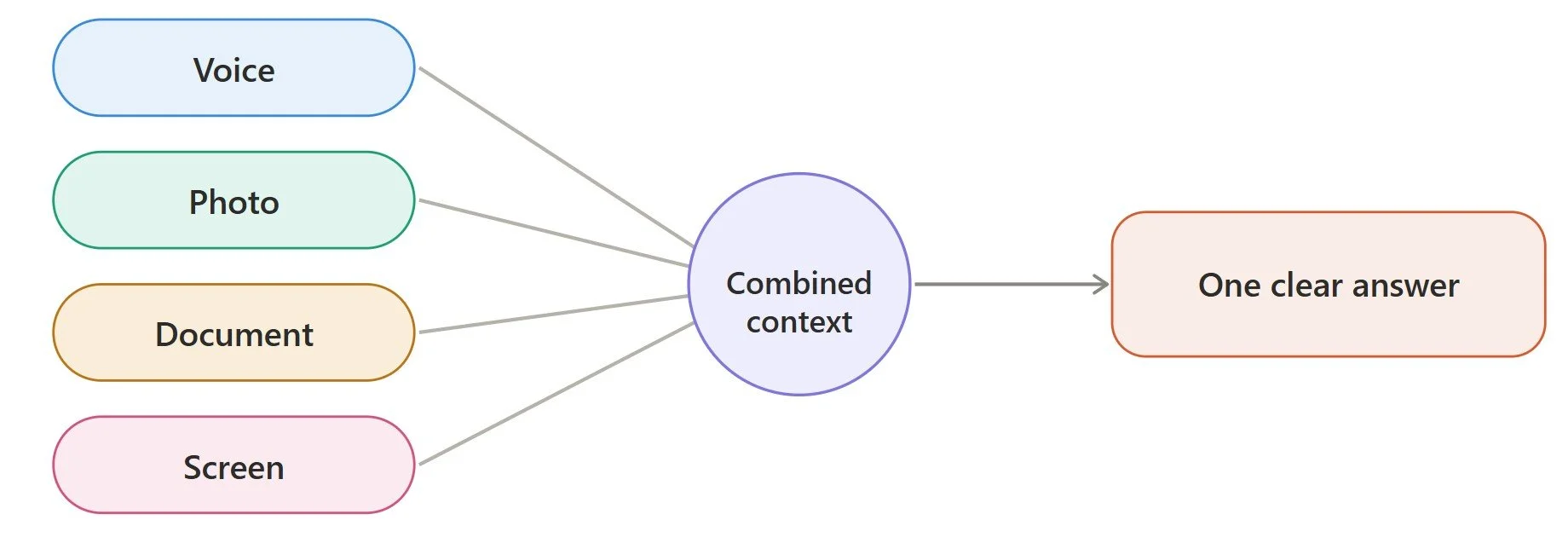
Multimodal AI expands voice interactions beyond audio by combining spoken requests with images, documents, video, and on-screen information.
For example, a customer could show an image of a product and ask how to resolve an issue. The AI could use both the image and the spoken question to generate a relevant response.
Applications include:
Technical support and troubleshooting.
Interactive training and learning.
Accessibility tools.
Voice-enabled software interfaces.
Google's Gemini 3.8 Live models, announced in September 2026, combine real-time dialogue with visual understanding and task execution. These capabilities can make voice assistants more useful, provided they interpret different inputs correctly and handle user data securely.
7. AI Voice Agents That Can Take Actions
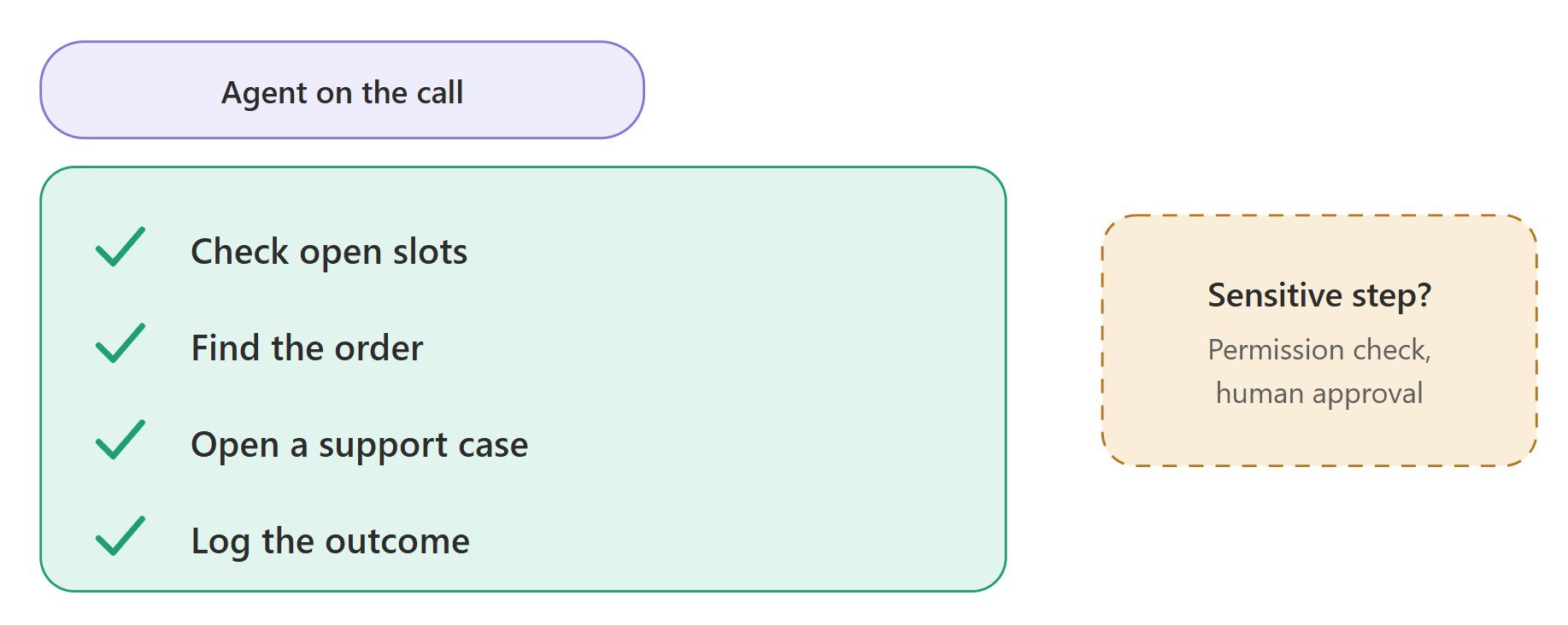
One of the biggest advancements in voice AI is the shift from assistants that answer questions to AI voice agents that complete tasks. By combining conversational AI with APIs, tool calling, and business application integrations, these agents can:
Check appointment availability and reschedule bookings.
Retrieve order information.
Create customer support cases.
Update CRM records and log call outcomes.
OpenAI's GPT-Live-1 also supports spoken conversations while delegating complex reasoning and tool use to a backend agent. For businesses, AI voice agent development involves connecting voice systems with existing CRM, contact center, and support platforms. Permission controls, action validation, and human approval remain important for sensitive operations.
8. Better Context Retention and Personalized Conversations
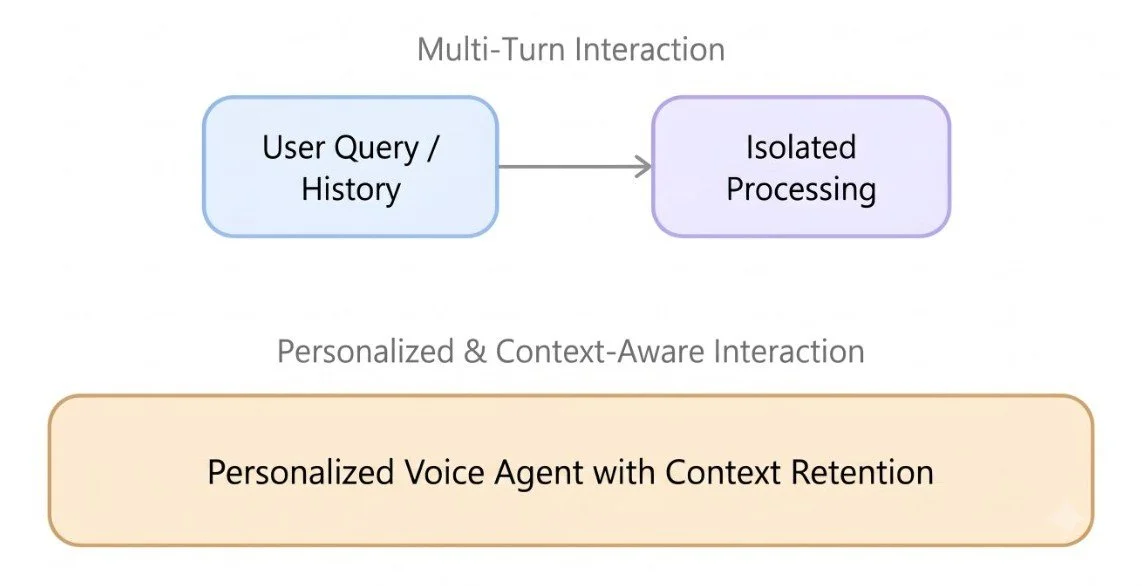
Modern conversational AI can use earlier parts of a discussion to understand follow-up questions. This reduces the need for users to repeat information.
With suitable integrations, AI voice agents can also retrieve relevant customer history or approved business information. For example, a support agent could refer to an existing CRM case before asking a customer for additional details.
Context retention is especially useful for multi-step tasks, but businesses should establish clear rules for data access, retention, and privacy.
9. Voice Cloning Technology and Personalized Synthetic Voices
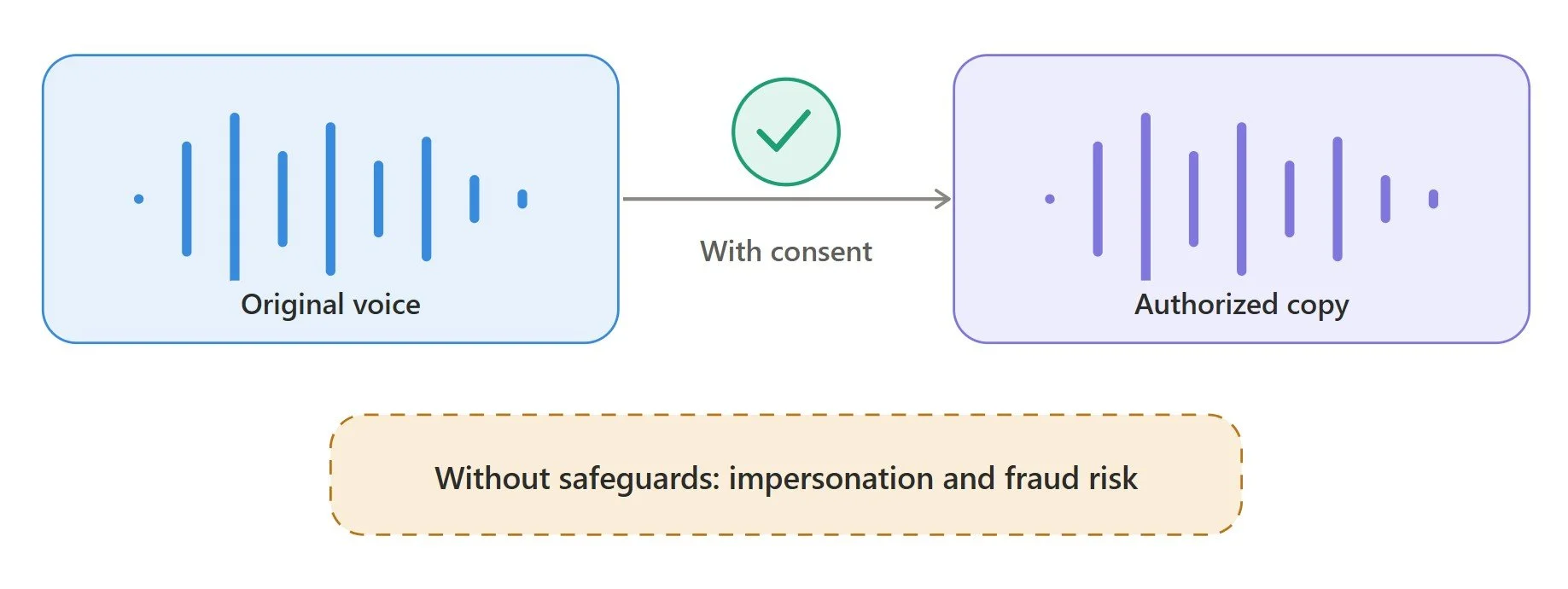
Voice cloning technology allows AI systems to generate speech that resembles a particular person's voice. It can support branded voice experiences, content production, and accessibility applications. Businesses can use authorized synthetic voices to maintain a consistent voice across customer interactions and digital content.
However, voice cloning also creates risks, including impersonation and fraud. Responsible use requires consent, access controls, and safeguards against unauthorized replication. As the technology advances, transparency and trust will remain essential.
10. Improved Reliability, Observability, and Safety

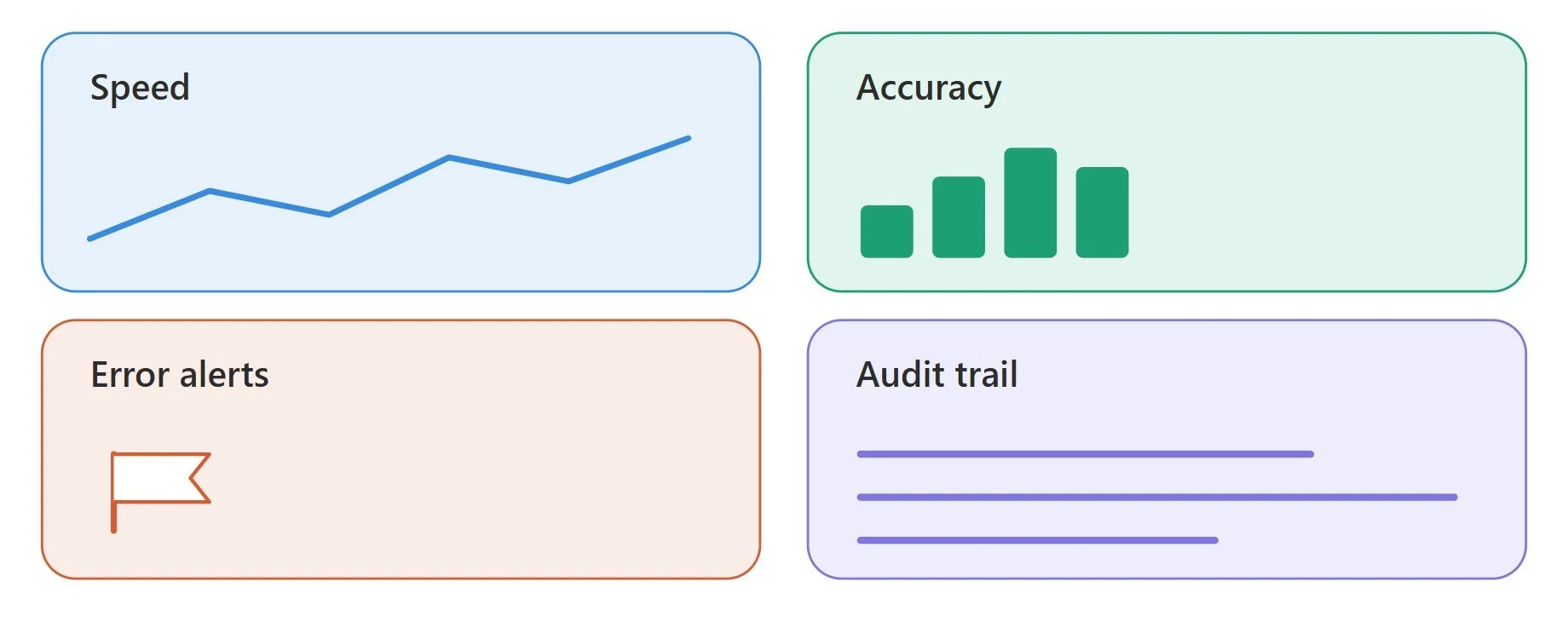
As AI voice technology becomes more capable, businesses need systems that are not only responsive but also reliable, secure, and easy to monitor. Advancements in monitoring and safety mechanisms help teams track voice agent performance, identify errors, and detect unexpected behavior during conversations.
Key improvements include:
Performance monitoring: Track response times, transcription accuracy, and task completion rates.
Error detection: Identify misunderstandings, failed integrations, and incorrect actions.
Safety controls: Apply permission limits, validate sensitive actions, and transfer complex conversations to human agents when needed.
Auditability: Maintain appropriate records of agent actions to support troubleshooting and accountability.
These capabilities are essential for businesses deploying AI voice agents in customer support, sales, and other critical workflows. Combining observability with clear safeguards helps organizations improve performance and build trust in automated voice interactions.
How These Advancements Are Changing Business Applications
Advancements in AI voice technology are helping businesses automate routine interactions, improve customer service, and make everyday workflows more efficient. Key applications include:
Customer support: AI voice agents can answer common questions, retrieve customer information, and create support cases, allowing human agents to focus on complex issues.
Sales and lead qualification: AI-powered voice assistants can engage prospects, ask qualifying questions, schedule meetings, and update CRM records.
Appointment scheduling: Conversational AI can check availability, book appointments, and handle rescheduling through natural voice conversations.
Multilingual communication: Real-time voice AI helps businesses support customers who speak different languages without relying solely on multilingual staff.
Internal operations: Employees can use voice interfaces to retrieve business information, record updates, and complete routine tasks hands-free.
To deliver these benefits, businesses need reliable integrations with CRM platforms and other business applications. Effective AI voice agent development also requires accurate responses, appropriate data access controls, and a clear process for transferring complex or sensitive conversations to human employees.
What Does the Future of AI Voice Technology Look Like?
The future of AI voice technology will likely focus on combining natural conversations with stronger reasoning, contextual awareness, and reliable task execution.
Key developments to watch include:
More capable AI voice agents that complete multi-step workflows.
Better multimodal experiences that combine voice with visual and contextual information.
More personalized interactions based on relevant customer information.
Expanded multilingual support for global communication.
Stronger safety and privacy controls for voice data and automated actions.
Businesses may increasingly use voice interfaces to handle routine requests across customer service, sales, and internal operations. AI can manage repetitive tasks while employees focus on complex situations requiring judgment and empathy.
The success of these systems will depend on more than how naturally they speak. Accuracy, dependable integrations, appropriate permissions, and consistent performance will determine whether they deliver meaningful value.
Final Thoughts
The latest advancements in AI voice technology are making conversations faster, more natural, and more useful. Improvements in speech recognition, voice generation, multilingual translation, and multimodal AI are expanding what these systems can do.
AI voice agents are also moving beyond answering questions to completing tasks through connected business applications. As conversational AI becomes more capable, businesses have more opportunities to improve customer experiences and simplify workflows.
With reliable integrations and appropriate safeguards, AI voice technology can become a practical interface between people, business data, and everyday business operations.
Frequently Asked Questions
-
AI voice agents use speech recognition, conversational AI, and speech generation to understand spoken requests and respond. When integrated with business systems, they can also retrieve information, schedule appointments, update CRM records, and complete other tasks.
-
Real-time voice AI reduces conversational delays and supports more natural interactions. It can help businesses answer common questions, route requests, qualify leads, schedule appointments, and provide multilingual support.
-
Multimodal AI combines voice with other inputs, such as images, documents, and visual information. This allows users to ask spoken questions about what they see and receive more relevant, context-aware responses.
-
Voice cloning can support branded voice experiences and accessibility, but it also creates risks such as impersonation and fraud. Businesses should use authorized voices, obtain consent, and implement safeguards against unauthorized use.
-
Businesses should evaluate speech accuracy, response speed, integration capabilities, data privacy, security controls, monitoring, and human handoff options. The solution should meet specific business needs and perform reliably in real-world conversations.
Related Readings


Let's Talk

Drop us a note, we’re happy to take the conversation forward 👇🏻