
How Do AI Voice Agents Maintain Your Exact Brand Voice?
Key takeaways:
Brand voice has two layers. The words (vocabulary, tone, phrasing) and the sound (pitch, pace, pauses) both have to match your brand on every call.
Consistency comes from a stack of controls. A detailed persona, approved content, a tuned voice, firm guardrails, planned dialogue, and good examples work together.
Brand voice drifts over time, so score real calls, listen to the audio, retest tricky scenarios, and keep a human owner for the voice standard.
Your brand voice is how customers recognize you before they see a logo. It lives in the words you choose, the pace you speak at, and the way you handle a frustrated caller. On the phone, there is no design or visual identity to lean on, so the voice carries all of it.
That is why AI voice agents raise a real question for marketing, CX, and operations teams: can software sound like you, call after call, across thousands of conversations? It can, but only when the voice agentic system is built to protect your brand voice deliberately rather than leaving it to the model's defaults. This guide covers how AI agents maintain brand voice, how to test your agents, what to look for, and mistakes that break it.
What Does "Brand Voice" Actually Mean for a Voice Agent?
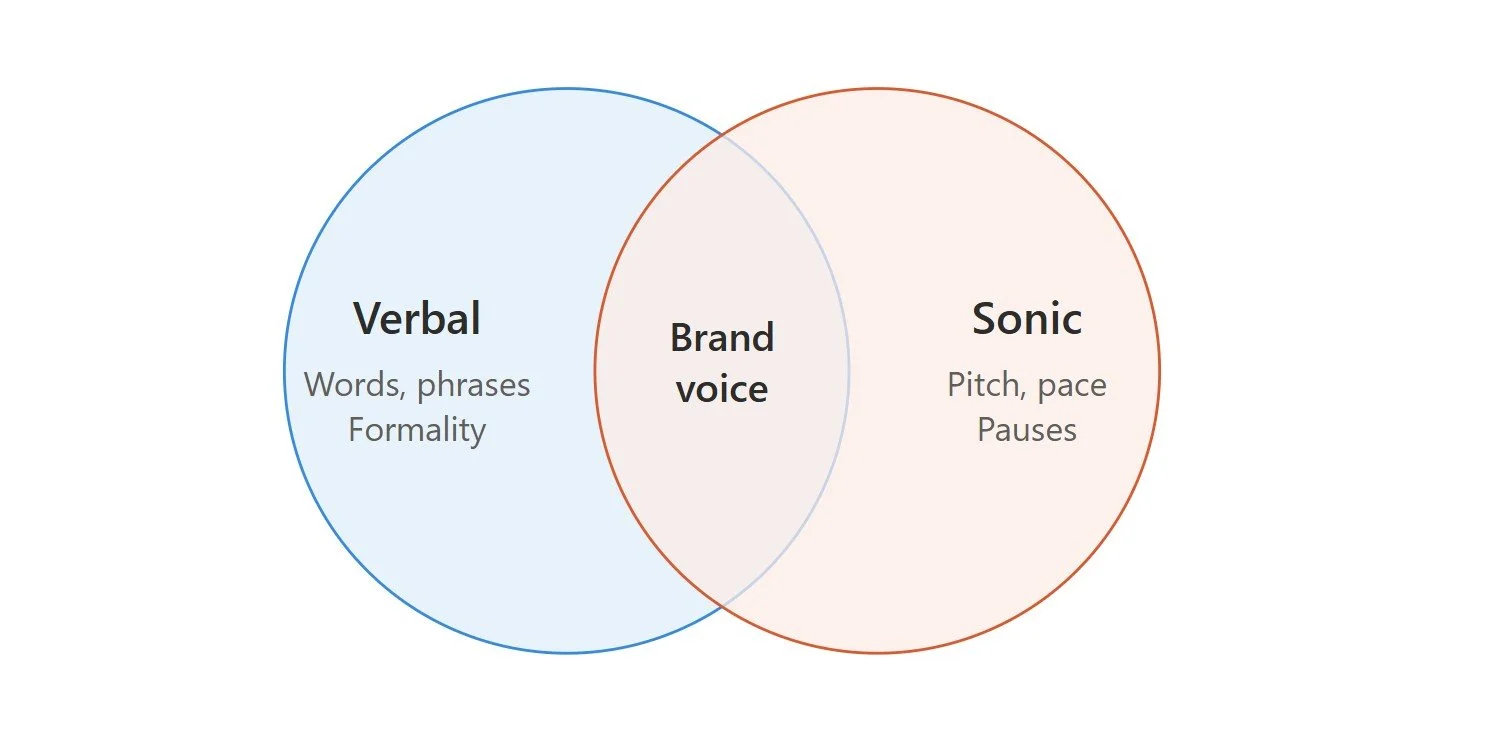
On a website, brand voice is mostly about word choice. Over the phone, it has two layers, and voice AI agents have to get both right:
Verbal identity: vocabulary, sentence length, formality, humor, how you greet and close, and the phrases you always or never use.
Sonic identity: the sound of the voice itself, including pitch, pace, warmth, accent, pauses, and how the agent handles interruptions.
A bank's agent might be calm, precise, and formal. A meal-kit brand's agent might be upbeat and conversational. Both are valid, and the point is that the agent behaves the same way every time.
Why Brand Voice Consistency Matters in Voice AI
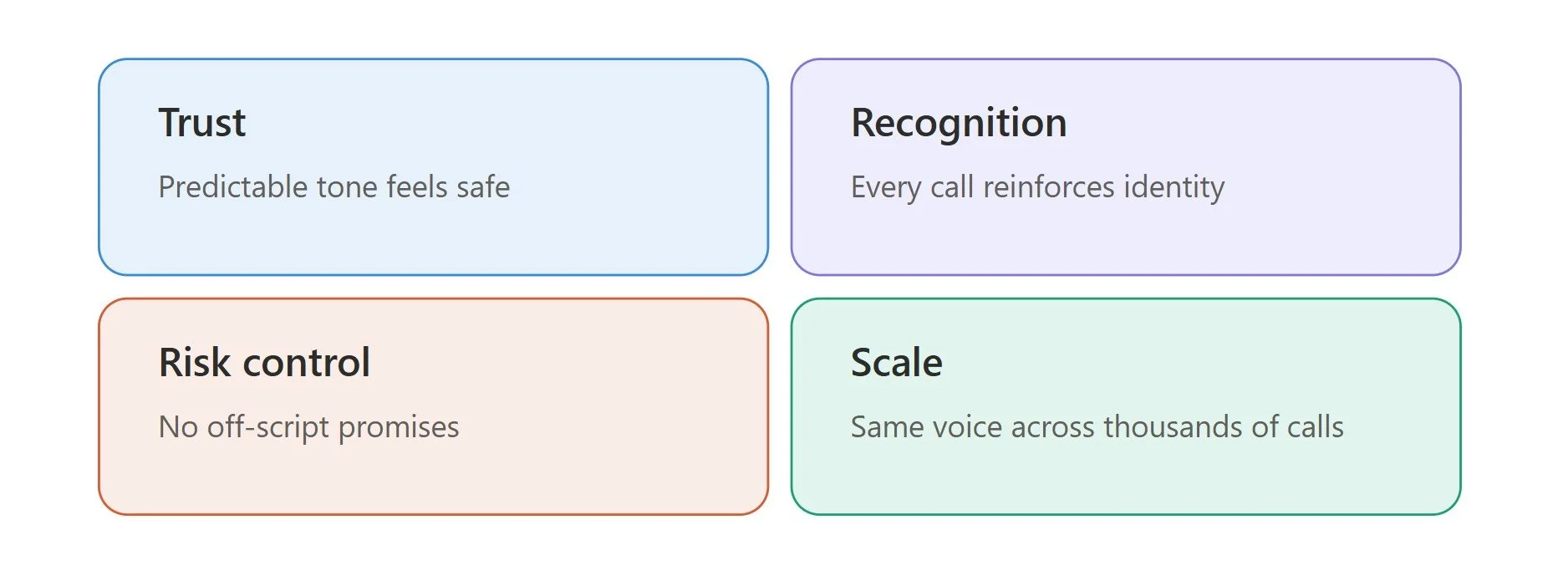
Customers judge a call quickly. If the voice agent sounds off-brand, they notice, even if they cannot say why. Consistency matters for a few reasons:
Trust: a predictable tone makes the interaction feel safe and professional.
Recognition: the agent becomes another touchpoint that reinforces your identity.
Risk control: an agent that improvises can promise things you do not offer or use language your legal team would never approve.
Scale: a human team can be coached, but an AI system repeats whatever it was set up to do, for better or worse.
How AI Voice Agents Maintain Your Exact Brand Voice
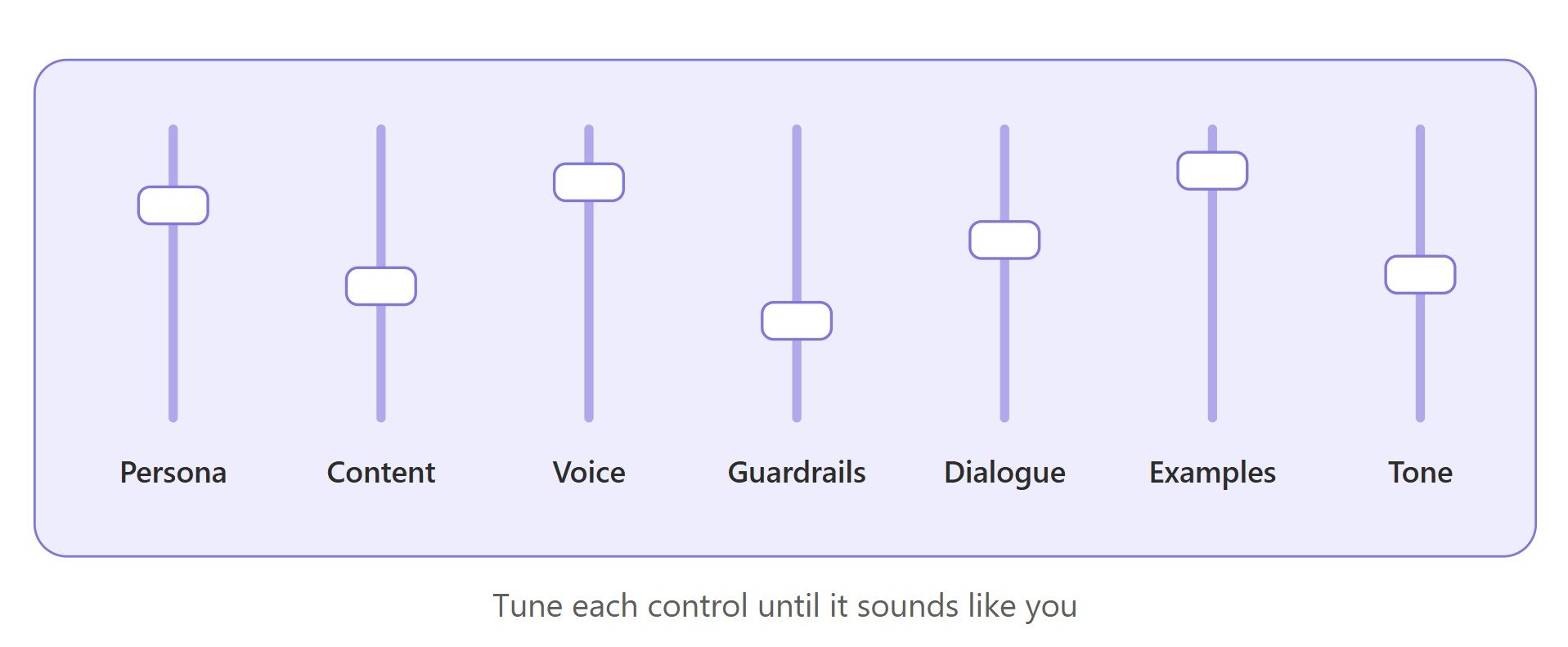
Brand voice in conversational AI agents is not one setting. It is a stack of controls working together, and each one handles a different part of the problem.
1. Translating brand guidelines into a persona and system instructions
The foundation is a written persona that the language model follows on every turn. Good ones are specific rather than vague. Instead of "be friendly," they define things like:
Who the agent is, such as a helpful guide with a calm, concise style
Preferred words and phrases, and a list of words to avoid
How formal to be, and whether contractions are fine
How to open and close a call
How to address the customer, such as first name or "Mr." and "Ms."
Your existing brand guidelines, tone-of-voice documents, and best human call transcripts are the raw material. Turning them into instructions a model can act on is a specialized skill, which is why many brands bring in an AI agent development company that has done it before rather than learning through trial and error on live customer calls.
2. Grounding responses in approved content
An agent that guesses will drift off-brand and off-fact. Retrieval-based setups let the agent pull answers from your own approved sources, such as help-center articles, policy documents, and product pages, rather than from general model knowledge. That keeps the wording consistent with how you actually speak and reduces the risk of invented answers. If the answer is not in the approved knowledge, the agent says so and hands off.
3. Choosing and tuning the actual voice
The sound of the agent is a separate decision from the words. Teams usually have three options:
A stock voice that matches your personality, which is the fastest to launch
A custom-designed voice built for your brand and used only by you
A cloned voice based on a real speaker, which needs explicit written consent and a clear legal basis
Whichever route you take, the voice can be tuned for pace, pitch, and emphasis, and pauses can be placed deliberately. A slightly slower speaking rate and a brief pause after a greeting can change how warm a call feels. This is also where good AI voice agent development services earn their keep, since voice selection, tuning, and disclosure all need to be handled together. Callers should be told they are speaking with an AI, and regulators in several regions now require it.
4. Guardrails that keep the AI agent inside the lines
Guardrails are the rules that stop the agent from going off-script even when a caller pushes it to. They typically cover:
Topics the agent should never discuss or speculate on
Claims it must not make, such as pricing guarantees or medical or legal advice
Required disclosures and compliance language
Tone limits, so it stays composed even when the caller is rude
Clear triggers for escalating to a human
A strong guardrail layer protects the brand as much as it protects compliance.
5. Conversation design for the moments that define a brand
Brand voice shows most in the awkward moments, not the easy ones. Good conversation design plans for:
Greetings and sign-offs worded exactly the way you want them
Fallbacks for when the agent did not understand, such as "Sorry, could you say that another way?" in your tone rather than a generic error
Hold and transfer language that sets expectations
Apologies and bad news, which should sound like your brand and not like a template
Handoffs that pass context to a human so the customer never repeats themselves
6. Examples, fine-tuning and prompt iteration
Showing the model good examples is one of the most effective ways to maintain the brand voice of AI voice agents. Teams include sample exchanges that show the right register, and they add negative examples of what not to say. For stricter requirements, further tuning on approved transcripts can reinforce the pattern. This is iterative work, and the first version is rarely the final one. If your team does not have the conversation design and prompt engineering experience, it is worth choosing to hire AI developers who have shipped production voice systems, because the gap between a demo and a consistently on-brand agent is mostly in this iteration.
7. Adapting tone without losing identity
Brand voice is not monotone. A good agent is lighter when booking a table and more careful when handling a complaint. Sentiment and context signals let it adjust its pacing and word choice, while the core personality stays the same. The brand voice sets the range, and the situation picks the point inside it.
How to Test and Monitor Brand Voice Consistency
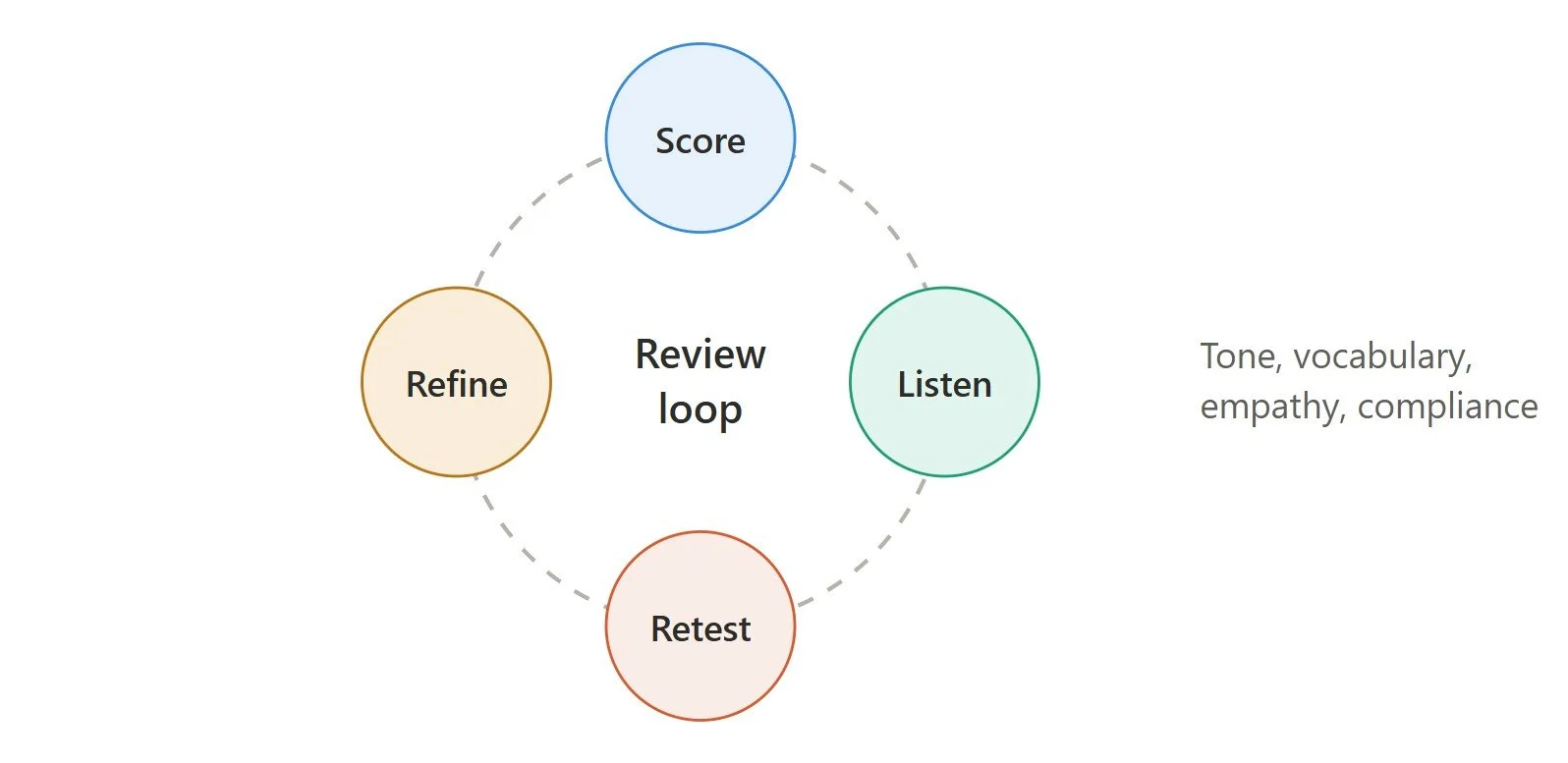
Launching is the start of the work. Brand voice can drift as you add content, change prompts, or swap models, so it needs ongoing checks:
Build a scorecard: rate sample calls on tone, vocabulary, empathy, accuracy, and compliance to measure the quality of your voice agent.
Review real calls regularly: listen to calls, not just transcripts, since sonic issues like pacing or awkward pauses only show up in audio.
Run regression tests: replay a fixed set of tricky scenarios after every change to catch regressions.
Track escalations and complaints: a cluster of off-brand moments often shows up there first.
Keep humans in the loop: a brand or CX lead should own the voice standard and approve changes.
Common Mistakes That Break Brand Voice
Writing a persona that is vague, such as "professional and friendly," without examples
Letting the agent answer from general knowledge instead of approved content
Choosing a voice because it sounds impressive rather than because it fits the brand
Testing only on clean, scripted calls and ignoring interruptions, accents, and angry callers
Treating the setup as finished after launch and never reviewing drift
Final Thoughts
AI voice agents can sound like your brand, but only when the voice is treated as a product requirement from day one. The reliable approach combines a clear persona, grounded content, a carefully chosen voice, firm guardrails, and continuous review. Done well, your agent becomes a consistent, always-on expression of your brand rather than a generic bot.
Frequently Asked Questions
-
An AI voice agent converts the caller’s speech to text, uses a language model to understand intent and decide the reply, then turns that reply into natural speech. An orchestration layer manages interruptions, tool calls, and handoffs to humans.
-
AI voice agents can come very close to sounding like a brand. However, consistency comes from a detailed persona, approved knowledge, a tuned voice, and ongoing testing, and it needs human oversight to stay on target.
-
Brand voice is your overall personality and tone. A voice persona is the specific, documented version of it that the agent follows, including word choices, pacing, and example responses.
-
Brand-focused AI voice agents build customer trust, make every call recognizable, and reduce the risk of off-script promises. They also keep tone consistent across thousands of conversations, so your brand experience stays reliable at scale without extra coaching.
-
Use guardrails, ground answers in approved content, test difficult scenarios regularly, and review real calls. Escalate to a human whenever the agent is outside its approved scope.
-
Review it continuously through call sampling and complaint tracking, and run a full check after any change to prompts, content, or models of your voice AI.
Related Readings

Let’s Talk

Drop us a note, we’re happy to take the conversation forward 👇🏻