
How to Maintain Security Review Compliance for AgentExchange Apps After Launch
Key Takeaways:
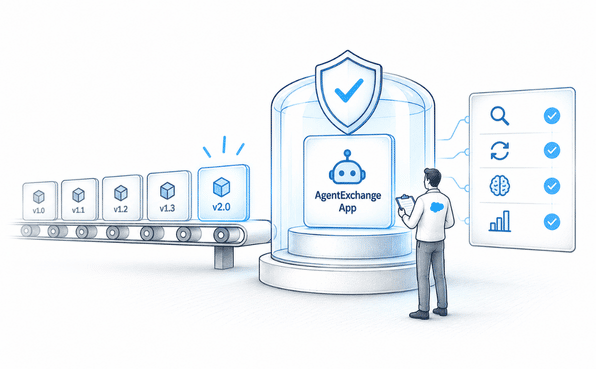
Security is an ongoing process. Passing an AgentExchange security review is only the first step. Continuous monitoring and regular assessments are essential.
Integrate security into every release. Automate testing, review AI-specific risks, and validate permissions before deploying new features.
A structured security review process helps protect customer data, reduce vulnerabilities, and support long-term app success.
Launching an AI agent or app on Salesforce AgentExchange is a major achievement, proving your solution meets Salesforce’s strict security standards. However, getting listed is only step one.
As underlying AI models evolve, third-party APIs change, and Salesforce rolls out seasonal releases, maintaining compliance requires an active posture. Ongoing AgentExchange compliance relies on three core practices: continuous vulnerability scanning via the Partner Security Portal, strict patch release management, and proactive monitoring of AI data guardrails.
Instead of treating security as a milestone, organizations should make AgentExchange security review an ongoing practice that supports every release, enhancement, and integration.
In this guide, we'll explain why continuous security matters, what Salesforce expects from developers after launch, and how you can build a repeatable process that strengthens AgentExchange app security and protects your customers.
Why Security Compliance Doesn't Stop After Your AgentExchange App Goes Live
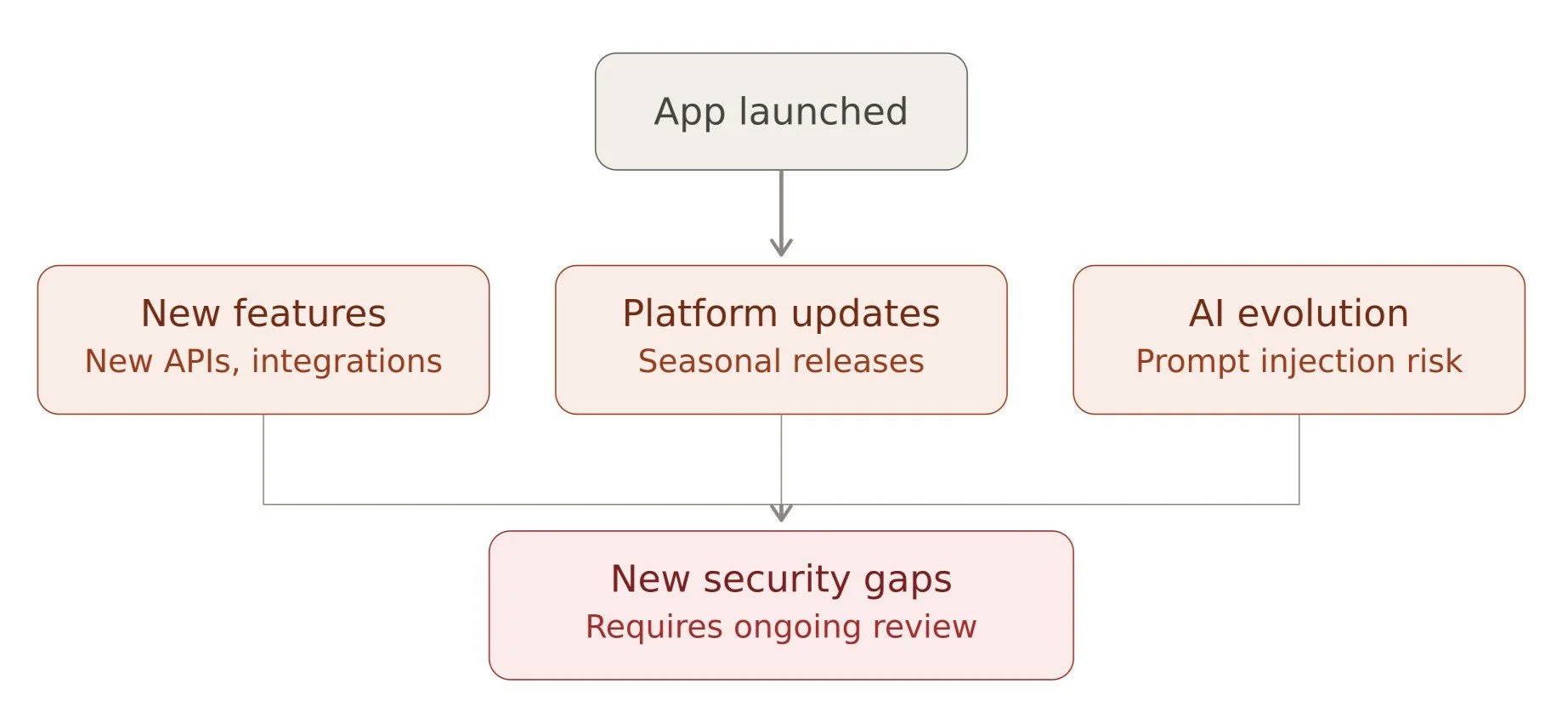
Passing an AgentExchange security review confirms that your application met Salesforce's security standards at the time of submission. However, software doesn't remain static after launch. New features are introduced, integrations expand, and AI models become more sophisticated. Every change creates an opportunity for new security risks.
Consider a simple feature update that connects your AI agent to another business application. While the functionality may improve user experience, it can also introduce new APIs, authentication methods, or data-sharing mechanisms that require additional security validation.
Similarly, Salesforce releases seasonal platform updates that may affect permissions, APIs, and security controls. If these changes are not reviewed, they can unintentionally expose sensitive information or create compliance gaps.
AI applications also introduce unique considerations. Prompt injection attacks, excessive data exposure, and insecure AI responses are risks that traditional applications may never encounter. As businesses rely more heavily on AI agents, maintaining strong AI agent security becomes an ongoing responsibility rather than a one-time task.
Organizations should also remember that customers expect continuous protection of their business data. Demonstrating a commitment to security compliance helps build trust, improves product reliability, and reduces the likelihood of costly security incidents.
Understanding Salesforce's Expectations for Ongoing Security
Salesforce expects developers to maintain secure applications even after they have been published. An initial AppExchange security review or AgentExchange approval should be viewed as the foundation of a long-term security strategy.
Ongoing security involves regularly reviewing application architecture, protecting customer data, monitoring vulnerabilities, and responding quickly when security issues are discovered.
Initial Security Review vs Continuous Compliance
| Aspect | Initial Security Review | Continuous Compliance |
|---|---|---|
| Purpose | Validate app before launch | Maintain security after release |
| Timing | One-time (pre-launch) | Ongoing (post-launch lifecycle) |
| Focus | Baseline security requirements | Evolving threats & updates |
| Scope | Static application state | Code, dependencies, AI, integrations |
| Outcome | Approval to publish | Long-term risk reduction |
| Responsibility | Development team | Cross-functional teams (Dev, Security, Ops) |
Some of Salesforce's broader security expectations include:
Following secure coding practices throughout development.
Keeping third-party libraries and dependencies up to date.
Monitoring integrations and connected applications.
Addressing newly discovered vulnerabilities promptly.
Maintaining accurate documentation of security-related changes.
For organizations building AI-powered applications, these expectations extend to AI-specific safeguards as well. Developers should validate AI outputs, limit unnecessary data exposure, review prompts regularly, and ensure that AI-generated responses remain appropriate and secure.
Business leaders should also recognize that maintaining AgentExchange app security is not solely a developer's responsibility. Product managers, security teams, architects, and leadership all play a role in establishing governance processes that support long-term compliance.
Build a Continuous Security Review Process for AgentExchange Apps
The most effective way to maintain strong security is by creating a structured review process that becomes part of everyday development instead of an occasional exercise.
Step 1: Maintain an Updated Asset Inventory
Start by documenting everything your application depends on.
This includes APIs, connected applications, AI models, external services, authentication methods, and third-party libraries. Having a complete inventory makes it much easier to understand how changes may affect your application's security.
Without visibility into your assets, important risks can easily be overlooked.
Step 2: Automate Security Testing
Manual reviews remain valuable, but automation allows teams to identify issues much earlier.
A continuous review process should include:
Static code analysis to identify insecure coding patterns.
Dependency scanning to detect vulnerable packages.
Secret scanning to prevent accidental credential exposure.
Automated testing within the CI/CD pipeline.
Regular vulnerability assessments.
Automation reduces human error while helping development teams maintain consistent security compliance throughout the software lifecycle.
Step 3: Review AI-Specific Risks
Traditional application security practices are no longer sufficient for AI-powered applications.
Organizations should routinely evaluate:
Prompt injection vulnerabilities.
Unauthorized access to sensitive business information.
AI hallucinations that could expose incorrect information.
Excessive permissions granted to AI agents.
Secure handling of user prompts and responses.
As AI capabilities expand, maintaining strong AI agent security becomes just as important as protecting the underlying application infrastructure.
Step 4: Review Permissions Regularly
Over time, applications often accumulate permissions that are no longer required. Review profiles, permission sets, OAuth scopes, connected apps, and API access regularly to ensure users and AI agents only have the permissions they genuinely need.
Applying the principle of least privilege significantly reduces the potential impact of compromised accounts.
Step 5: Monitor Application Activity
Security reviews should extend beyond development. Monitor authentication failures, unusual API activity, unexpected data exports, and abnormal AI behavior. These indicators often reveal security issues before they become major incidents.
Continuous monitoring allows organizations to respond quickly instead of reacting after customers have already been affected.
Step 6: Schedule Periodic Security Assessments
Automated scans are essential, but they shouldn't replace expert reviews. Conduct comprehensive security assessments:
Before major product releases.
After significant architectural changes.
Following new AI feature implementations.
At regular intervals throughout the year.
Regular reviews help identify risks that automated tools may miss while supporting ongoing AgentExchange security review efforts.
Establish a Secure Release Management Process
Every software release presents an opportunity to strengthen or weaken your application's security. Rather than focusing only on new functionality, organizations should integrate security into every release cycle.
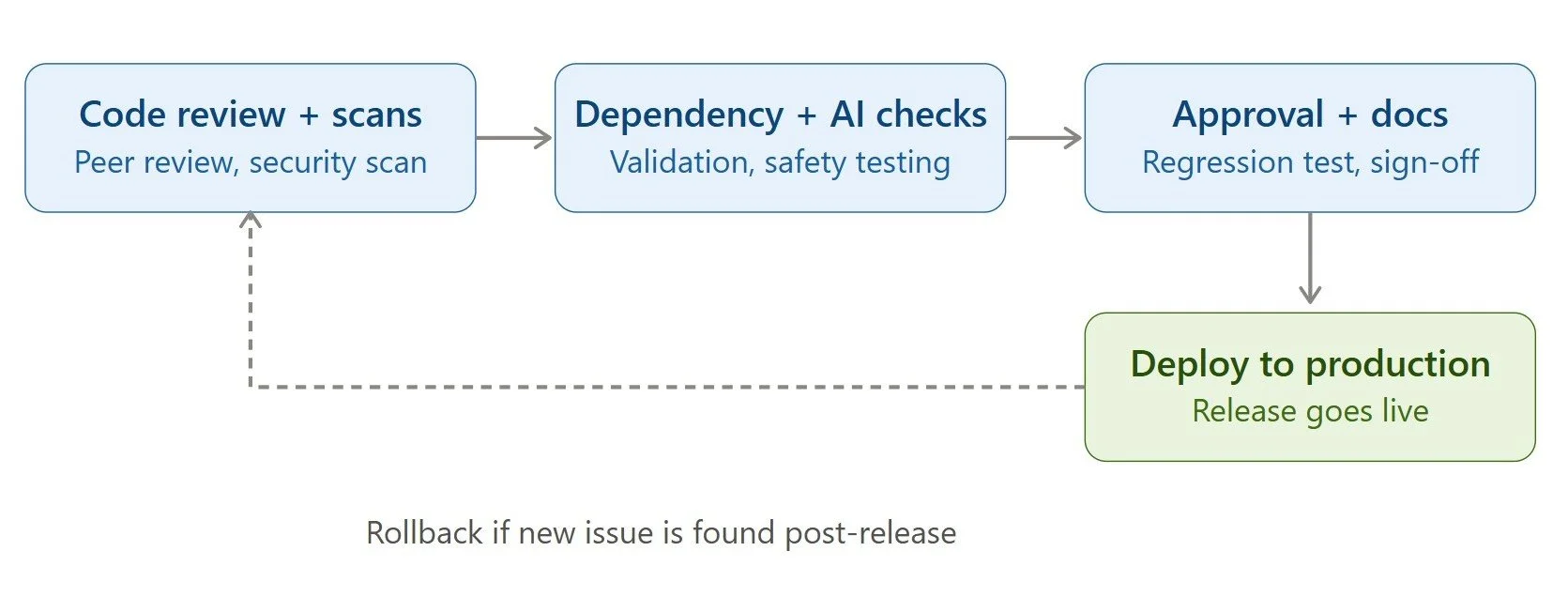
A secure release process typically includes:
Peer code reviews.
Automated security scans.
Dependency validation.
AI safety testing.
Regression testing.
Approval workflows.
Security documentation updates.
By making security checks mandatory before deployment, the chances of new vulnerabilities getting appearing into production can be reduced.
Businesses should also establish clear rollback procedures. If a newly released feature introduces unexpected security concerns, teams need the ability to restore a stable version quickly while minimizing customer impact. This proactive approach not only supports AgentExchange app security but also improves operational resilience.
Organizations often work with an experienced Salesforce consultant or trusted Salesforce partner when designing secure release processes, especially for enterprise implementations involving complex integrations or AI-driven workflows. Their expertise can help align release practices with Salesforce best practices while reducing deployment risks.
Continuous Compliance Checklist for AgentExchange Apps
Maintaining security becomes much easier when organizations follow a consistent checklist instead of relying on memory or individual experience. Before each major release, consider reviewing the following:
Perform static code analysis.
Scan third-party dependencies for known vulnerabilities.
Review permission sets and OAuth scopes.
Validate AI prompts and generated responses.
Test for prompt injection and data leakage.
Rotate API keys, tokens, and secrets.
Monitor application logs for suspicious activity.
Review external integrations and connected apps.
Verify encryption for sensitive information.
Update documentation after security-related changes.
Conduct penetration testing when appropriate.
Review compliance with Salesforce security expectations.
Document identified risks and remediation activities.
Following a structured checklist encourages consistency across development teams while reducing the chances of overlooking critical security tasks.
For organizations delivering enterprise AI solutions through Salesforce AgentExchange, continuous reviews also demonstrate a proactive approach to security compliance and customer trust.
Conclusion
Launching an application on Salesforce AgentExchange is a significant milestone, but maintaining its security requires ongoing commitment.
Threats evolve, AI technologies advance, and platform updates introduce new considerations that didn't exist during the initial review. Organizations that establish a continuous AgentExchange security review process are better positioned to identify vulnerabilities early, respond quickly to emerging risks, and maintain customer confidence.
Strong AgentExchange app security isn't achieved through a single review, it comes from building security into every stage of development, testing, deployment, and maintenance.
As AI becomes increasingly central to business operations, investing in continuous AI agent security practices will help organizations deliver trusted, reliable, and compliant applications for years to come.
Frequently Asked Questions
-
Security reviews should be part of every major release. Organizations should also perform periodic assessments throughout the year and whenever significant architectural or AI-related changes are introduced.
-
AI-powered applications face additional risks such as prompt injection, sensitive data exposure, inaccurate responses, and excessive permissions. These require specialized testing and ongoing monitoring beyond traditional application security practices.
-
Organizations should automate security testing, review permissions regularly, monitor application activity, keep dependencies updated, document security changes, and conduct regular security assessments as part of their development lifecycle.
-
For complex implementations, working with experienced Salesforce consultants can help organizations establish secure development practices, improve governance, and align with Salesforce security expectations.
-
No. While AI solutions are a central focus, AgentExchange hosts the full spectrum of Salesforce ecosystem offerings, including traditional enterprise apps, Slack tools, workflow automation solutions, and consulting services.
-
Developers can publish complete standalone AI agents capable of autonomous workflows, as well as modular skills like Agent Actions, Topics, and Model Context Protocol (MCP) servers that extend the capabilities of existing agents.
Related Readings

Let’s Talk

Drop us a note, we’re happy to take the conversation forward 👇🏻