
What's New in Salesforce 2026: Summer, Spring, and Winter Releases
Key takeaways:
Agentforce became the core of Salesforce, enabling autonomous AI-powered automation.
Flow Builder gained powerful low-code enhancements across all 2026 releases.
Security updates require admins to replace legacy authentication and Connected Apps.
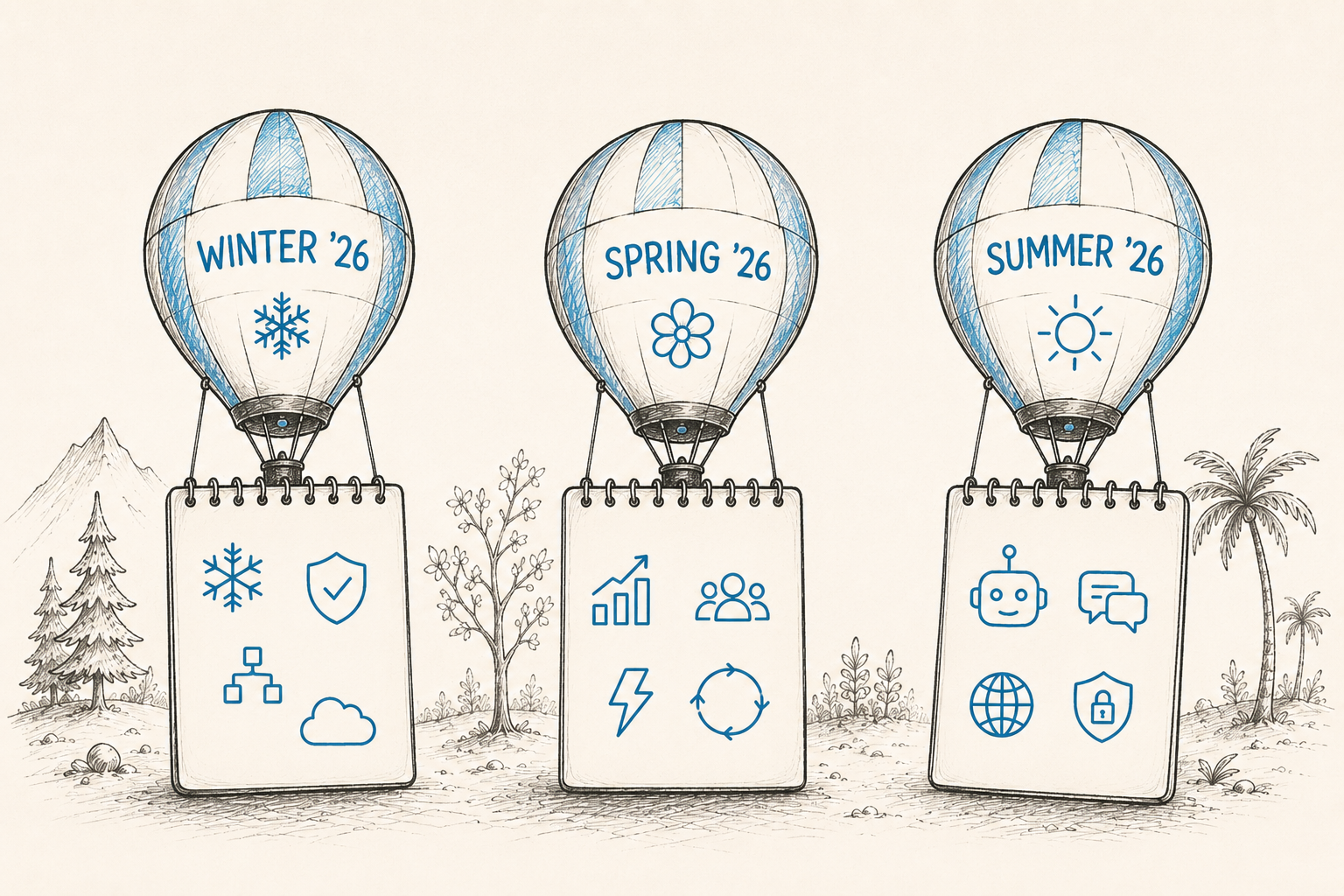
Salesforce stays consistent when it comes to rolling out updates. The three major releases every year are Winter (October), Spring (February), and Summer (June). And in 2026, that consistency has been anything but quiet. Each release has brought a wave of changes, with one theme running through all of them: AI is no longer an add-on; it's the foundation.
Whether you're a Salesforce admin, a developer, a sales rep, or a business leader, 2026 has something significant in store for you. Let's walk through the highlights from each release so you're caught up on everything that's happened.
Salesforce Summer '26 Release Highlights
The Summer '26 release, which started rolling out in June 2026, is arguably the boldest yet. Salesforce's official tagline for it is "the Agentic Enterprise," and that tells you a lot about where things are heading.
Multi-Agent Orchestration
One of the biggest headlines is Multi-Agent Orchestration in Agentforce. Instead of relying on a single AI agent to handle tasks, you can now have multiple specialized agents working as a team. Think of it like this: one agent handles lead qualification, another manages follow-ups, and a supervisor agent coordinates everything. The result? Complex, end-to-end workflows that run with minimal human intervention.
Slack First Sales
Sales has also gotten a major upgrade with Slack First Sales. Rather than forcing sellers to jump between Salesforce and Slack, this feature brings CRM data directly into Slack conversations. Sellers get a proactive layer of AI agents that can prospect, engage leads, and manage pipeline, all inside the tool they're already using every day. It's designed so that one seller can operate with what feels like a full revenue team behind them.
Agentforce Self-Service and Customer Engagement Agent
On the customer side, Agentforce Self-Service has been completely reimagined. There's a new Help Agent that can be set up in six clicks or fewer, and a new portal experience that guides customers through resolution with a conversational, personalized interface. There's also a brand-new Customer Engagement Agent that independently interacts with and qualifies buyers 24/7, so no lead goes cold just because your team is busy.
Scheduling Console for Field Service
Field service teams got a much-needed upgrade, too. The new Scheduling Console gives dispatchers live appointment updates, map routes, and side-by-side schedule comparisons. It even lets Agentforce automatically surface the closest qualified technician for emergency jobs.
Real-Time Offer Management
Marketing got some love in Summer '26 as well. Real-Time Offer Management lets brands deliver personalized, channel-optimized offers based on live customer behavior. Marketers can orchestrate offers at scale without the bottleneck of slow campaign cycles.
Headless 360 and Developer Upgrades
For developers, Summer '26 Salesforce updates are described as a "maturity release" for Lightning Web Components (LWC). The big themes are cleaner architecture, faster development cycles, and a tighter bridge to Agentforce. New State Managers pull data logic out of components into reusable, testable layers. There's also a new Headless 360 platform that makes every major Salesforce capability available as an API or MCP (Model Context Protocol) tool and accessible to apps, humans, or AI agents alike.
Agentforce Vibes 2.0 (Salesforce's enterprise-level AI coding assistant) also got a notable upgrade. Salesforce consultants and developers can now choose from multiple frontier AI models, including Claude Sonnet, Claude Opus, and GPT-5, to power their coding experience. Get a quick introduction to Headless 360 in this video.
Security Mesh and Compliance Updates
On the security front, a new Security Mesh introduces proactive risk scoring to help organizations stay ahead of threats. Admins also get better access controls for queue-based record sharing, and a new permission change view that makes indirect permission changes much more visible before saving.
One important heads-up: Chatter is being phased out. New orgs created from Summer '26 onward will have Chatter disabled by default. It can still be enabled manually, but the writing is on the wall for Salesforce's legacy social feed feature.
Salesforce Spring '26 Release Highlights
The Spring '26 release landed in February 2026 and focused on blending AI into the workflows people actually use every day. From sales to service to Flow automation.

Sales Workspace and Agentforce Sales
Perhaps the biggest branding change in this release: Sales Cloud was rebranded as Agentforce Sales. This isn't just a name change but it signals that AI agents are now central to how selling works in Salesforce. The new Sales Workspace brings agents, analytics, and predictive insights into a single hub for every sales rep. Instead of toggling between dashboards, reps see their performance, agent activity, and next-best actions all in one place.
Agentforce in Spring '26 can also enrich existing CRM data with signals from the web and external sources, then build prioritized prospect lists and share them directly in Slack for team collaboration.
Proactive Service and Agentforce Voice
Customer service got a meaningful upgrade with Proactive Service, which shifts support to anticipating problems before customers even call. For financial services specifically, Agentforce Voice lets banks deploy AI agents to handle common banking and collections inquiries by phone at scale, without adding headcount.
Flow Builder Gets Smarter
Flow Builder saw some of the most practical improvements in the Spring '26 Salesforce news. You can now use natural language prompts in Agentforce to modify record-triggered flows without manually dragging and dropping elements. Decision and loop elements can now be collapsed on the canvas, making complex flows much easier to navigate. A new Kanban Board Screen Component lets flow records display in a visual card layout, and a flow version comparison tool helps admins track exactly what changed between versions.
Flow Logging was also introduced, giving native visibility into how flows are running in real time, with execution data stored in Salesforce Data Cloud for analysis and troubleshooting.
Experience Cloud and Generative Engine Optimization
Public-facing sites built on Experience Cloud got a forward-looking upgrade: Generative Engine Optimization (GEO). With a simple toggle in Experience Builder, your help centers and portals become readable by AI engines like ChatGPT and Gemini. Essentially, it's the 2026 version of SEO, making sure AI tools can surface your content accurately for end users.
Security Overhaul
Spring '26 Salesforce updates also came with some firm security deadlines that organizations couldn't ignore. The ability to create new Connected Apps was disabled by default, pushing everyone toward the more secure External Client Apps (ECAs). Legacy authentication via SOAP API login() was also phased out.
A new My Trust Center (formerly Personalized Trust) gives Salesforce customers an authenticated place to monitor the health of their specific Salesforce products, subscribe to maintenance alerts, and review a full year of incident history.
Salesforce Winter '26 Release Highlights
The Winter '26 release, which rolled out in October 2025, is really where Salesforce drew the line in the sand: this is an AI-first platform now, and everything is being rebuilt around that idea.

Agentforce Across Every Cloud
Winter '26 marked a massive expansion of Agentforce capabilities. Agentforce for Sales: Lead Generation introduced an AI agent that engages website visitors around the clock. Answering questions, qualifying leads, and booking meetings completely autonomously. For service teams, Agentforce for Service: IT Service brought an agentic console for managing internal IT issues, complete with Slack integration, incident detection, and root-cause analysis.
Agentforce for Financial Services added Collections Assistance for automated debt recovery workflows. And on the e-commerce side, Guided Shopping powered by Agentforce created an AI personal shopper experience that guides customers from product discovery through checkout. This replicates the best parts of an in-store experience online.
Agentforce Grid
One of the more creative features of Winter '26 Salesforce news was Agentforce Grid. A spreadsheet-like interface for chaining together CRM data, AI prompts, actions, and agents. It's designed for rapid prototyping, letting teams run bulk updates, generate insights, and test multi-turn AI conversations without writing code.
Agentforce Observability
Managing a group of AI agents also got easier with Agentforce Observability, a unified system that lets teams monitor, optimize, and scale autonomous agents across the enterprise. It helps quantify ROI from your AI workforce and surfaces actionable insights to drive adoption.
Data Cloud: Clean Rooms
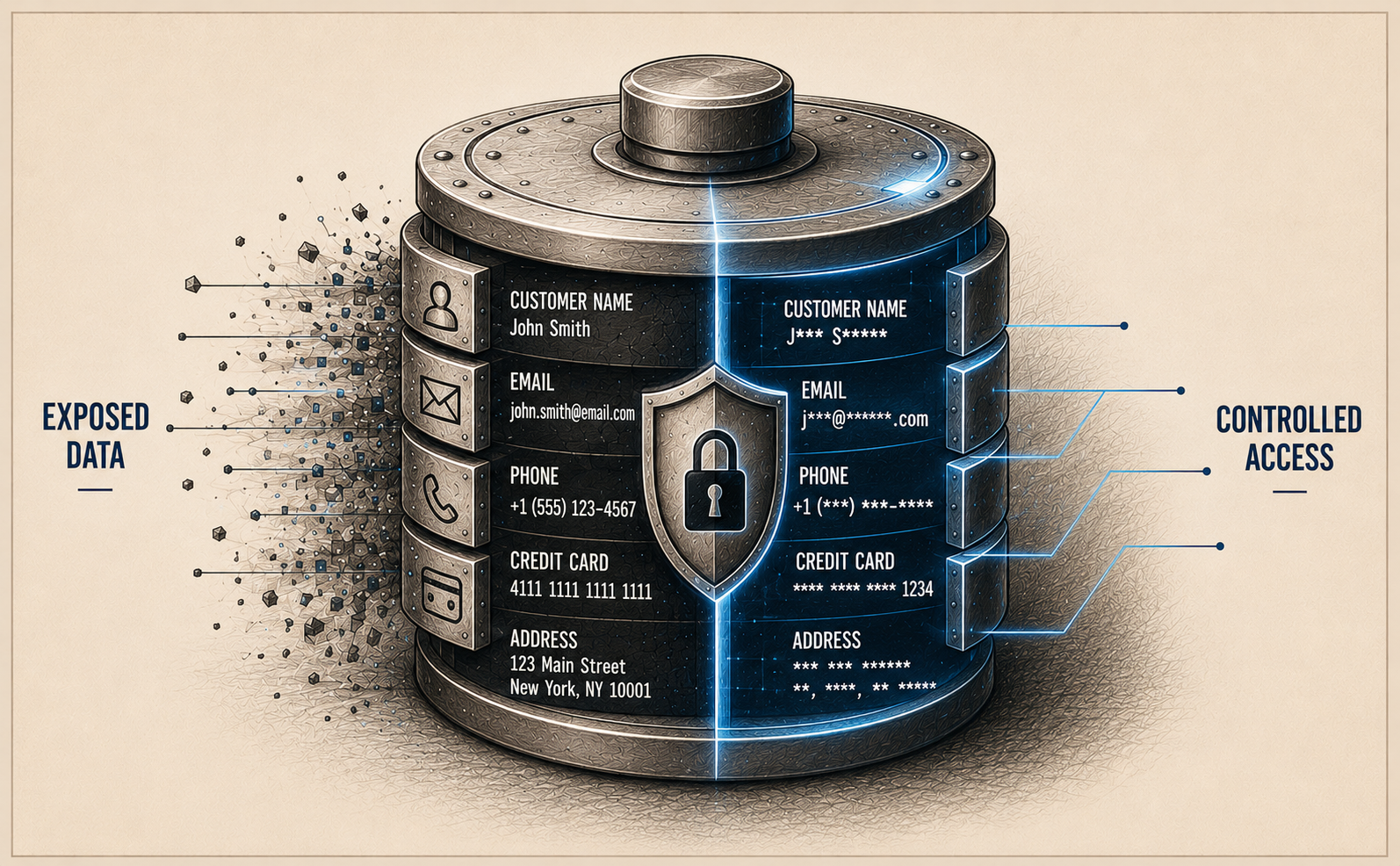
Privacy-conscious data collaboration got a significant boost with Clean Rooms in Data Cloud. Using zero-copy technology, multiple parties can now securely collaborate on customer insights without moving or exposing sensitive data. This is particularly useful for co-marketing campaigns or industry partnerships.
Flow and Einstein Updates
Winter '26 also introduced AI-powered Decision elements inside Flow, letting flows analyze unstructured data using generative AI. The Flow Resource Menu got smarter filtering. A file attachment trigger became generally available, meaning flows can now fire automatically when a file is added to a record.
On the Einstein side of Salesforce updates, admins gained access to 13 pre-built email templates for faster service responses. Plus, one-click AI account research that compiles strategic customer insights automatically.
The Big Picture: What 2026 Means for Salesforce Users
Across all three releases, it’s clear that Salesforce is not developing a CRM platform with AI capabilities; it is creating an AI platform with CRM capabilities.
Moving from passive tools (dashboards, reports, and workflow management) to active agents (AI taking actions, making decisions, and collaborating with people) is a reality that is gaining momentum. From the Agentforce Sales closing deals, to the Agentforce Self-Service solving customers' issues without escalation, to Multi-Agent Orchestration managing cross-functional workflows, the 2026 releases mark the transition of Salesforce into the "agentic enterprise."
For admins, it’s important to master Flow automation, get acquainted with Agentforce agents, and stay ahead regarding security in particular, the migration from Connected Apps to External Client Apps. For Salesforce consultants, investments in LWC development, Headless 360, and MCP tooling indicate an increasing openness and composability of the platform. For business leaders, the productivity and customer experience improvements brought by these releases are tangible. Early adopters of Agentforce features report improved deal cycle time, increased satisfaction scores, and substantial operational efficiency.
The 2026 Salesforce release cycle has been among the most transformative to happen recently. If you have not yet begun experimenting with these features in your sandboxes, then it's about time.
Frequently Asked Questions
-
Salesforce delivers three major seasonal releases every year: Winter (October), Spring (February), and Summer (June). In addition to these, some products like Data Cloud and Agentforce receive smaller, more frequent monthly updates. So in practice, there's almost always something new rolling out on the platform.
-
Not necessarily. Some basic Agentforce capabilities come bundled with Salesforce Foundations, but more advanced features like Agentforce Sales, Agentforce Self-Service, and Multi-Agent Orchestration typically require specific editions or add-on licenses. It's worth checking with your Salesforce account executive or reviewing your current plan against the feature availability notes in each release.
-
No, it's not being discontinued. Starting with the Spring '26 release, Salesforce rebranded Sales Cloud as Agentforce Sales. The core CRM functionality you're used to is still there, but it's now being built around AI-first workflows and autonomous agents rather than just data management and reporting.
Related Reading

Let’s Talk

Drop us a note, we’re happy to take the conversation forward 👇🏻