How do I select a Trusted Consultant for enterprise AI adoption?

Key Summary:
Enterprise AI success starts with choosing an experienced AI consultant.
AI consulting delivers better ROI when aligned with business goals, data, and automation needs.
Avoiding common AI adoption mistakes like poor data quality and unrealistic expectations is essential for long-term AI success.
Is your organization truly unlocking the value of AI or just experimenting with it? Despite 88% of companies already using AI, nearly two-thirds are still stuck in pilot stages, and only a fraction have scaled it successfully. Even more telling, while 64% report innovation gains, just 39% see real financial impact according to McKinsey & Company.So what’s missing? For many enterprises, the challenge isn’t adopting AI, it’s executing it right.
Choosing the right AI consultant can be the difference between stalled initiatives and measurable success.
Here’s what to look for when selecting a trusted consultant for enterprise AI adoption, the key evaluation criteria that matter, and the common mistakes to avoid.
Why AI Expertise Is Essential for Your Business
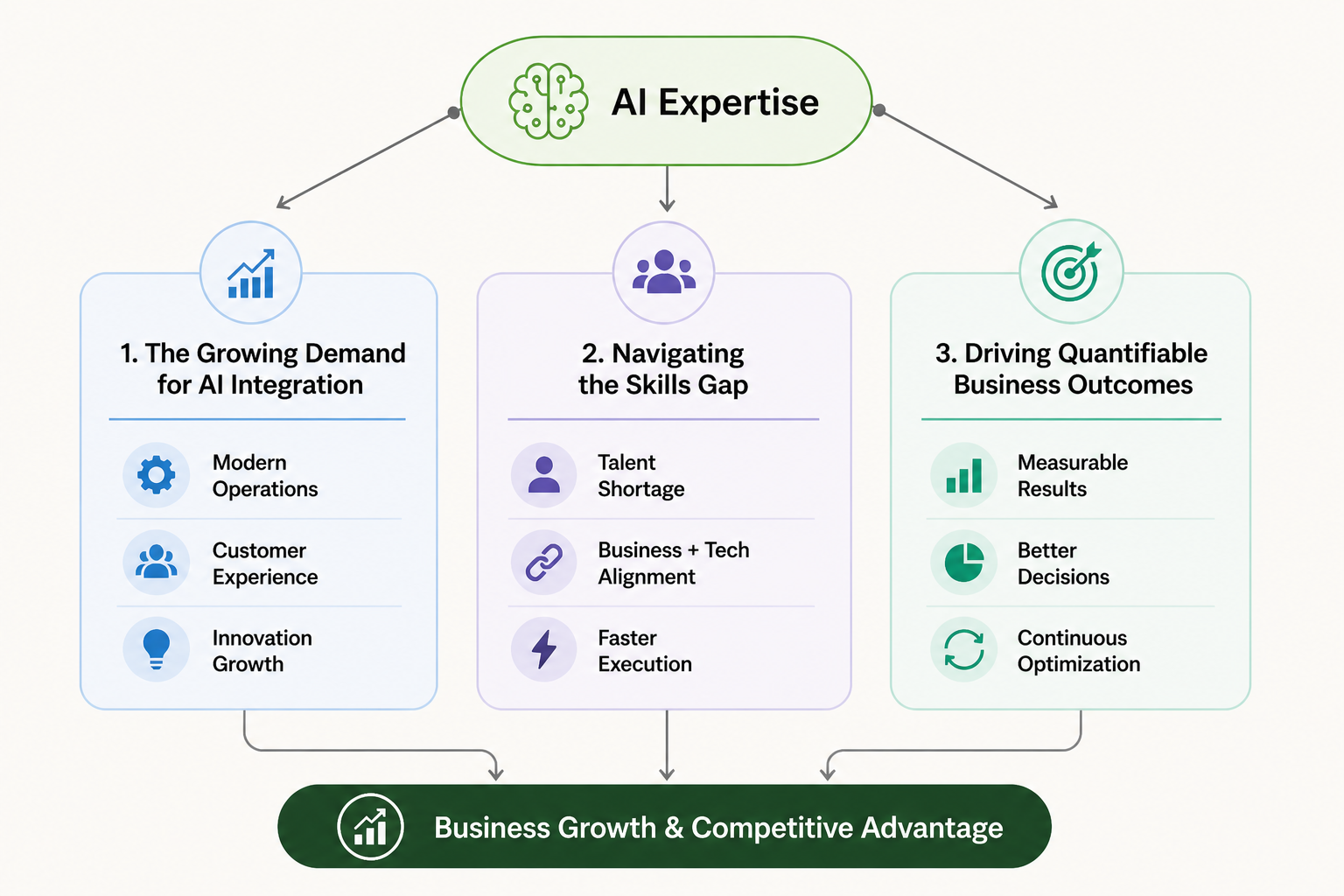
AI expertise is no longer optional; it’s essential for businesses aiming to stay competitive. However, transforming AI potential into measurable results remains a key challenge for many organizations. The following key factors highlight why this expertise is critical for successful AI adoption.
The Growing Demand for AI Integration:
AI isn’t just a trend for tech companies anymore it’s becoming the backbone of modern business. Whether it’s transforming customer experiences or streamlining operations, its impact is everywhere. Yet, as innovation accelerates, many organizations find themselves asking: are we truly keeping up, or already falling behind?
Navigating the Skills Gap:
AI adoption often doesn’t fail for lack of interest; it stalls due to a shortage of the right talent. Finding professionals who can connect business goals with technical execution remains a major challenge. This is where specialized expertise makes the difference, helping organizations move faster without the delays of hiring and training from scratch.
Driving Quantifiable Business Outcomes:
AI expertise goes beyond implementation, bringing clarity and accountability to initiatives, including AI agent development for smarter automation and decision-making. By focusing on high-value opportunities and clear goals, businesses can turn AI into a measurable driver of growth.
Approach to Selecting the Right AI Consultant
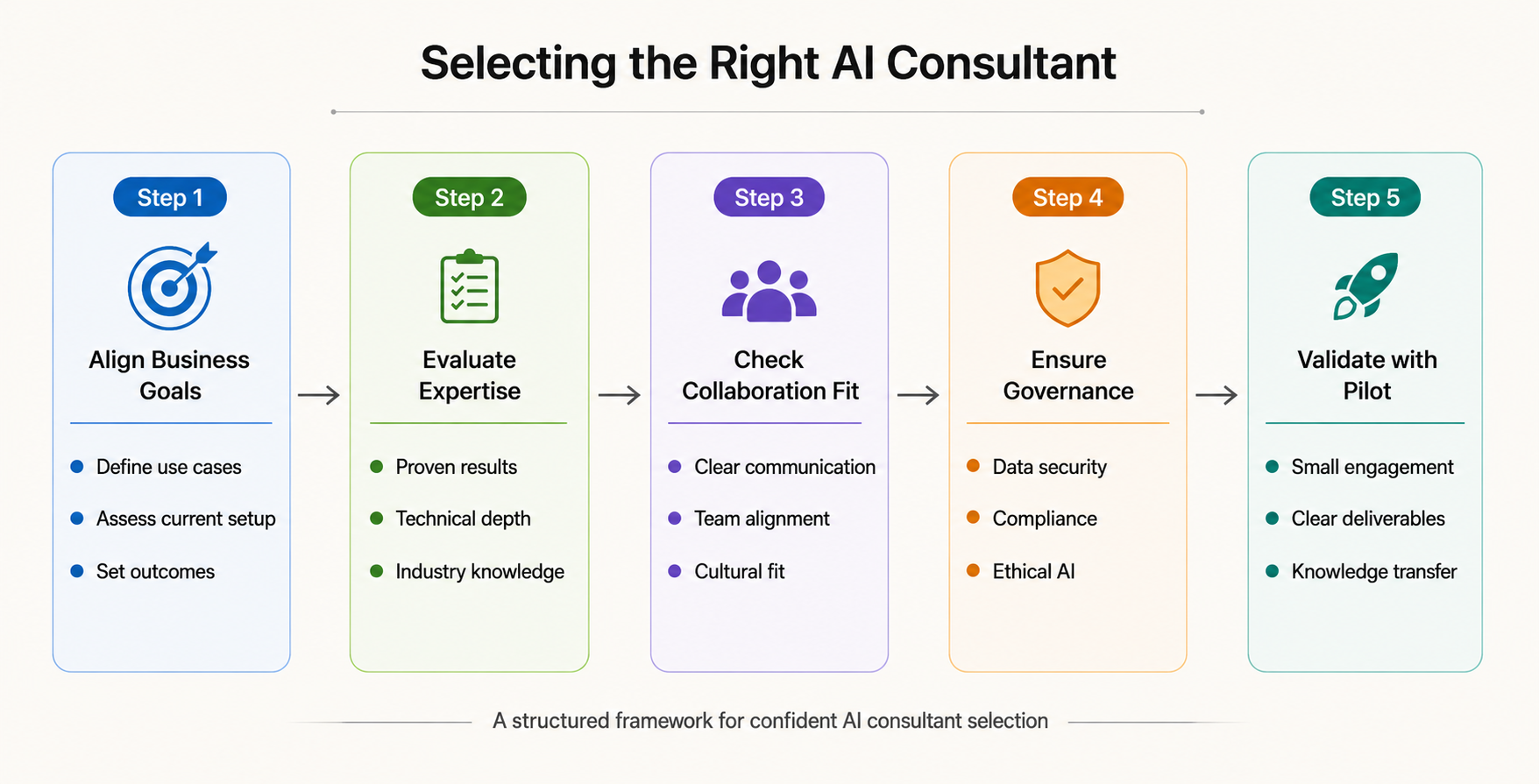
1. Align AI Efforts with Business Objectives
Before engaging with any consultant, it’s important to have a clear understanding of what you want AI to achieve. A focused direction ensures that every decision is tied to business value rather than experimentation.
Define Main Use Cases
Identify exactly where AI can support your business, whether through faster workflows or smarter insights, so you can effectively evaluate potential partners based on those needs.
Review Your Existing Setup
Take stock of your existing tools and team capabilities to figure out where external help will speed up your progress.
Align on Outcomes and Timelines
Set realistic timelines, budgets, and success criteria early. This creates alignment and helps avoid unnecessary complexity later.
2. Determine Background and Sector Suitability
Selecting the right partner requires more than reviewing capabilities; it demands a deeper understanding of their experience and relevance to your business context.
Look at Verified Outcomes
Examine case studies, client references, and past implementations. A strong track record, particularly within your industry, indicates the ability to deliver tailored and effective solutions.
Assess Technical Capabilities
Ensure the consultant is proficient in modern AI technologies, tools, and frameworks. Depth in emerging areas, such as generative AI, can be a strong differentiator.
Consider Industry Understanding
AI solutions are highly context-driven. Partners with domain expertise are better positioned to identify high-impact use cases and align solutions with business goals.
3. Check Communication and Collaboration Compatibility
Successful AI initiatives rely on seamless collaboration between internal teams and external partners.
Evaluate Communication Clarity
Clear and structured communication is critical. The ability to explain complex concepts practically ensures alignment across stakeholders.Ensure Organizational Fit
The right consultant should integrate smoothly into your workflows and culture. Alignment in working style and vision fosters stronger collaboration and long-term success.
4. Ensure Strong Data Governance and Ethical Standards
Validate Data Security Practices
Confirm that the consultant follows robust data protection measures and complies with relevant regulations.Assess Commitment to Ethical AI
Responsible AI practices are key to sustainable adoption. A strong partner will prioritize transparency, fairness, and governance throughout the lifecycle of AI solutions.
5. Validate Through Focused Engagements
Before committing to large-scale initiatives, organizations should assess capabilities through smaller, controlled engagements.
Start with a Defined Scope
Begin with a pilot or limited engagement to evaluate execution quality and alignment.Ensure Clear Deliverables
Well-defined scopes and expectations help prevent ambiguity and keep projects on track.Focus on Knowledge Transfer
Effective consultants enable internal teams by sharing knowledge and building long-term capabilities, ensuring continued success beyond the engagement.
Critical Mistakes to Watch Out For
Even with the right intentions, many organizations struggle with AI adoption due to avoidable missteps. Recognizing these early can save time, cost, and effort while ensuring better outcomes.
1. Ensuring AI Aligns with Business Goals
A common mistake is starting with tools rather than problems. AI should solve real business challenges, not just be implemented for the sake of innovation. Without clear objectives, even the most advanced solutions can fail to deliver impact.
2. Overlooking Data Readiness
AI is only as effective as the data behind it. Many organizations underestimate the importance of clean, structured, and accessible data. Ignoring this foundation often leads to delays, poor results, or failed implementations.
3. Choosing Partners Without Proven Experience
Selecting a consultant based solely on cost or promises can lead to poor outcomes. Without a strong track record and relevant experience, projects may lack direction and scalability.
4. Expecting Immediate Results
AI adoption is a journey, not a quick fix. Unrealistic expectations around timelines and outcomes can lead to frustration and misaligned decisions. Sustainable success requires a phased and strategic approach.
5. Failing to Manage the Transition
Technology needs people to work. Without a human-centric automation solution, AI initiatives often fail at the starting line due to poor adoption and resistance to change.
6. Underestimating Long-Term Commitment
To get the full value from AI, you must continuously manage and scale it instead of viewing it as a one-time setup.
Conclusion: Shaping a Future-Ready AI Strategy
Choosing the right AI consultant is a strategic step toward turning AI into real business value. With the right approach, organizations can move beyond experimentation and scale solutions through AI agent development, enabling smarter automation and measurable outcomes.
As AI evolves, success depends on how effectively you scale it. Ready to move from ideas to execution? Concret.io can help you design and deploy AI solutions tailored to your business.
Frequently Asked Questions
-
An AI consultant helps businesses identify opportunities for AI, develop strategies, and implement solutions that improve efficiency, decision-making, and overall performance.
-
Costs vary depending on project scope, expertise, and engagement model. It can range from hourly consulting to full-scale enterprise projects.
-
Timelines depend on complexity, but most projects start with a pilot phase before scaling into long-term implementation.
-
No, businesses of all sizes can benefit. However, the scope and scale of implementation may vary based on resources and goals.
-
AI agent development involves creating intelligent systems that can automate tasks, make decisions, and optimize workflows with minimal human intervention.
Related Reading
Let’s Talk

Drop us a note, we’re happy to take the conversation forward 👇🏻