
How AgentExchange Changes Salesforce ISV Strategy
Key takeaways:
ISVs must now build Agentforce-native components that AI agents can invoke directly.
Semantic search inside Agentforce Builder replaces static storefront browsing.
ISVs now compete directly with Salesforce's own native Agentforce actions.
Usage-based pricing and a go-to-market app with unified billing and faster payouts are reshaping how ISVs price and sell.
Salesforce has spent nearly two decades building AppExchange into the backbone of its partner ecosystem. With the rise of agentic AI, that model is being rewritten. At TDX 2025, Salesforce launched AgentExchange, a new marketplace built specifically for Agentforce, its AI agent platform. For independent software vendors (ISVs), this is not a minor product update. It is a shift in how software gets built, distributed, and monetized inside the Salesforce ecosystem.
If your business has been built around traditional Salesforce apps, AgentExchange changes the ISV development strategy you’ve been following. Here is what it is, why you need a strategic rethink, and what ISVs need to do differently to stay competitive.
What Is Salesforce AgentExchange?
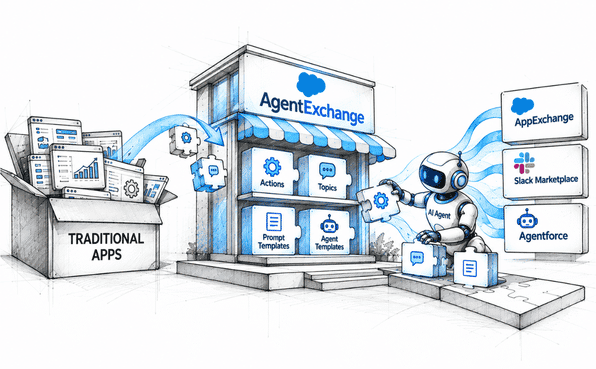
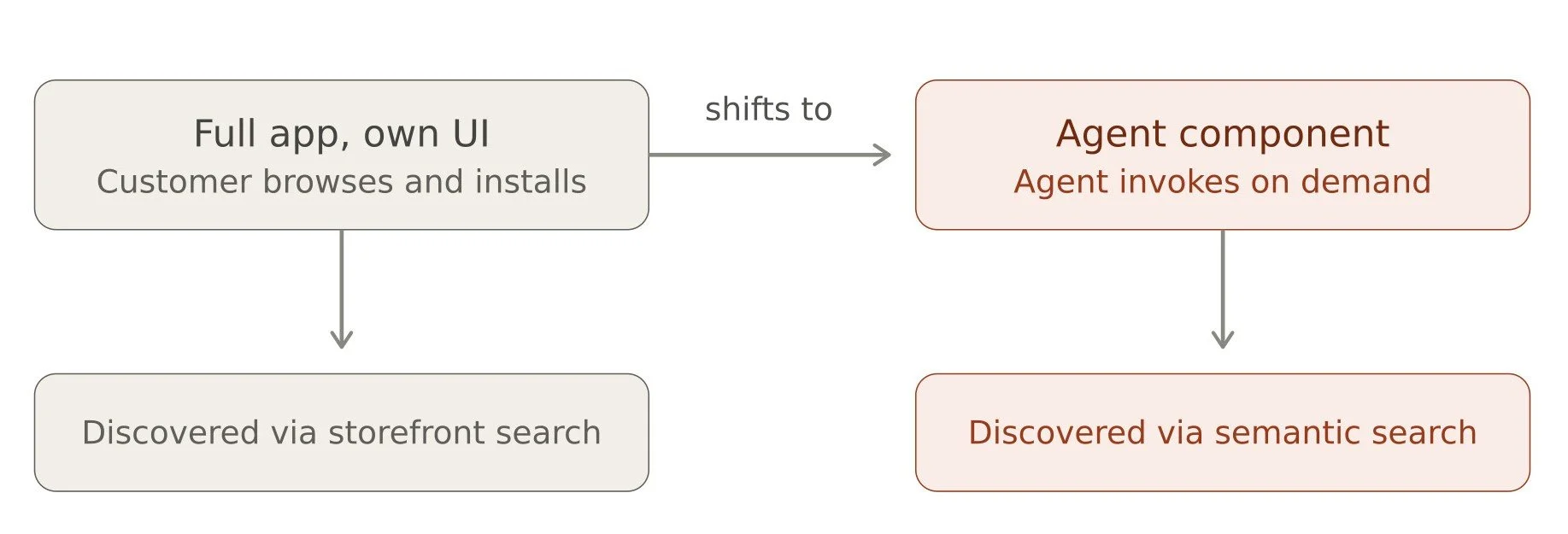
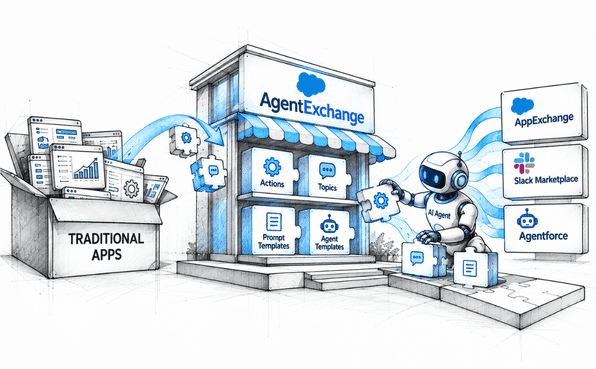
AgentExchange is Salesforce's agent-era counterpart to AppExchange. Where AppExchange lets customers browse and install full applications, AgentExchange is built around a different unit of value: agent components. Instead of shipping a complete app with its own user interface, ISVs now package their expertise into pieces that an AI agent can call on demand, such as actions, topics, prompt templates, and agent templates.
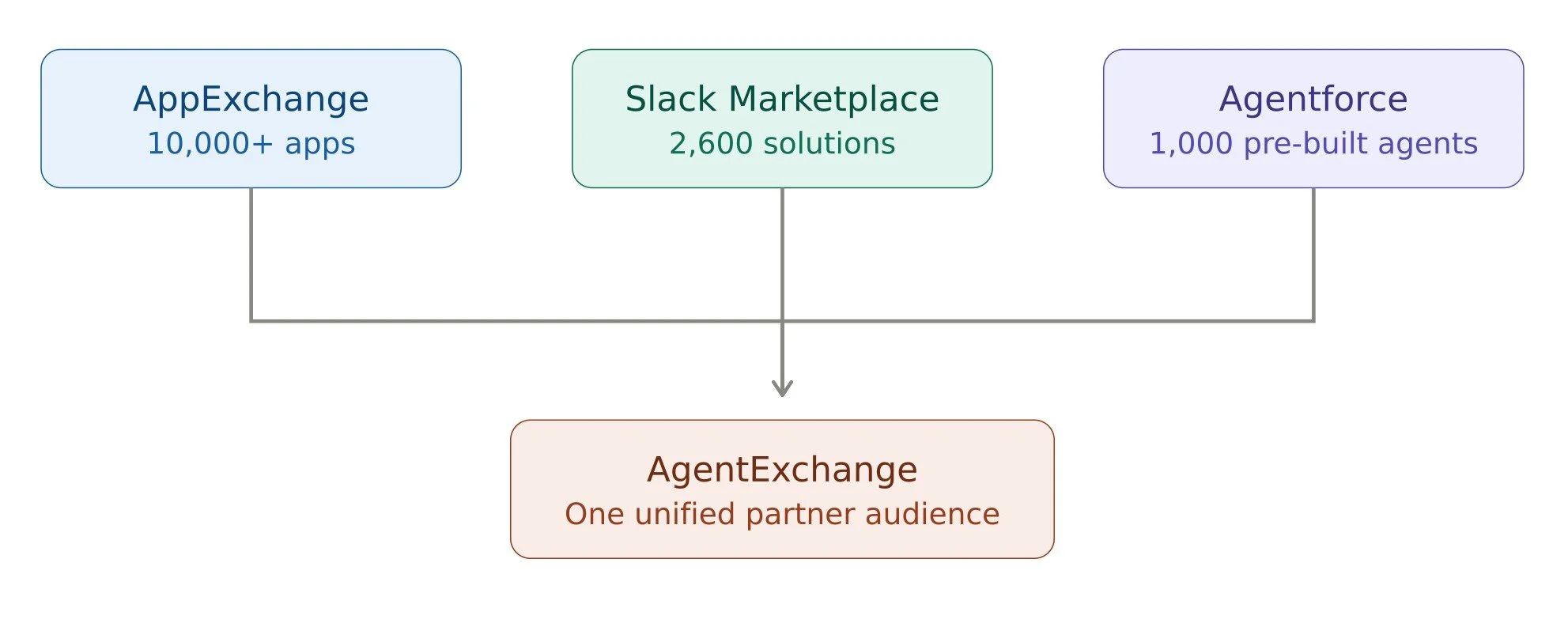
This reflects a broader consolidation happening across Salesforce's ecosystem. AppExchange, Slack Marketplace, and Agentforce are converging into a single environment, bringing together:
More than 10,000 apps
Around 2,600 Slack solutions
Roughly 1,000 pre-built agents
For ISVs, that means your potential audience is no longer confined to whichever marketplace you originally built for. A component built for Agentforce can now be discovered by customers who first came in through Slack or through a traditional AppExchange search.
Why AgentExchange Forces a New ISV Strategy
The core shift is this: ISVs are moving from being a destination customers visit to being an ingredient that an agent uses along the way. In the old model, a customer browsed AppExchange, read reviews, and installed a full application with its own dashboard and workflows. In the new model, a customer's AI agent pulls in exactly the capability it needs, in the moment it needs it, without a human necessarily ever seeing a storefront listing.
A New Discovery Model
Discovery is no longer limited to a static web page you optimize for search. Components now surface contextually, through semantic search inside AgentExchange and directly within Agentforce Builder as admins configure their agents. That means the way you describe and structure your component matters as much as what it actually does. A capability with a vague or generic description simply will not surface at the right moment, no matter how well it performs once invoked.
A More Crowded Competitive Field
ISVs are no longer just competing with other third-party vendors. They are competing with Salesforce's own native Agentforce actions, which are built directly into the platform. To stand out, ISVs now require clearer differentiation and deeper specialization than a traditional app listing ever demanded.
New Product Requirements for Agent-Ready ISVs
Meeting these new expectations requires real changes to how ISVs build software.
Building Agentforce-Native Components
Rather than relying solely on traditional managed packages, ISVs now need to build Agentforce-native elements, either alongside or instead of a conventional app, including:
Actions
Topics
Prompt templates
Agent templates
Designing for Autonomous Invocation
An agent does not click through a UI. It calls a capability with a specific input and expects a specific, reliable output. That puts a premium on:
Clear contracts between components
Strong guardrails around what a component can and cannot do
Predictable, well-tested behavior, since there is no human in the loop to catch an error before it causes a downstream problem
Adopting Open Connectivity Standards
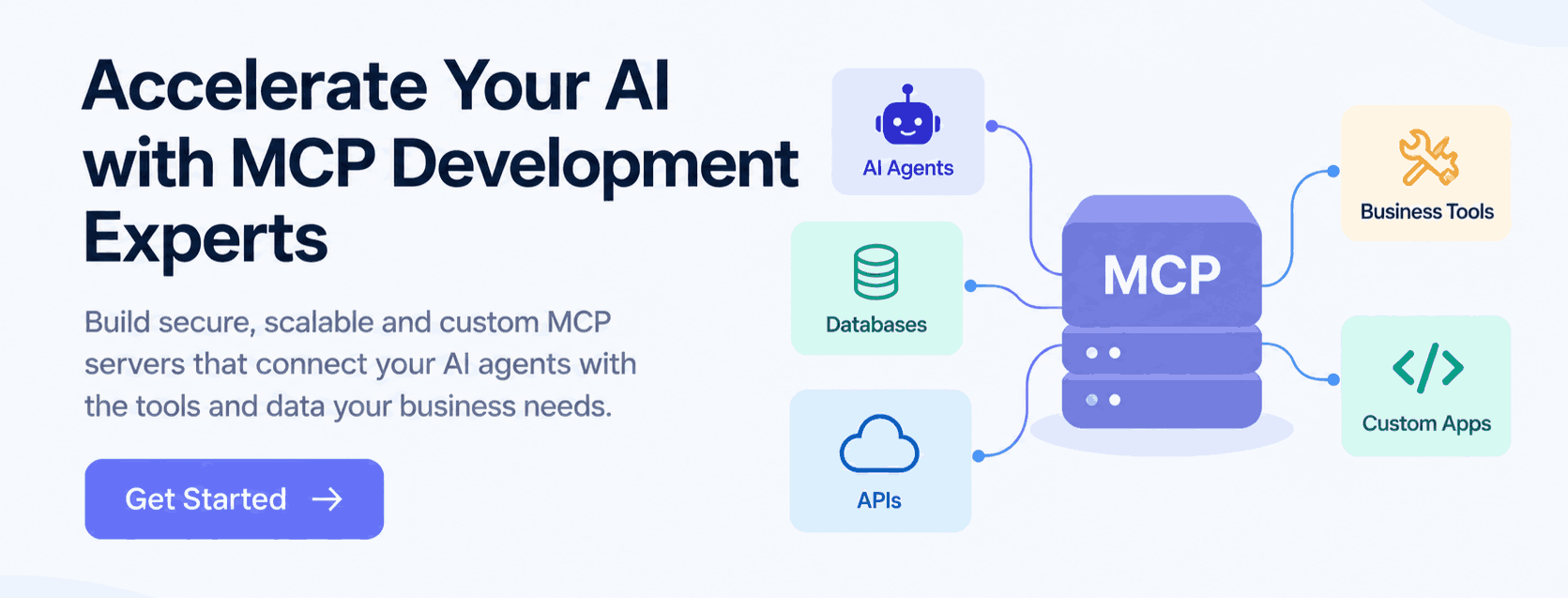
Development is moving toward open protocols like the Model Context Protocol (MCP) and Agent-to-Agent (A2A) communication, rather than the siloed, custom APIs that ISVs have historically built to connect their products to Salesforce. Standardizing on protocols like MCP makes it easier for your components to work with agents beyond Salesforce as well, which widens your addressable market over time instead of locking you into one platform's proprietary integration layer.
Meeting Higher Security Standards
Because AI agents act with more autonomy than a traditional app interface, components need to clear a more rigorous review bar before they are trusted to run unsupervised inside a customer's environment.
Go-to-Market and Partner Program Changes
The path to publishing has changed too. Building on Agentforce technology through the Partner Community, signing the right commercial agreement, and passing a security review are still required. However, the process now ends with an AgentExchange listing rather than a traditional AppExchange one.
Salesforce has also streamlined the commercial side of this transition. A new AgentExchange Go-To-Market App is designed to handle:
Unified billing
Private offers
Automated provisioning
Faster payouts
This is backed by a $50 million investment initiative aimed at accelerating partner success under this model. For ISVs, this reduces a lot of the operational friction that used to come with managing sales and payouts across multiple Salesforce channels, freeing up time to focus on building better agent components instead of chasing invoices.
Existing partner benefits across technical, sales and alliances, and marketing categories still apply, but ISVs need to reassess which tier and licensing structure actually fit a component-based business, since it may look quite different from a licensing model built around a full application.
Rethinking the ISV Business Model
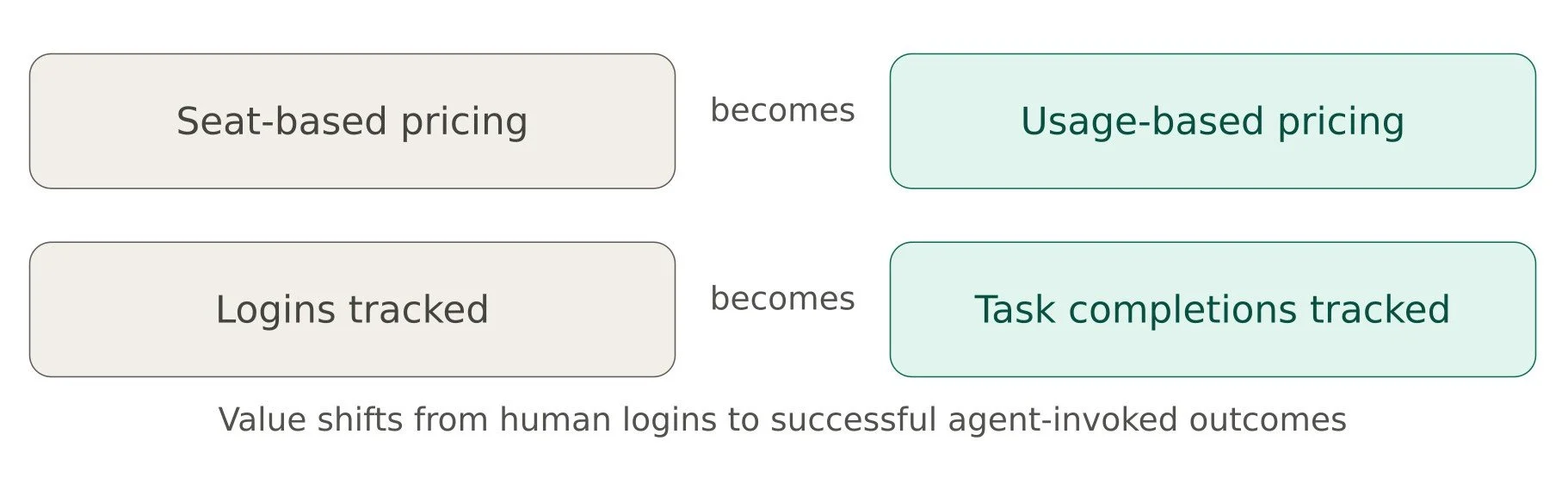
Agent-native distribution invites a different pricing logic. Usage-based or consumption-based pricing tends to map more naturally onto agent-invoked capabilities than traditional seat-based licensing, since an agent might call a component dozens of times a day without any human ever logging into a dashboard.
The value metric shifts as well. Instead of tracking logins or active users, ISVs increasingly need to measure something closer to successful task completions, since that is the outcome a customer's agent, and by extension the customer, actually cares about. This requires new analytics and reporting that many ISVs have not needed to build before.
There is also a real risk of disintermediation. If Salesforce's native Agentforce capabilities cover the simpler, more common use cases, ISVs may find themselves pushed toward more specialized functionality in order to remain differentiated and worth paying for.
Strategic Recommendations for ISVs Moving to AgentExchange
ISVs looking to adapt should focus on a few concrete priorities:
Audit your product. Identify which features can reasonably be decomposed into agent-ready actions or topics. Not everything needs to become a component, but the parts of your product that solve one clear, well-scoped problem are strong candidates.
Optimize for semantic search. Invest in how your components are described and tagged, since that is now a primary discovery channel inside AgentExchange and Agentforce Builder.
Build in observability. Add monitoring to every component, since there is no human watching over each invocation the way there was with a traditional UI.
Update your messaging. Reframe your sales and marketing narrative around being "agent-ready" rather than simply being a good standalone app.
Track the platform roadmap. Keep a close eye on Salesforce's ongoing changes to development tooling and hosting options, since these will keep shifting what is technically required to stay competitive.
Build the right team. Because this transition spans two distinct skill sets, many ISVs are choosing to hire AppExchange developers with deep experience in the existing Salesforce platform, and pair them with AgentExchange developers who understand Agentforce's architecture, prompt design, and agent orchestration.
Open Questions and Risks to Watch
Several questions remain unsettled as AgentExchange matures:
How will Salesforce arbitrate situations where its own native Agentforce features overlap directly with an ISV's offering?
What will long-term pricing and revenue-share models for agent components look like compared with traditional apps?
Who is responsible when autonomous agents chain together components from multiple ISVs and something goes wrong?
The Bottom Line
AgentExchange is not simply a rebrand of AppExchange for the AI era. It reflects a genuine shift in how Salesforce ISVs need to build, distribute, and price their products, from componentizing IP into agent-ready pieces, to optimizing for semantic and in-flow discovery, to adopting open standards like MCP and A2A.
ISVs that move early with AgentExchange developers and with the right expertise will be best positioned as Salesforce's ecosystem moves deeper into the agentic AI era. Those that wait risk being left behind as customers increasingly expect software to show up not as an app they open, but as a capability their agents simply use.
Frequently Asked Questions
-
Not entirely. AppExchange, Slack Marketplace, and Agentforce have been unified into one ecosystem, so AgentExchange sits alongside AppExchange rather than eliminating it, while extending distribution to agent-native components.
-
Agent components are the modular building blocks an AI agent can invoke on demand, including actions, topics, prompt templates, and agent templates, rather than a full app with its own interface.
-
An ISV (Independent Software Vendor) partner is a software company that builds and sells software solutions, apps, integrations, or now agent components on the Salesforce platform, typically distributed via AgentExchange.
-
ISV strategy for the Summer '26 release focuses on building for speed and scale through tools like Agentforce Vibes 2.0, Salesforce Multi-Framework (a universal runtime for React, MCP UI, and A2UI so ISVs can plug in existing UI without custom hosting), and Headless 360 for platform evolution. It also pushes ISVs toward the Slack frontier, using a Salesforce-hosted MCP server to expose Apex tools directly to Slackbot without writing Slack-specific code.
-
Spring '26 is built around three pillars: developer velocity, deterministic trust, and new revenue paths. ISV strategy for the Salesforce Spring release focuses on key tools, including the DX Model Context Protocol (MCP) Server, Agent Scanner (detecting and cataloging "Shadow AI" agents across an org for security compliance), and Agentforce Script (a pro-code language for enforcing consistent, deterministic agent behavior).
-
ISVs build on Agentforce through the Partner Community, sign the appropriate commercial agreement, pass a security review, and then publish their listing through the AgentExchange Listing Builder in the Partner Console.
Related Readings
Let’s Talk

Drop us a note, we’re happy to take the conversation forward 👇🏻