How to Reduce SLA Breaches with ChatBridge Auto Translator
Key Takeaways:
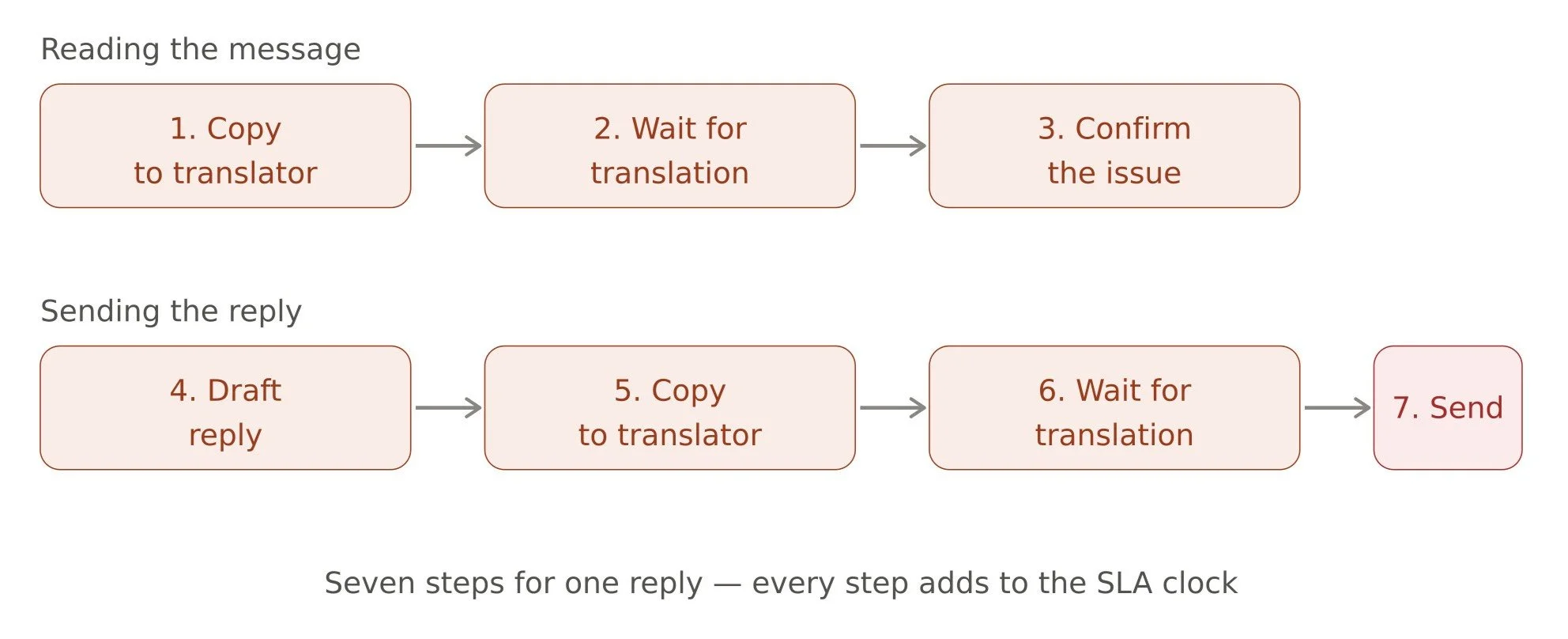
Manual translation adds multiple steps per reply, and every step adds to the SLA clock, making multilingual tickets far more likely to breach.
ChatBridge translates chats in real time inside Salesforce, so response times for foreign-language tickets match your team's native-language speed.
Consistent translation across 130+ languages means fewer misunderstandings, fewer reopened tickets, and more predictable SLA compliance overall.
Every support team has that one metric everyone quietly fears checking on a bad week: SLA compliance. It's the number that tells you whether you're keeping the promises you made to your customers about response and resolution times. When any of those numbers slip past the line, it's a breach, regardless of why.
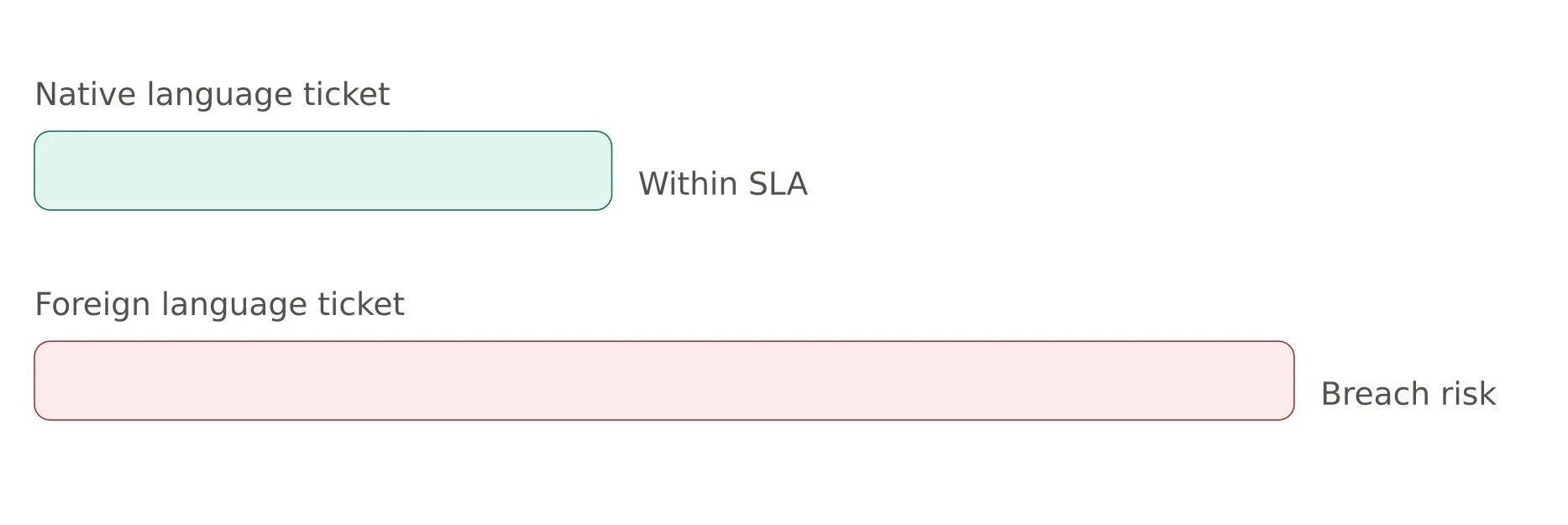
For businesses running global support on Salesforce, one of the most common and least discussed reasons behind that slip is language. A ticket in your team's primary language moves fast. A ticket in a language your agents don't speak moves slower because of the extra steps it takes to translate it manually.
Let's talk about how SLA breaches in customer support actually happen, why multilingual tickets are often the hidden cause, and how a translation tool like ChatBridge helps close that gap.
The Real Cost of an SLA Breach
An SLA breach sounds like a small technical miss on paper. In reality, it's rarely just one thing going wrong. It's usually a chain of small delays that add up until a ticket crosses the line it was never supposed to cross.
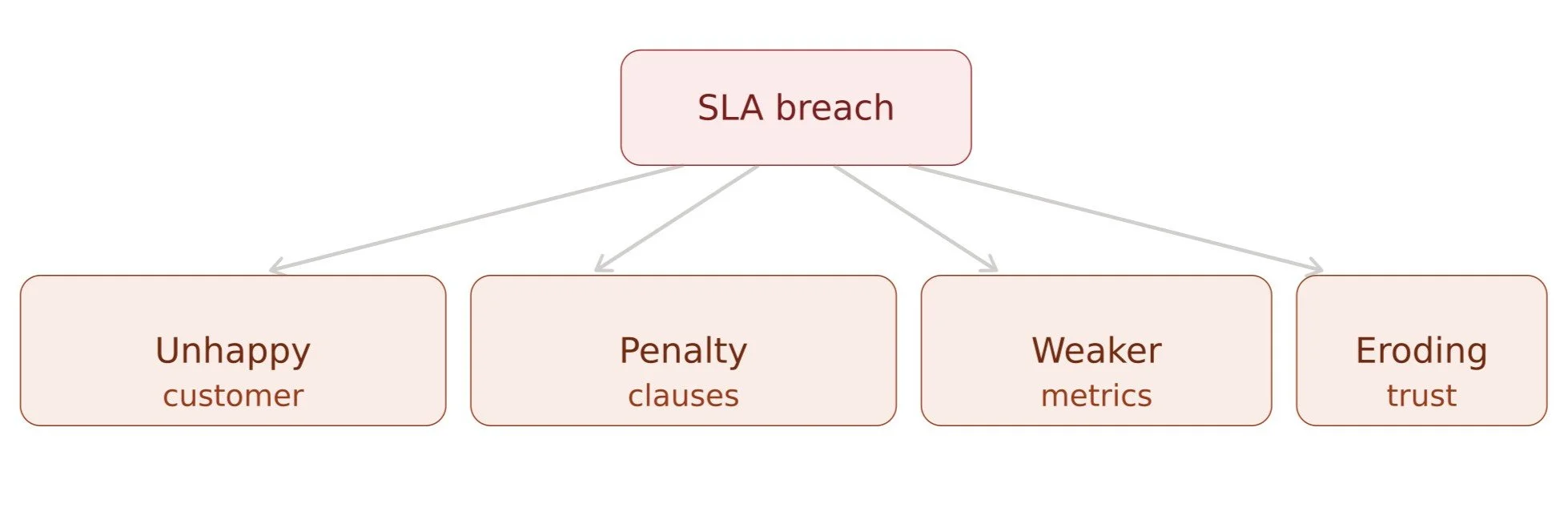
Every breach carries a cost, and not all of it shows up immediately:
An unhappy customer who feels like their issue wasn't a priority.
Possible penalty clauses, especially with enterprise contracts that tie SLAs to compensation.
Weaker metrics that make the next quarterly review harder to explain.
Eroding customer trust, since repeated breaches signal a business can't keep its word consistently.
Once breaches start clustering around certain regions or language groups, it stops looking like bad luck and starts looking like a systemic issue. That's usually the moment support leaders start digging into why breaches are happening, and language barriers show up far more often than people expect.
This is why multilingual customer support is so directly tied to SLA performance. It's not a soft, nice-to-have improvement. It's often the actual mechanical reason certain tickets consistently breach while others don't.
What the Manual Translation Bottleneck Actually Looks Like
Let's walk through what this looks like on an actual support ticket, because it's easy to underestimate until you see it laid out step by step.
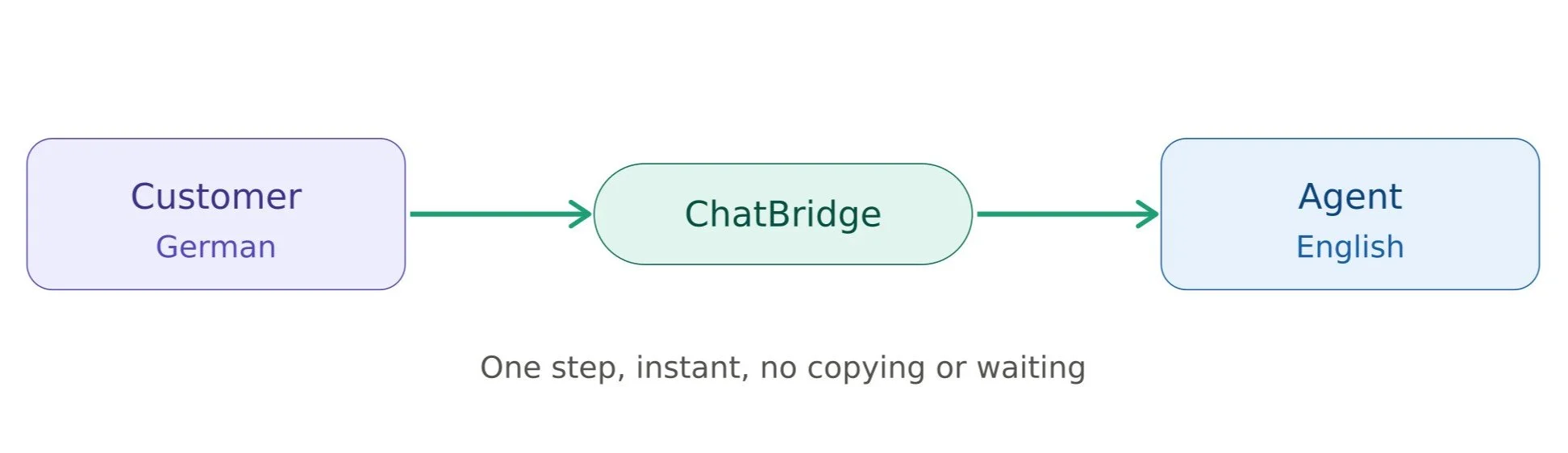
A ticket comes in from a customer writing in German.
The assigned agent doesn't speak German.
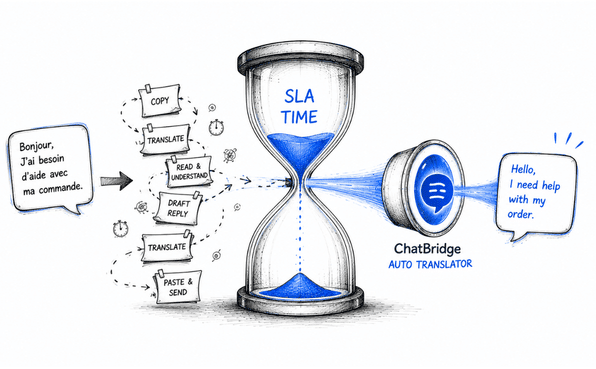
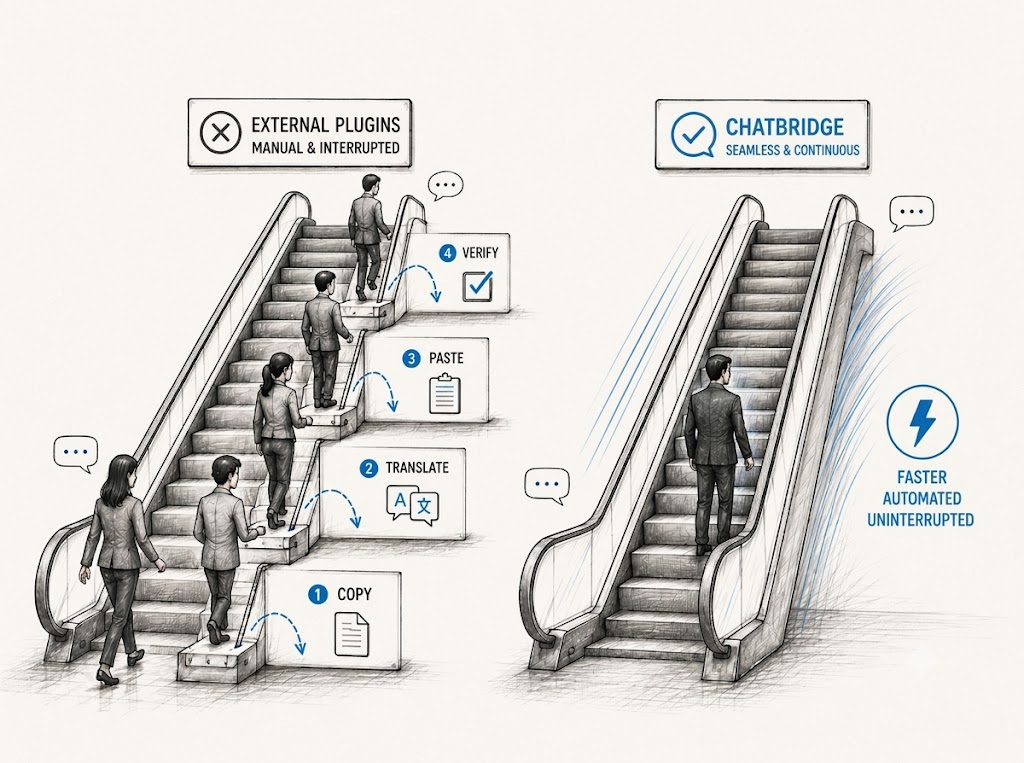
They copy the message into a separate translation tool, wait for the result, read it, and try to make sense of the customer's issue.
They draft a reply in English, copy it into the translation tool again, wait for that translation, and paste it back into the case.
That's five or six manual steps for a single reply, and most conversations involve several back-and-forth messages before resolution.
Multiply that across every non-English ticket your team receives in a day, and it becomes obvious why international tickets tend to take noticeably longer to resolve. It’s not a lack of effort. It’s friction built into the process itself.
This friction is exactly what pushes tickets past their Service level agreement (SLA) deadlines. And because it happens quietly, ticket by ticket, it often doesn't get flagged as a systemic issue until someone reviews SLA compliance reports and notices a clear pattern by region or language.
How ChatBridge Removes the Friction Behind SLA Breaches
This is where a dedicated Salesforce chat translator changes the math entirely.
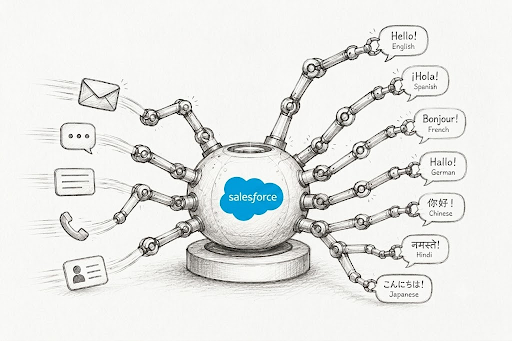
ChatBridge works as a Salesforce chat translation app built directly into Service Cloud, so translation happens inside the live conversation instead of as a separate manual task. Here's what changes:
A customer sends a message in their language. The agent sees it translated instantly, right inside the chat window they're already using.
The agent replies normally, in their own language.
The reply gets translated back to the customer in real time.
There's no separate tool to open, no copying text back and forth, and no waiting for a translation to load before the conversation can continue. The entire multi-step workaround that used to eat into response time simply isn't part of the process anymore.
This is what real Salesforce chat translation should look like: invisible to the customer, effortless for the agent, and fast enough that international tickets move at the same pace as tickets in your team's primary language.
The Direct Line Between Faster Translation and Better SLA Compliance
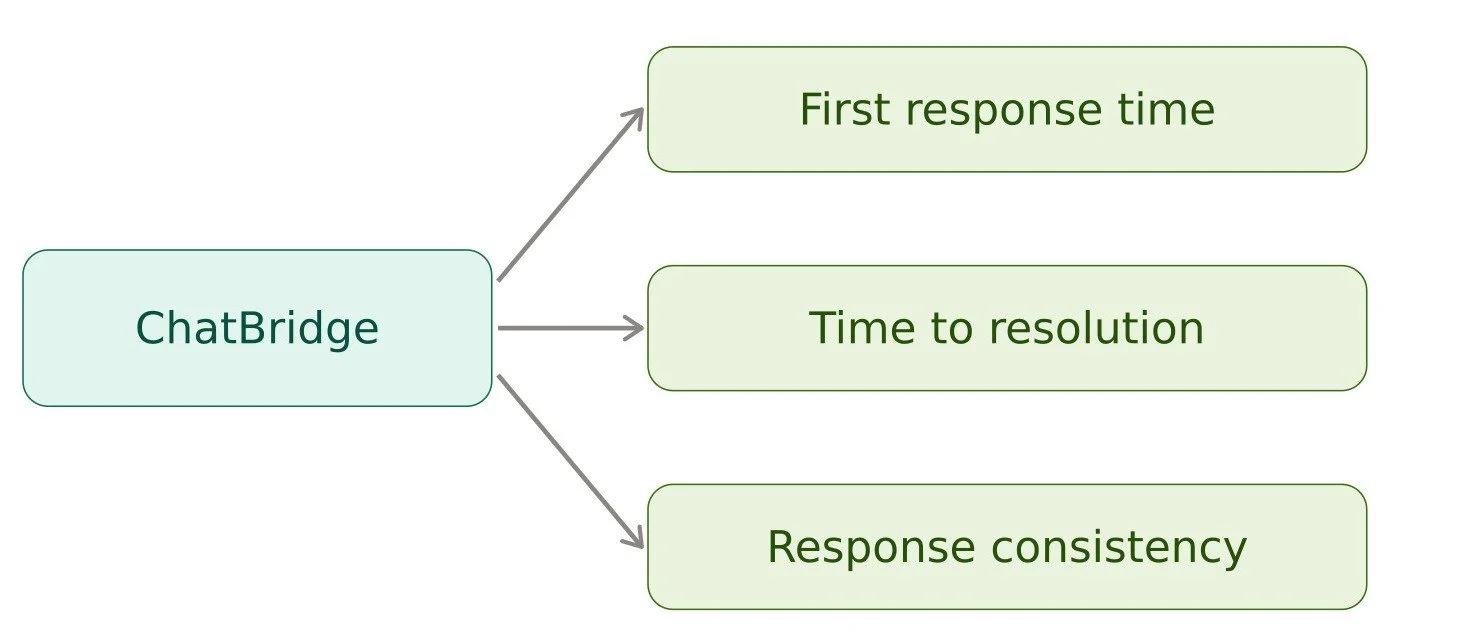
SLA compliance is fundamentally about time:
First response time.
Time to resolution.
Time between updates on an open case.
Every manual translation step adds time to each of those measurements. Remove the manual steps, and you remove a meaningful chunk of the delay that was pushing tickets toward a breach in the first place.
With ChatBridge handling translation in real time, agents spend their time actually solving the customer's problem instead of managing the mechanics of understanding what the customer said. First response times on multilingual tickets start looking a lot more like first response times on tickets in your team's native language. That consistency is exactly what strong SLA compliance depends on.
Fewer Errors Mean Fewer Reopened Tickets
There's a secondary SLA risk that doesn't get talked about as much, i.e., reopened tickets and follow-up escalations caused by miscommunication.
When translation happens manually, nuance often gets lost:
A customer's urgency might not come through clearly.
A technical detail might get slightly difficult to understand.
An agent might misunderstand the actual issue and send a reply that doesn't fully address it.
Any one of these can cause the customer to respond again, confused or frustrated, and the ticket clock keeps running longer than it should have.
ChatBridge helps reduce this risk by keeping the translation embedded directly in the conversation flow, which tends to preserve context and meaning more reliably than a copy-paste workaround. Fewer misunderstandings mean fewer reopened tickets, which means fewer opportunities for a case to drift past its SLA window on a second or third round of back-and-forth.
Consistency Across 130+ Languages, Not Just the Common Ones
SLA breaches don't just cluster around obscure languages. They often show up in languages your team assumes they've got covered, simply because "good enough" translation tools tend to perform inconsistently depending on the specific language pair.
ChatBridge is built to maintain consistent translation quality across more than 130 languages, which means:
SLA improvements aren't limited to a handful of major languages your business happens to deal with most often.
Whether a ticket comes in from a customer writing in Spanish, Arabic, Vietnamese, or a less commonly supported language, the response process stays just as fast.
Translation quality doesn't quietly drop off outside the usual set of languages.
That consistency matters a lot for SLA reporting specifically. It's much harder to spot and fix a systemic problem if it only shows up occasionally in unpredictable languages. When translation quality and speed stay steady across the board, SLA performance becomes far more predictable too.
What Changes for the Team Day to Day
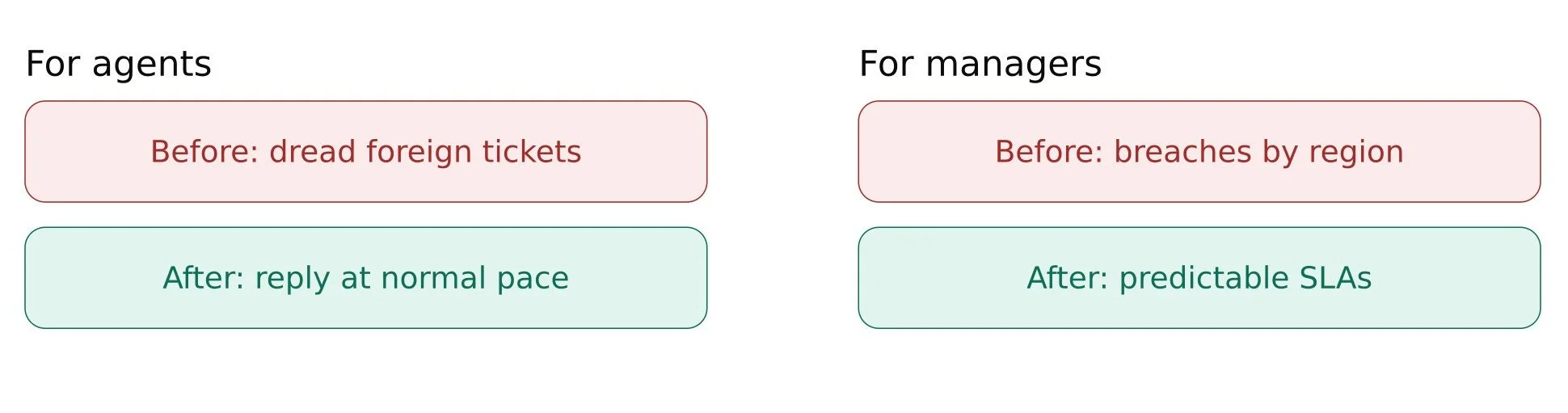
For the agents actually handling tickets, the change is simple to describe:
They stop fearing tickets in unfamiliar languages, since there's no extra workflow attached to them anymore.
They read the message and understand it immediately.
They respond, and the conversation moves at a normal pace, no matter what language it's in.
For support managers watching SLA dashboards, the change shows up differently:
Fewer breaches clustered around specific regions or languages.
A support queue where response times finally reflect the team's actual capability.
Response times no longer dragged down by manual translation delays.
The Bottom Line
SLA breaches rarely happen because a support team isn't trying hard enough. More often, they happen because something in the process is quietly working against the clock, and language barriers are one of the most common, least talked about culprits.
ChatBridge tackles this directly by bringing real-time, native Salesforce chat translation into the workflow your agents already use. Less time spent managing translation workarounds means more time actually resolving issues, which means fewer tickets drifting past their SLA window simply because of the language they happened to arrive in.
If your SLA reports keep showing the same pattern quarter after quarter, it might be worth checking whether language is the actual bottleneck.
Frequently Asked Questions
-
Every manual translation step - copying text, waiting for results, or translating replies - adds time to the response clock. SLAs don't pause for these steps, so multilingual tickets breach far more often than same-language ones.
-
Yes. ChatBridge translates each message in real time as it's sent, so it adapts instantly even if a customer switches languages partway through a conversation, without disrupting the SLA clock.
-
No. Translation happens automatically inside the same Salesforce console agents already use. There's no extra step for English tickets, and non-English tickets move at the same pace.
-
Yes. Translation speed and quality stay consistent across every supported language. So SLA performance doesn't quietly drop for less common languages the way it often does with other tools.
-
No. ChatBridge doesn't change how SLAs are tracked or reported in Salesforce. It simply removes the translation delay that was contributing to breaches, so your existing reporting reflects genuinely faster response times.
Related Readings
Let’s Talk

Drop us a note, we’re happy to take the conversation forward 👇🏻