Salesforce Dreamforce 2026 Main Keynote: Everything You Need to Know (Day 1)
Key Takeaways:
Dreamforce 2026 opened with Salesforce’s vision for the Agentic Enterprise, putting AI agents at the center of how businesses work.
The keynote introduced AIforce and Koa while highlighting major updates across Agentforce, Data 360, Guardian, Agent Fabric, and Customer 360.
Salesforce also previewed what’s coming next, with dedicated keynotes and sessions set to reveal more product updates and rollout details.
What an attention-grabbing keynote that was. Salesforce opened Dreamforce 2026 with a clear vision for the Agentic Enterprise, showing how AI agents, humans, data, and applications are coming together to change the way businesses work.
From AIforce and Koa, Salesforce’s first CRM reasoning model, to new Agentforce capabilities, partnerships, and customer stories, the keynote covered a lot in just a few hours.
But beyond the announcements, one message stood out: Salesforce wants agents to become a natural part of how businesses use their CRM and get work done.
Here’s a breakdown of what Salesforce showcased in today’s Dreamforce 2026 keynote.
AIforce Was the Star of the Show
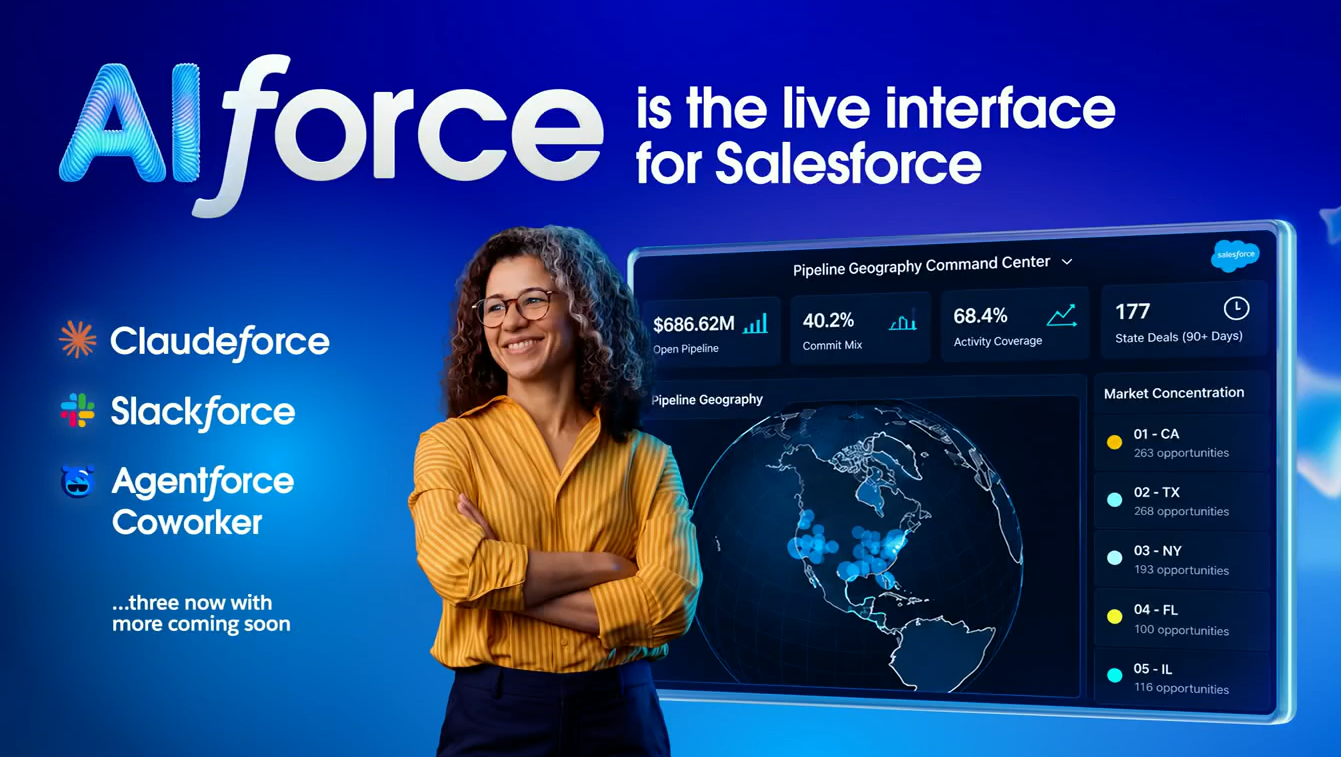
AIforce was one of the biggest highlights of the Dreamforce 2026 keynote. Salesforce introduced it as a new interface layer that brings Salesforce data, workflows, business logic, permissions, security, and governance into the AI interfaces people already use.
The idea is simple. Instead of opening Salesforce, finding the right screen, and clicking through dashboards, users can ask an AI interface for what they need. Whether it is a pipeline update, an account summary, or an action on a customer record, Salesforce wants that interaction to happen conversationally.
But AIforce is more than another chatbot sitting on top of CRM data. Salesforce is positioning it as the interface layer for its Agentic Enterprise, connecting its trusted CRM data and business logic with AI models and agents.
Salesforce also introduced experiences in the AIforce umbrella such as Claudeforce and Slackforce, extending Salesforce capabilities into Claude and Slack.
Why does it matter? Salesforce wants users to access CRM intelligence where they work, instead of always having to work inside Salesforce.
Salesforce Brings CRM Into Claude
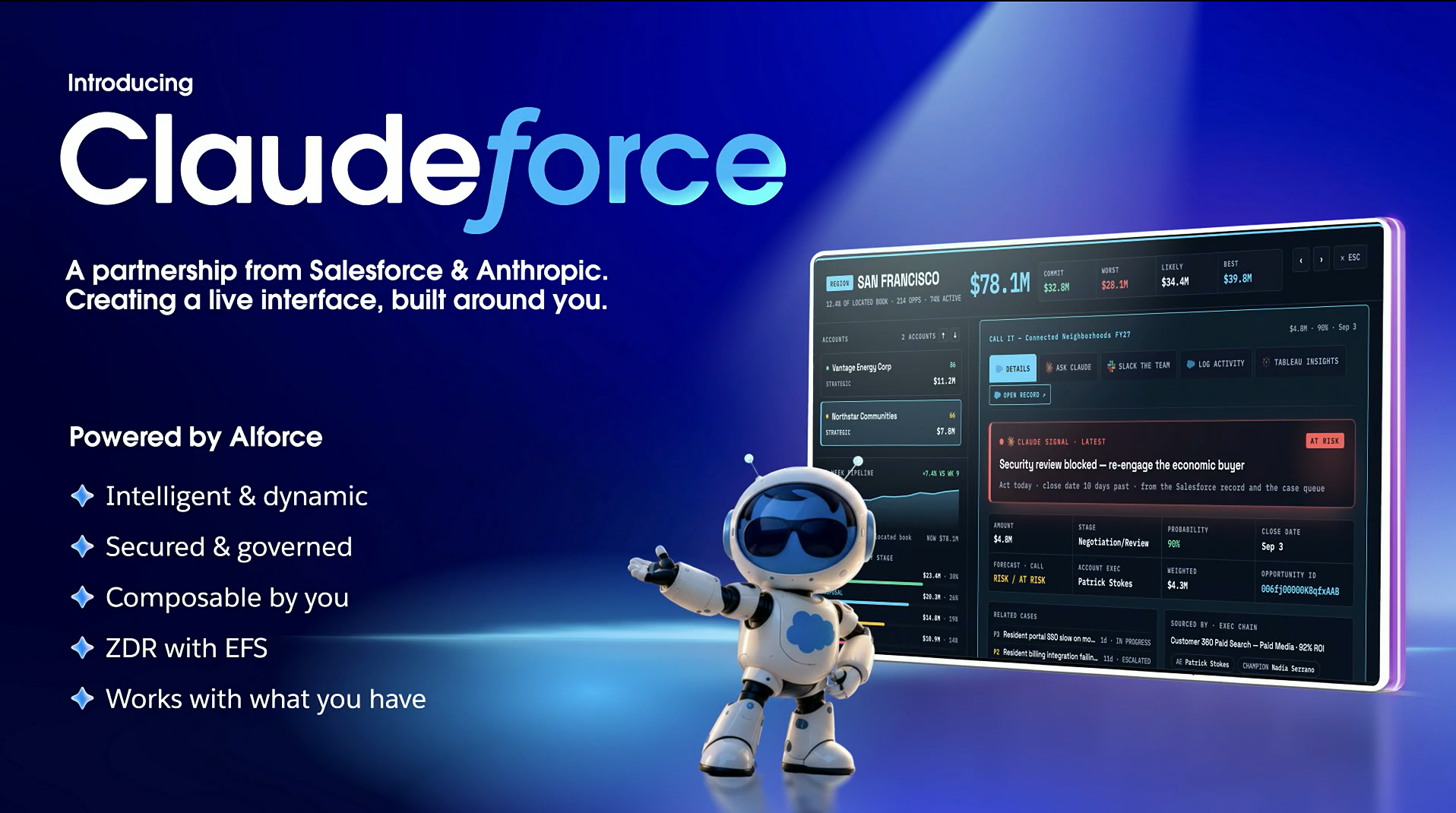
One of the most interesting demos in the keynote happened outside Salesforce itself. Patrick Stokes, President of Applications and Marketing, showed his personal command center running inside Claude Cowork, bringing together pipeline, service cases, and marketing signals through the new Salesforce for Claude plugin, built with Anthropic.
The plugin handles much of the technical setup, including MCP servers, zero-data-retention configuration, and custom skills. Salesforce says teams can get a working interface running in around six to eight minutes, followed by further customization. It is now available in open beta through AppExchange.
The demo highlighted a bigger change in how Salesforce sees the CRM interface. Users do not always need to open Salesforce directly to work with their CRM data. Instead, Salesforce can bring its trusted data, business logic, security, and context into AI interfaces such as Claude.
For Salesforce, the data and trust layer stays at the center, even when the interface changes.
The Same Experience Comes to Slack and Lightning
As we saw earlier, Salesforce brings CRM into Claude, but it doesn’t stop there.
Salesforce is not limiting this new AI experience to Claude. The keynote also showed how the same idea extends to Slack and Salesforce’s own interface.
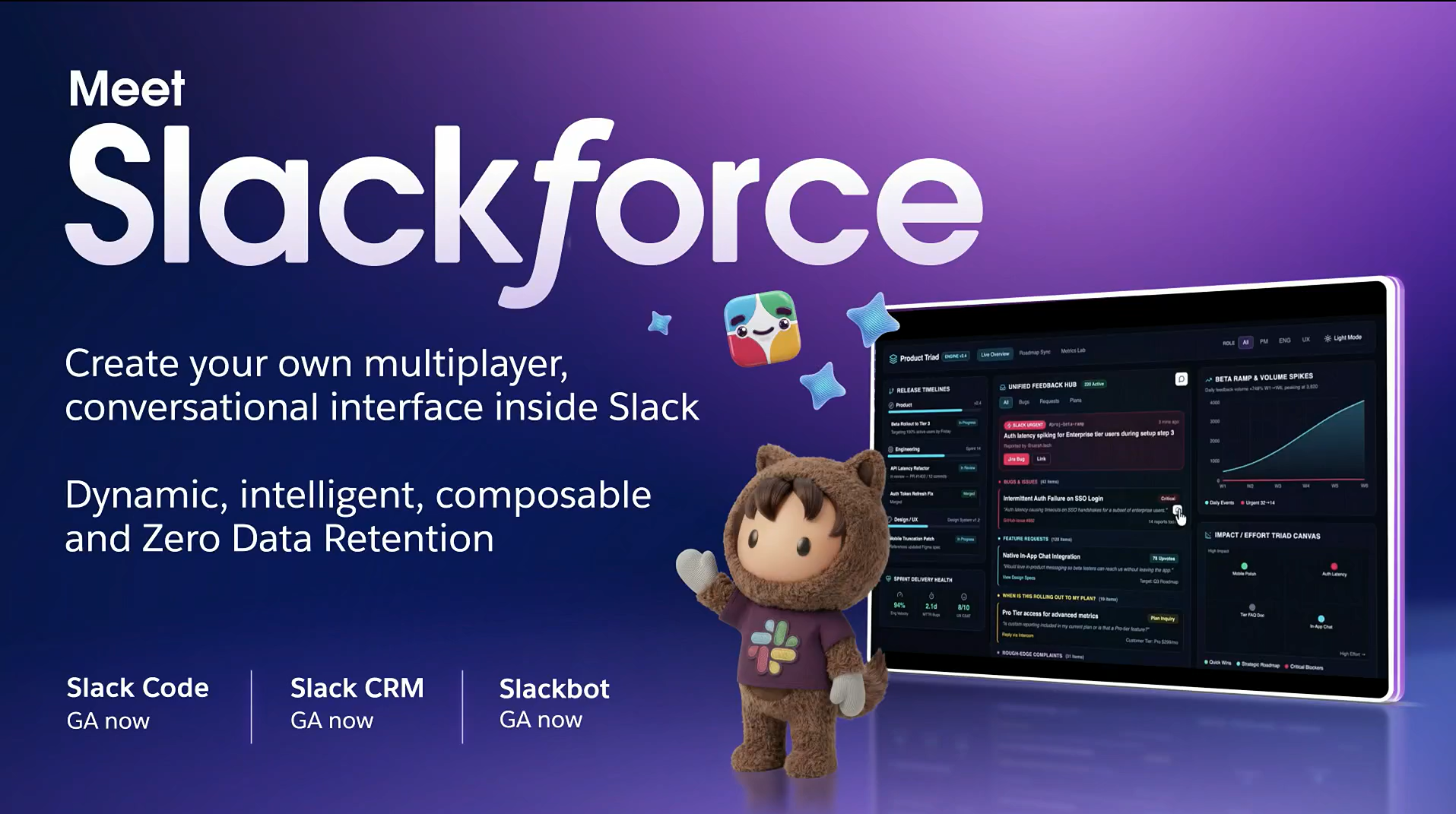
Inside Slack, Slackforce lets users access Salesforce information, get answers, and work with agents without leaving their existing conversations and channels.
For teams that still work primarily inside Salesforce (Lightning Experience), Agentforce Coworker brings a similar experience directly into the Salesforce interface. It gives users access to AI assistance without requiring them to change how they already use the platform.
The approach is simple: instead of asking businesses to change where they work, Salesforce is bringing its AI capabilities to the interfaces they already use.
Whether that means users will eventually see Salesforce less often while still relying on its data and platform remains one of the more interesting ideas coming out of this keynote.
Agentforce Stops Making You Build Everything Yourself
Salesforce is also changing how businesses use Agentforce. When Agentforce launched, the focus was largely on giving teams the tools to build their own agents. At the keynote, Salesforce showed a stronger push toward pre-built agents that are ready to handle specific jobs.
The lineup includes:
Hunter handles outbound sales, with integrations to data from ZoomInfo, Demandbase, and Apollo.
Piper engages website visitors, qualifies leads, and books meetings.
Casey handles customer service conversations at scale.
Paige manages internal IT and HR requests.
Marshall handles operations and can execute tasks directly inside backend systems such as SAP.
Fin brings customer service capabilities into the Agentforce lineup.
Salesforce also backed these agents with real customer examples. Siemens showed Marshall handling supplier onboarding inside SAP, while Piper qualified a live partner lead during the keynote. Adecco showcased Ada, a voice-enabled recruiting agent handling candidate calls.
Salesforce Puts It All Together With AI Force Max
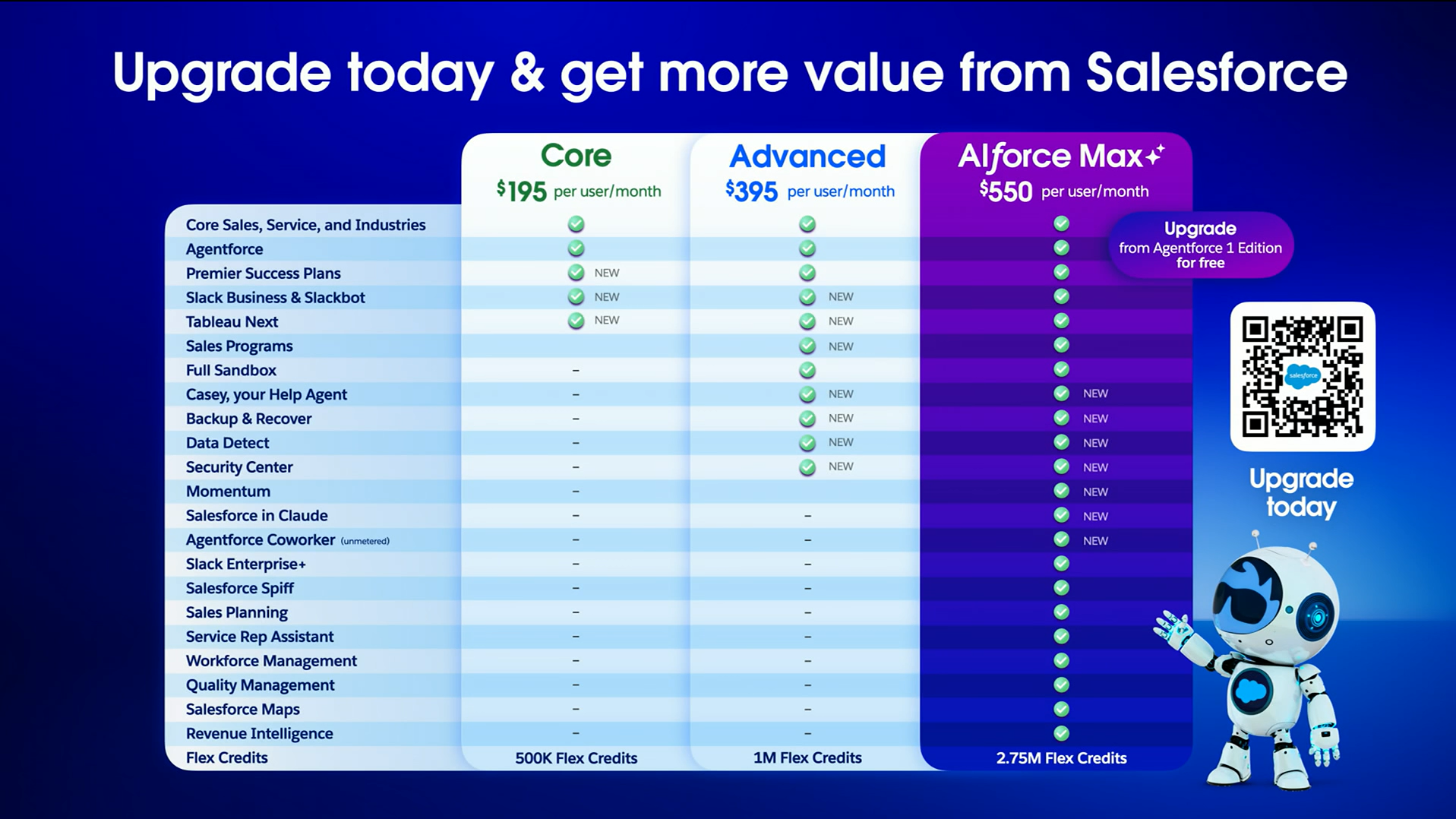
After introducing AIforce and showing how Salesforce is bringing its AI capabilities together, Marc Benioff also revealed AIForce Max Edition.
He positioned it as a single core Salesforce product that bundles different functionalities, giving customers one package instead of having to piece together different capabilities separately.
Meet Koa, Salesforce’s First CRM Reasoning Model
Salesforce introduced Koa, its first reasoning model built specifically for CRM, during the Dreamforce 2026 keynote. Unlike general-purpose models, Koa is designed to reason over the kind of structured business information found inside Salesforce.
Koa was developed with NVIDIA using the Nemotron model family and trained with Salesforce CRM intelligence. Salesforce says the model is designed to understand business context and handle complex CRM tasks that require more than simply retrieving information.
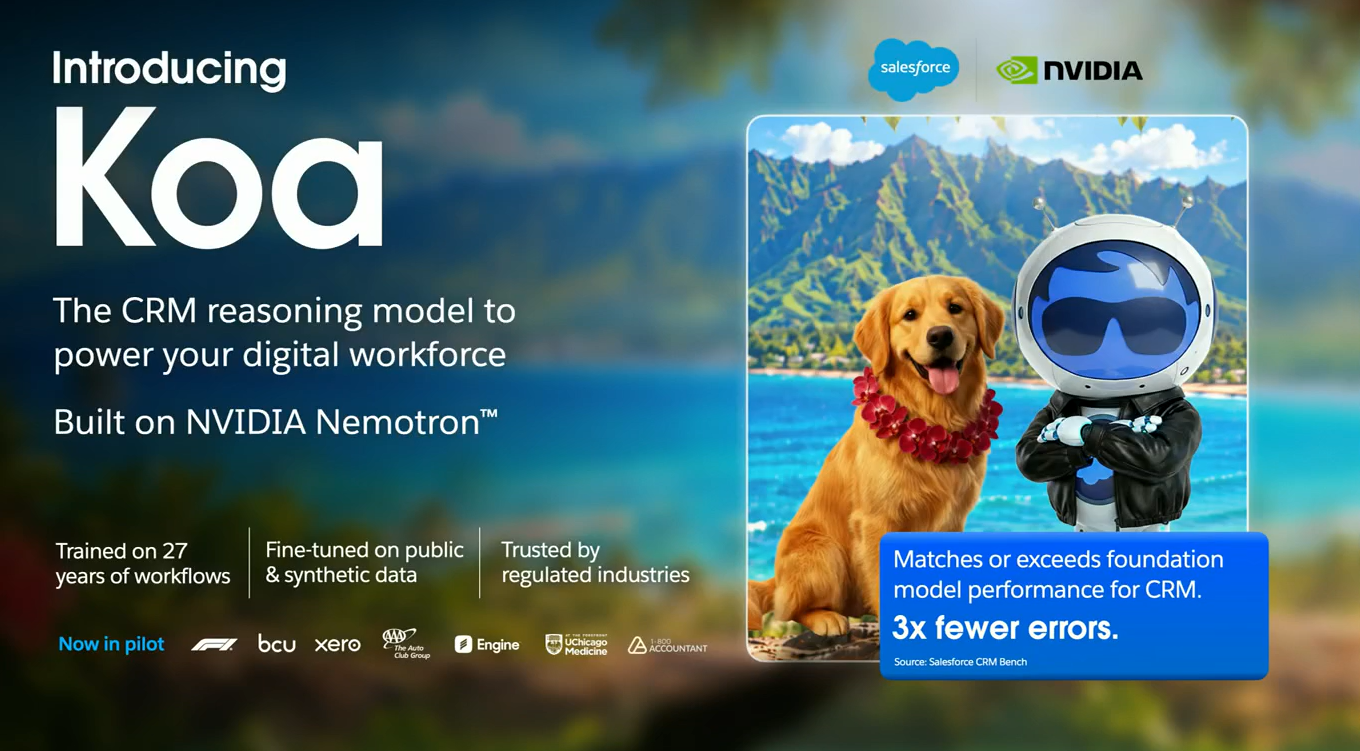
The goal is to make Agentforce better at reasoning through real business situations, such as understanding customer history, evaluating opportunities, and determining the next action based on multiple pieces of CRM context.
This adds another layer to Salesforce’s Agentic Enterprise vision: Data provides the context, Koa provides the reasoning, and Agentforce takes action.
Data 360 Sets the Foundation for Enterprise Context
Salesforce also highlighted Data 360 as a foundational part of its agentic enterprise strategy, using it to create the trusted enterprise context that agents need to understand a business.
A lot of enterprise data sits outside Salesforce, across data lakes, warehouses, applications, and other systems. With Data 360's zero-copy capabilities, organizations can bring that external data into their enterprise context without physically copying those data assets.
The keynote also gave us a preview of where Data 360 is heading next. Salesforce described its evolution toward what it calls an “enterprise AI harness,” with more details expected in the dedicated Data 360 keynote.
So while today's keynote established Data 360's role in grounding agents with trusted context, there could be some significant Data 360 updates to watch for in the upcoming sessions.
Salesforce Guardian Secures a World Full of Agents
Another major announcement from the keynote was Salesforce Guardian, Salesforce’s new security and governance layer designed for an increasingly agent-driven environment.
Because more agents also mean more opportunities for something to go wrong. Guardian is an evolution of Shield and Trusted Services, built specifically for the risks that come with deploying and managing AI agents at scale.
Guardian focuses on two key areas.
Agent identity helps organizations understand and detect when agents behave outside their expected boundaries.
Data security covers how sensitive information is classified, protected, and accessed as agents interact with business data.
Salesforce also reiterated its zero-data-retention commitment, emphasizing that customer data is not used to train external AI models while agents work with that data.
Agent Fabric Gives IT a Single View of Every Agent
Salesforce also expanded Agent Fabric, building on MuleSoft’s capabilities to give IT teams a central way to discover, monitor, and govern agents across the enterprise.
Agent Fabric is designed to cover more than just Salesforce’s own agents. It can bring agents built across platforms such as Azure, AWS, and Google into a single registry alongside Agentforce agents.
From there, IT teams can track how agents are performing, including metrics such as latency, error rates, and token costs. This gives organizations more visibility into what their agents are doing and the resources they are consuming.
As businesses start running agents across multiple platforms and vendors, managing them individually can quickly become difficult. Agent Fabric gives IT teams a single view of that growing agent ecosystem.
A Refreshed Customer 360 Across Every Cloud
Salesforce also brought its Customer 360 portfolio into the agentic story, showing how AI capabilities are becoming part of the individual clouds rather than remaining a separate layer.
The keynote highlighted updates across several products:
Sales Cloud's Hunter agent now comes with ZoomInfo, Demandbase, and Apollo data built in
Service Cloud's contact-center-as-a-service offering, which launched back in March, is going live for customers in October
Marketing Cloud's campaign agent, which builds and iterates campaigns on its own, dates back to last year's Agentforce Marketing rebrand
Commerce Cloud's Shopper Agent, which reached general availability in June, supports the buying experience end to end
What Salesforce’s Agentic Enterprise Actually Means
After seeing everything Salesforce covered in the keynote, the Agentic Enterprise vision becomes much clearer.
Salesforce is not treating AI as another feature sitting on top of CRM. It is building an ecosystem where AIforce becomes the interface, Agentforce handles the work, Koa adds CRM-specific reasoning, Data 360 provides trusted context, and Guardian secures the agents.
That is the direction Salesforce laid out at Dreamforce 2026. The next few keynotes and sessions should give us a better look at how these capabilities will evolve and roll out across the platform.
Related Readings
Let’s Talk

Drop us a note, we’re happy to take the conversation forward 👇🏻