
Workato Just Turned Its Integration Platform Into a Digital Coworker. Meet Otto.
Key Summary:
Adaptable AI Teammate: Otto runs 24/7, replacing rigid scripts with smart, evolving automation.
Plug-and-Play Workflows: Automates your existing tech stack without requiring new infrastructure.
Secure App Control: Manages tasks via Slack or Teams while maintaining strict IT security.
Automation just got a massive upgrade. For years, we’ve connected apps using rigid "if this happens, do that" rules. But things are changing fast, moving away from static workflows toward smart, thinking assistants.
That is where Workato Otto comes in. It’s a brand-new digital coworker AI built to change how we interact with software and tasks. Far more than a basic chatbot, Otto is an AI teammate for enterprises that handles complex jobs right across your tech stack.
In this blog, we’ll break down what Otto is and why it’s a big deal. We’ll look at its best features, how it beats traditional tech, and finally, we'll cover the main benefits and challenges to keep in mind before bringing this AI coworker onto your team.
What Is Otto by Workato?
At its core, Otto is a Workato AI agent built on an advanced agentic AI architecture. Unlike traditional bots that blindly follow a pre-written script, Otto understands context, reasons through problems, and acts autonomously.
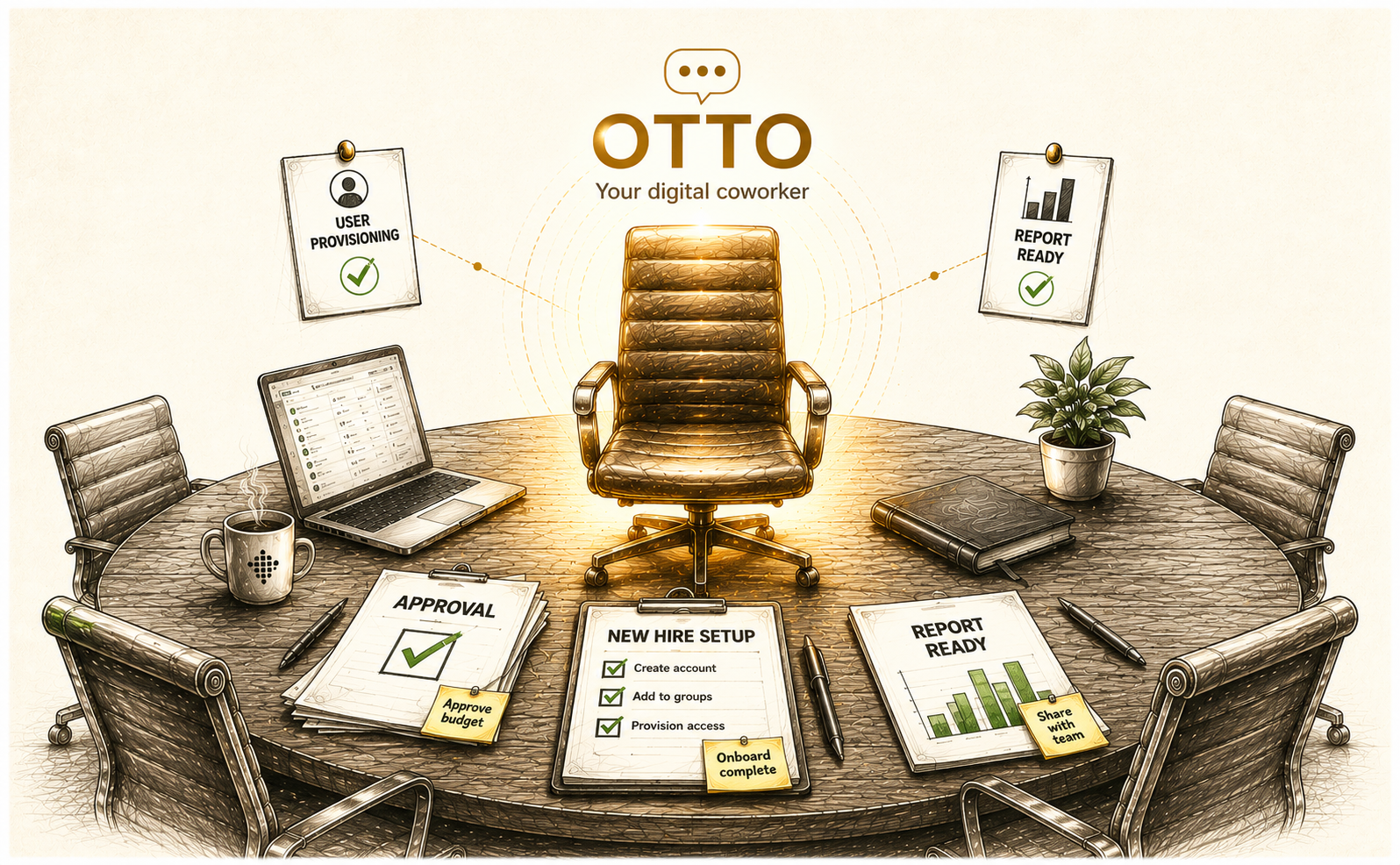
Think of Otto as an AI coworker software that lives inside your communication tools (like Slack or Microsoft Teams). Instead of logging into five different dashboards to approve a budget, update a CRM, and provision a new software license, you simply tell Otto what you need in plain English. It leverages the underlying power of the Workato automation platform to execute those tasks securely and instantly.
Why This Launch Matters
For a long time, enterprise AI automation has been stuck in two separate camps that just couldn't talk to each other:
1. Generative AI:
Generative AI models are amazing at thinking, talking, and creating. They can write great emails, summarize massive reports, and answer complex questions in a split second. But despite being incredibly smart, they have a major limitation: they can't actually do anything inside your corporate tools.They can't log into your CRM, they can't trigger a workflow, and they can't update a spreadsheet. They can give you advice, but they leave all the actual clicking and copying up to you.
2. Traditional Automation
Traditional automation platforms are the exact opposite. They are built to move fast and handle repetitive tasks without making mistakes. They are great at connecting your software systems using strict rules like a digital conveyor belt. However, they are completely rigid. They cannot think, understand context, or make a human-like decision. If a data format changes slightly, or if a situation doesn't fit their exact "if-this-then-that" rules, the whole automation simply breaks.
The launch of Otto completely changes this equation. Deploying a dedicated Workato AI agent allows businesses to combine generative AI automation with robust connectivity. This creates an AI integration platform that doesn't just suggest work; it actually finishes it, marking a massive milestone in digital workforce automation.
How Workato Otto Works
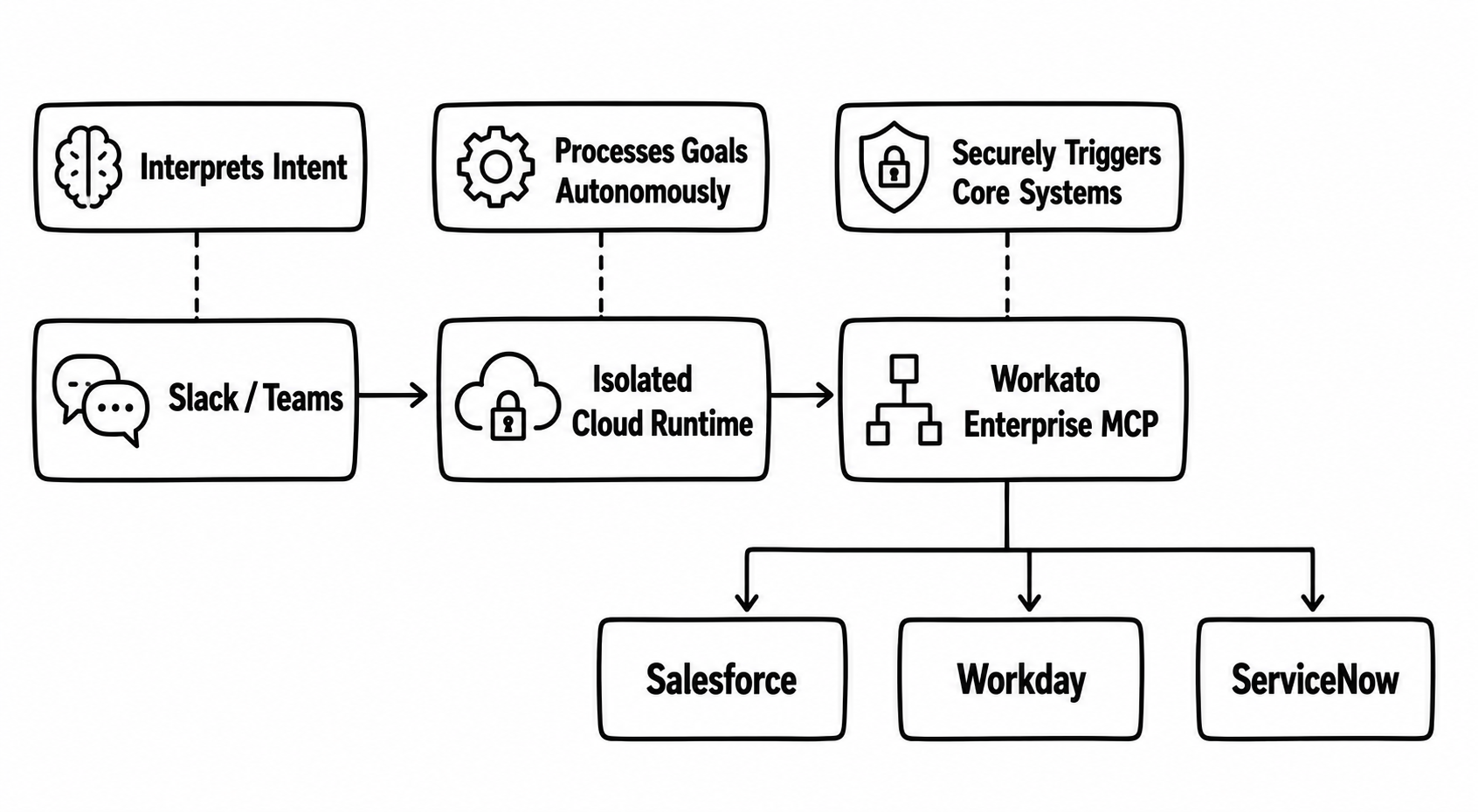
Otto operates through a streamlined three-layer framework that turns natural language into secure, backend enterprise actions:
1. The Interaction Layer (Slack/Teams)
Initiating directly within Slack or Microsoft Teams, Otto analyzes natural language objectives, breaks them down into clear operational execution plans, and proactively engages channels to coordinate human approvals without requiring manual prompts.
2. The Processing Layer (Cloud Runtime)
Operating continuously 24/7 in a serverless cloud environment, Otto processes workflows using isolated, sandboxed runtimes. This independent execution allows the agent to run complex logic, write code, and resolve process roadblocks completely in the background.
3. The Control Layer (Workato Enterprise MCP)
Powered by the Workato Enterprise Model Context Protocol (MCP), Otto acts as a secure translator that plugs directly into your existing, verified data pipelines. It completely eliminates "Shadow IT" risks by instantly inheriting your company's role-based access controls and data permissions.
Key Features of Workato Otto
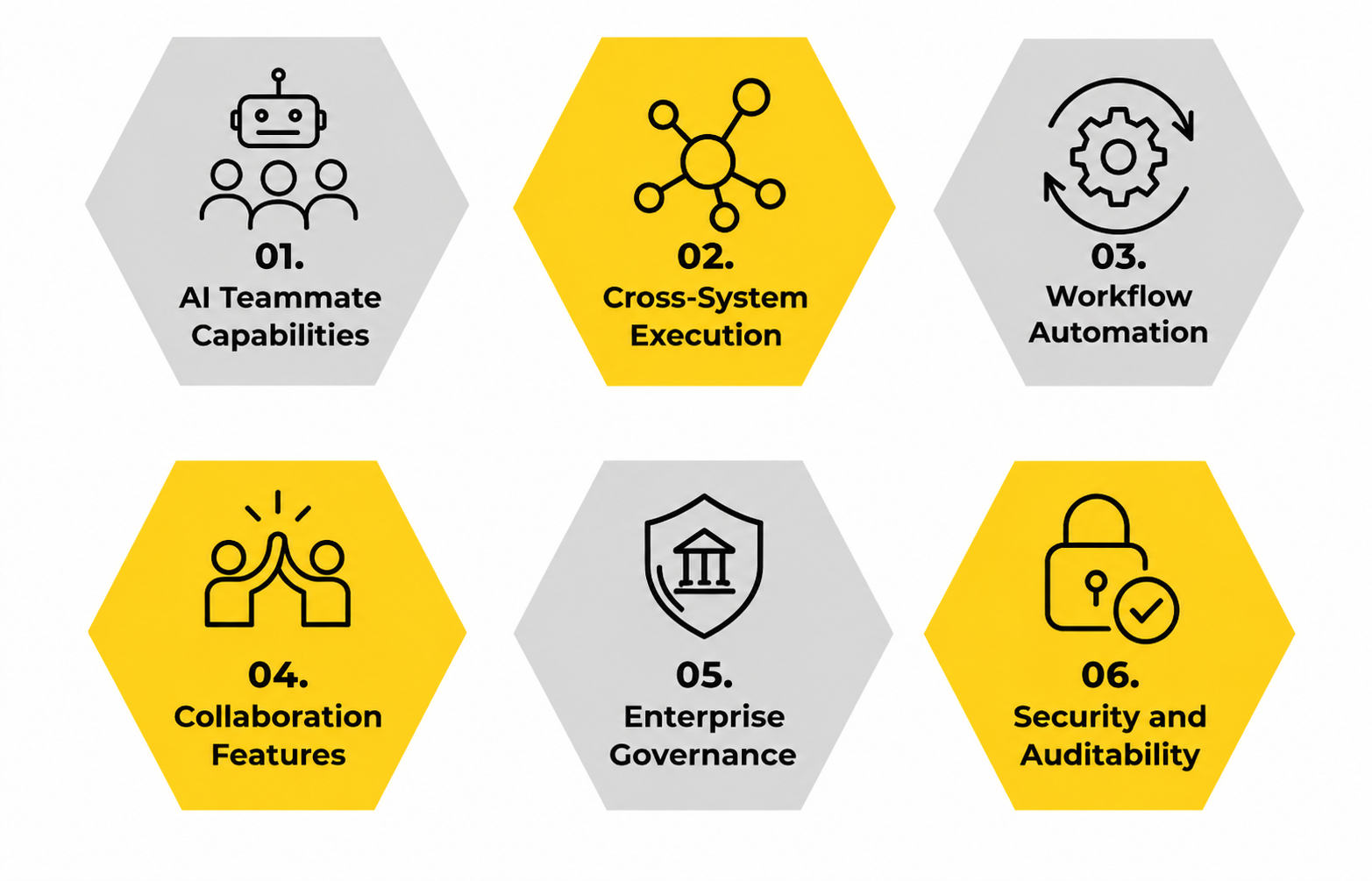
Otto acts as an autonomous digital teammate for automation instead of a standalone tool. Utilizing Enterprise MCP Skills, it coordinates multi-app data synchronization and enterprise system connectivity without manual endpoint configuration. This breaks down data silos, streamlines workflows, and ensures scalable enterprise workflow automation and workflow orchestration.
1. AI Teammate Capabilities
Otto operates as an autonomous, always-on digital coworker. Because it runs 24/7 in a secure cloud environment, you can assign it a complex, multi-step goal and close your laptop. It works independently in the background even overnight, so you can start your day with the project already finished.
2. Cross-System Execution
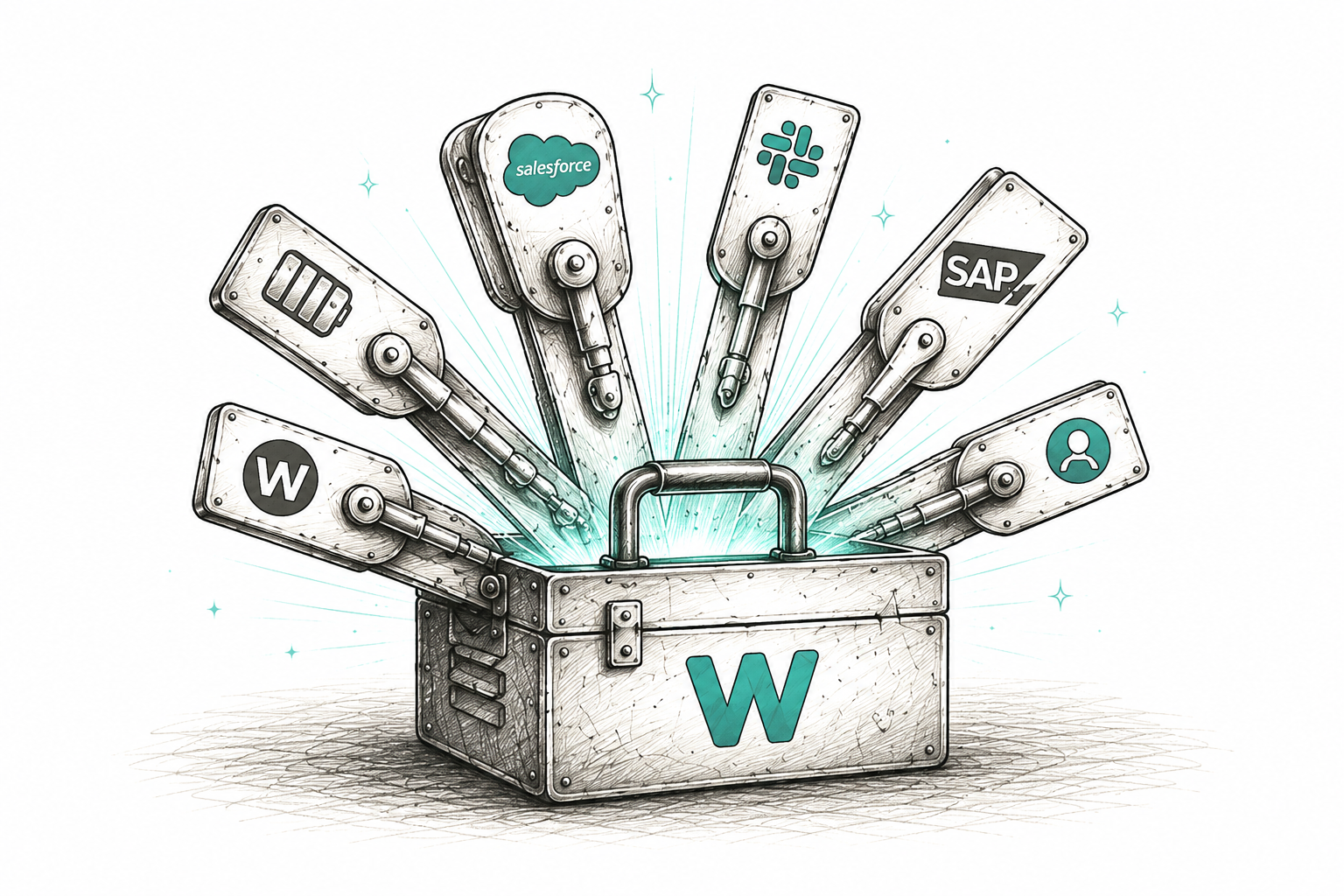
Otto connects directly to the enterprise apps your company already uses. Powered by Workato's Model Context Protocol (MCP) framework, it can instantly read data, write records, and update fields across completely separate systems in a single move. You do not need to build new custom integrations or pass around login credentials for it to work.
3. Workflow Automation
Instead of following rigid paths that break if a tiny piece of data changes, Otto uses goal-oriented reasoning. It understands the final result you want to achieve. If a minor error or unexpected change pops up, it can adapt its path automatically to keep moving forward without getting stuck.
4. Collaboration Features
Otto lives where your team already communicates, seamlessly embedding into tools like Slack and Microsoft Teams. It can join public channels or group direct messages to share updates, track down open tasks across departments, and coordinate with stakeholders. If a complex issue pops up that requires human judgment, it knows exactly when to pause and loop in a manager.
5. Enterprise Governance
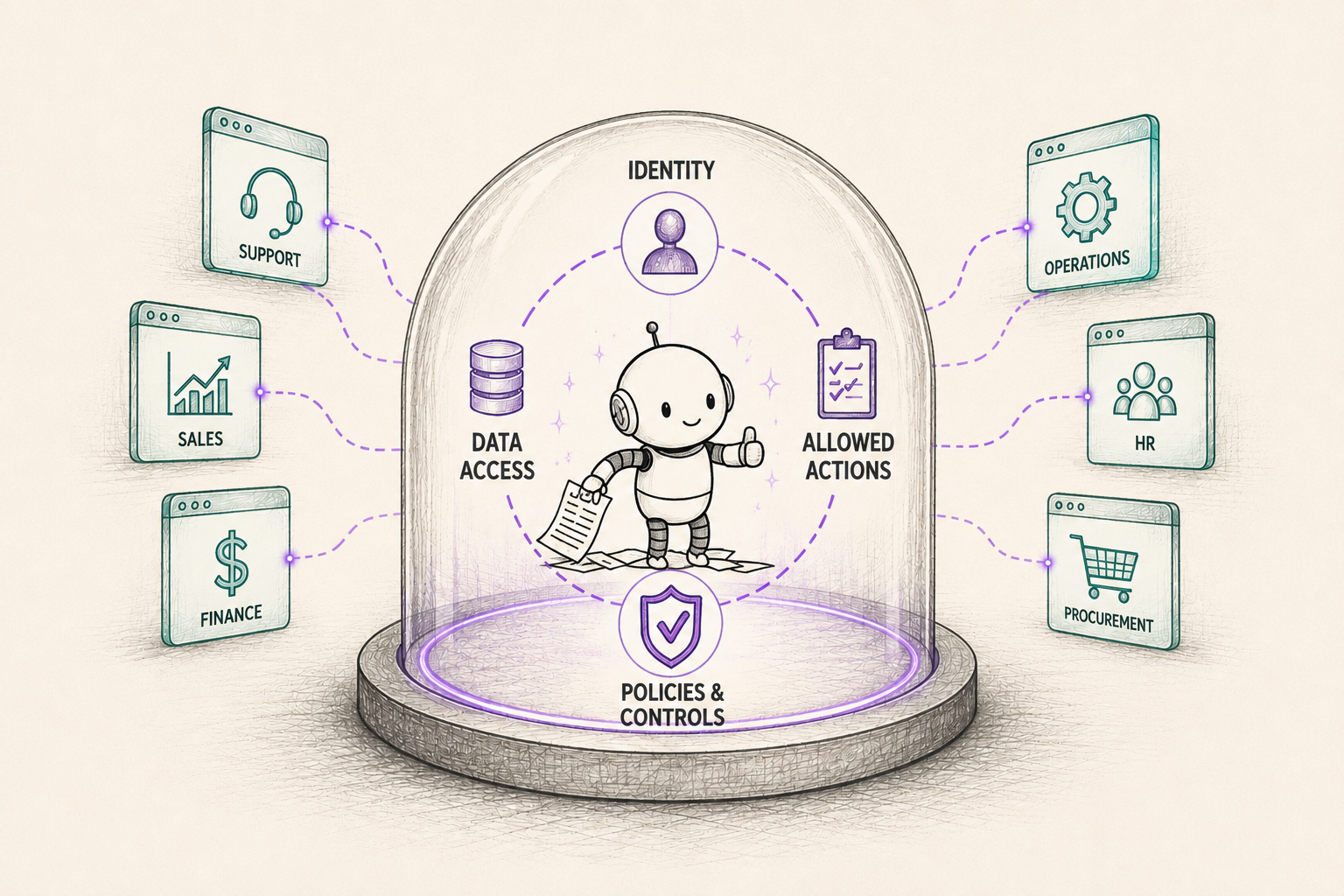
AI can be a massive risk for IT teams if it acts without rules. Otto solves this by inheriting the exact guardrails, process intelligence, and user permissions already set up in your organization. It automatically respects your company's data privacy rules and approval structures, meaning it will never perform an action it isn't explicitly authorized to do.
6. Security and Auditability
With Otto, there are no guessing games about what the AI did. Every single decision, tool connection, and operational step it takes is tracked with total transparency. It maintains a clean, traceable audit trail that complies with major enterprise security standards (like SOC 2 and GDPR), giving IT teams complete visibility and control.
How Otto Differs From Traditional Integration Platforms
For years, connecting corporate systems has been a highly technical game of building digital plumbing. While traditional API integration services and standard workflow orchestration tools have helped companies sync data for a long time, Otto introduces a completely new architecture.
It shifts the entire approach from manual configuration to autonomous collaboration, laying the groundwork for true enterprise workflow automation.
To see exactly how much the landscape has shifted, let’s look at how Otto compares to standard integration tools across core areas:
| Feature | Traditional Integration Platforms | Workato Otto (AI Agents) |
|---|---|---|
| Setup | Manual data mapping, rigid setup, and building complex recipes from scratch. | Dynamic and intent-based. You simply describe what you need using natural language. |
| Execution | Follows strict "If This, Then That" rules with little to no deviation. | Goal-oriented reasoning that understands the desired outcome and determines the best path to achieve it. |
| Flexibility | Automations can fail when data formats change or APIs are updated. | Uses runtime reasoning to adapt to unexpected changes, exceptions, or minor errors. |
| User Interface | Relies on administrative dashboards, technical developer tools, and backend consoles. | Operates through conversational interfaces embedded in familiar tools like Slack and Microsoft Teams. |
Key Benefits of Workato Otto for Modern Businesses
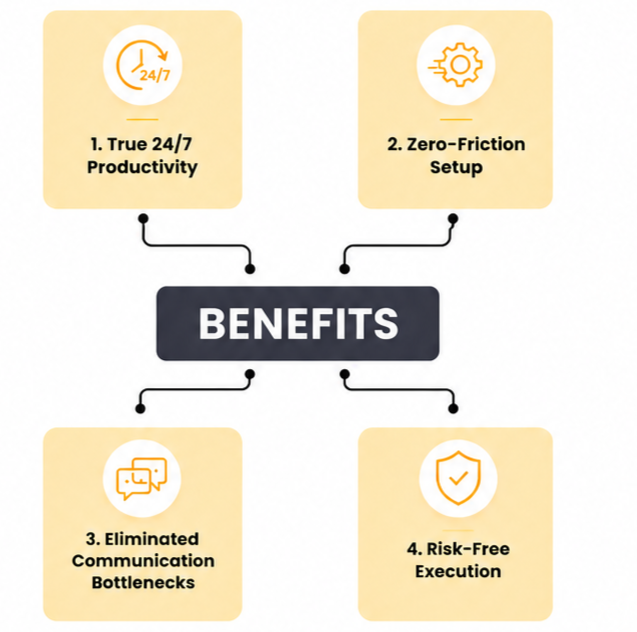
Bringing an intelligent automation platform like Workato into your enterprise delivers massive, measurable improvements by blending traditional data synchronization with modern automation with AI agents. The core benefits of Otto include:
1. True 24/7 Productivity
Because Otto runs continuously in its own secure cloud environment, it works independently overnight, so you start each day with complex tasks and reports already finished.
2. Zero-Friction Setup
Otto hooks straight into the secure enterprise connections you already have live on Workato. This means you can deploy your new AI coworker instantly, without building new infrastructure or waiting on fresh security reviews.
3. Eliminate Communication Bottlenecks
Embedded right inside Slack or Teams, Otto acts like a true teammate. It proactively coordinates with stakeholders, chases down approvals, and handles multi-step work across departments without waiting to be prompted.
4. Risk-Free Execution
Built strictly for corporate environments, Otto eliminates the threat of "Shadow IT." It automatically inherits your organization's existing access controls, data permissions, and security protocols right from day one.
Conclusion
The shift from rigid setups to autonomous digital coworkers marks a massive turning point for modern businesses. By pairing the data-moving muscle of API integration services with conversational AI, platforms like Workato Otto establish a smart, unified layer of enterprise workflow automation.
Leaving behind fragile, easily broken pathways opens up a brand-new playbook for scaling your business through adaptive workflow orchestration.
If you are ready to modernize your operations and deploy these intelligent systems smoothly across your tech stack, let our team help you get started with our expert Workato Automation services.
Frequently Asked Questions
-
Otto uses the Model Context Protocol (MCP) framework to securely read and write records across completely separate enterprise applications in a single move. This allows it to interact with your existing tech stack without needing brand-new custom integrations.
-
Yes. Otto operates as an always-on digital teammate in a secure cloud environment. It can execute complex, multi-step workflows independently overnight, allowing your team to start their day with projects and reports already completed.
-
Yes. Otto inherits the exact user permissions, data privacy rules, and governance guardrails already configured in your Workato platform. It also maintains a complete, traceable audit trail compliant with SOC 2 and GDPR.
-
Otto embeds directly into the collaboration tools your team already uses, like Slack and Microsoft Teams. Users can trigger automations, request updates, and manage workflows without logging into separate software dashboards.
Related Reading
Let’s Talk

Drop us a note, we’re happy to take the conversation forward 👇🏻