
Workato Introduces Headless API and Agent Guardrails
Key takeaways:
Workato announced Headless API and Agent Guardrails to enable secure, production-ready AI agents.
Headless API lets AI agents run across applications without rebuilding separate interfaces.
Agent Guardrails protect AI agents with identity verification, data protection, and audit logging.
Lots of companies have already tested AI agents in small pilot projects. That part is easy. The hard part is putting those agents into real, everyday use safely. Businesses need to know: who is this AI agent acting for? What information can it see? What is it allowed to do?
But that isn't a challenge anymore; Workato just announced two new features that tackle exactly this problem. On July 9, 2026, they introduced Headless API and Agent Guardrails for their Agent Studio product. These features let Workato's AI agents called "Genies" work inside almost any app or system, while staying safe and controlled no matter where they are used.
Why AI agents keep stalling before they reach production
Most enterprise AI agents today live in one place: a chat window, a dashboard, a specific app. If a company wants that same agent available inside a customer product, a mobile app, or another team's internal tool, the usual answer is to build a brand-new interface just to reach it. That's slow, and it multiplies the number of places security and compliance teams have to review.
Workato's Chief Product Officer, Bhagat Nainani, framed the shift this way: as orchestration becomes central to how AI gets used, agents can't simply wait around for someone to type into a chat box. They need to react to business events, work with other agents, and operate across systems, all while it stays clear who they're acting for, what they're touching, and what process they're running.
Headless API: one agent that works anywhere, without rebuilding anything
A headless API separates the backend functionality from the user interface. Instead of being tied to a specific application or screen, the same functionality can be accessed through APIs by websites, mobile apps, internal systems, or other software.
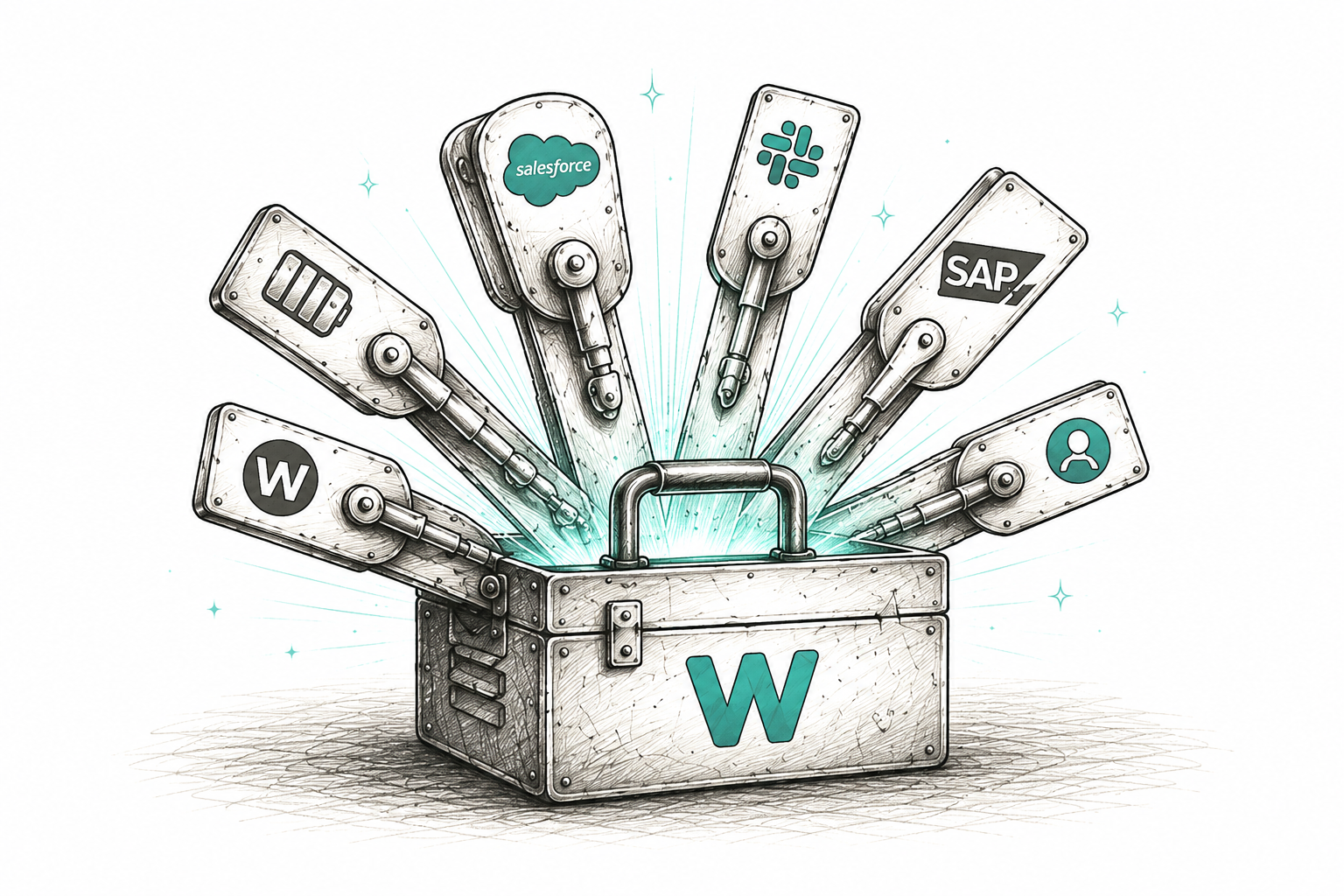
With Workato’s new headless API, companies can now plug Workato Genie directly into the apps and tools people already use; it can work in websites, phone apps, internal company systems, or even inside another AI agent, all without building a brand-new interface each time.
This lets agents do a few important things:
Deploy the same AI agent across websites, apps, and internal systems.
API embeds AI capabilities into existing applications businesses use
Enable AI agents to collaborate with other agents and workflows.
Reuse the same AI agent without rebuilding it for every application.
Agent Guardrails: the three simple checks that keep every agent safe
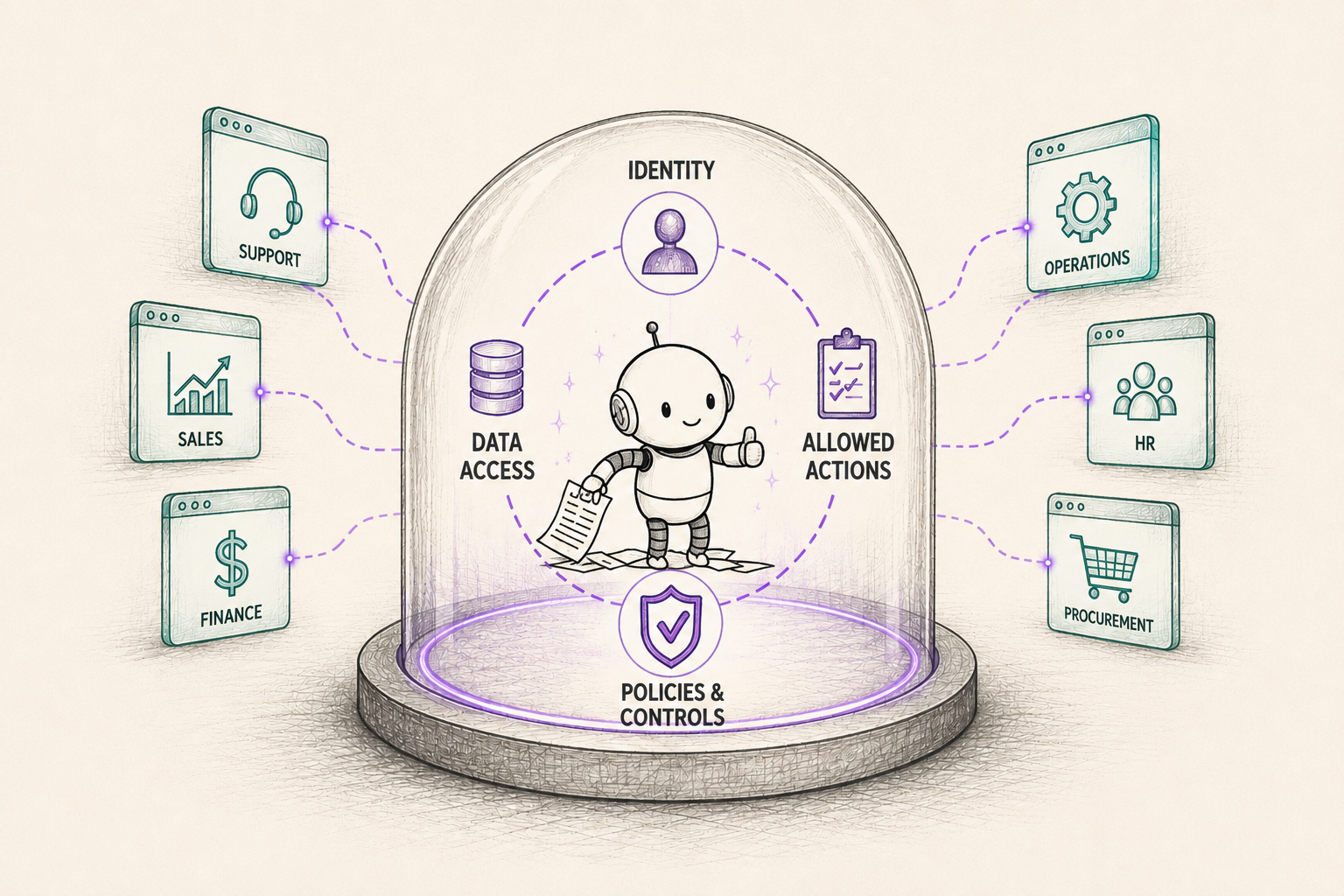
The second feature, Agent Guardrails, is what makes it safe to use agents everywhere. Every Genie automatically gets three layers of protection:
1. Protecting Sensitive Data
Personally identifiable information (PII) is blocked, redacted, or tokenized before it reaches the underlying AI model. Profanity, blocked words, and restricted topics are filtered out before the agent processes a request. Organizations can also choose which AI model powers their Genies, including OpenAI, Anthropic, or AWS Bedrock, using their own credentials.
2. Access and control
Every action is linked to a verified identity, whether it's a user-approved account or an admin-configured service account. For high-risk actions, Guardrails can pause the task and request human approval directly in Slack or Microsoft Teams before the agent proceeds.
3. Auditability and compliance
Every action a Genie takes is logged in a unified, automatically-redacted Conversation History. And because Workato already meets major security standards like SOC 2 Type II, ISO 27001, HIPAA, and PCI-DSS 4.0, companies don't have to prove they're safe all over again each time they use a Genie in a new app.
“Both features are available now for Workato ONE customers. According to Workato, its platform is already used by more than half of the Fortune 500, including organizations such as Nasdaq, Amazon, Cisco, Vodafone, Atlassian, and Lucid Motors.”
— Workato
How Workato closes the gap between pilot agents and production agents
The bigger idea behind this announcement is simple: a lot of companies get AI agents working fine in a small test, but then get stuck trying to use them for real, with real customers or real company systems, because the safety and tracking weren't built to travel with the agent.
Industry analysts covering the announcement point out that this update removes a lot of the extra work companies usually have to redo every time they want to use an agent somewhere new, since every action stays tied to a real identity, and private data is protected before the AI ever sees it.
One enterprise customer shared a simple, practical benefit: having one safe place for agents to plug into all their systems means fewer manual tasks for people, freeing up time for more meaningful work.
What this means for MuleSoft and other AI companies
Some analysts think this announcement matters more than it looks. The argument is that the real competition isn't about who has the smartest AI model; it's about who controls the safety and tracking as AI agents move across a business.
Though. In May 2026, MuleSoft also announced that headless access is coming soon, allowing users to work through Slack, Microsoft Teams, and Claude via an MCP server. So this is less about going headless and more a real head-to-head race to define what "safe, agent-ready integration" looks like.
Boomi and other established platforms still face pressure to offer similar capabilities. Newer AI-focused startups have a tougher time proving safety through certifications like SOC 2 takes years, so they're at a disadvantage even if their AI is just as good.
The same analysis pointed out what would really prove Workato's approach works: real examples of agents safely running across many systems in the real world, not just a list of new features. Time will tell how well these guardrails hold up as more companies put them to the test.
The Next Step in Workato's AI Roadmap
It wouldn't be wrong to say that these announcements are part of a bigger plan from Workato. The update builds on what the company launched in October 2025, when it introduced what it called the first "Enterprise MCP" platform for AI agents. Headless API and Agent Guardrails extend that same governance and security framework to wherever an AI agent is deployed next.
For enterprises evaluating how to move AI agents from pilot to production, the message is straightforward: the interface an agent runs in shouldn't determine how safe it is. Governance needs to be a property of the agent itself, not something rebuilt for every new place it shows up.
If your business is exploring how to put Workato to work, whether that's setting up Agent Studio, connecting systems, or planning a broader automation strategy, Concretio's Workato services can help you get there.
Frequently Asked Questions
-
In the context of AI, a headless API separates an AI agent from its user interface. Instead of being tied to a specific chat window or application, the agent's capabilities are exposed through APIs, allowing websites, mobile apps, internal systems, and other software to access the same AI without relying on its original interface.
-
No. It's an additional option, not a replacement. A Genie can still run through those interfaces — Headless API just adds a fourth way in, for when a company wants to build its own custom front end.
-
No. The same Genie keeps its existing skills, knowledge, and guardrails exactly as they are; nothing gets rebuilt or reconfigured. Headless API simply adds a new way to reach that same agent, letting it work into a custom app, website, or internal tool while everything underneath continues working exactly as before.
-
Headless AI agents can run across websites, mobile apps, internal systems, and other business applications. Guardrails ensure they follow consistent security, identity, and access policies, protecting sensitive data and preventing unauthorized actions regardless of where the agent is deployed.
Related Reading
Let’s Talk

Drop us a note, we’re happy to take the conversation forward 👇🏻