Marketing Cloud: 3 Advanced Salesforce Journey Blueprints That Drive Higher Retention
Key Takeaways:
Build journeys around customer behavior instead of relying on fixed, one-size-fits-all communication schedules.
Re-engage inactive customers early with relevant messages based on their changing needs and interactions.
Connect onboarding, win-back, and loyalty journeys to create consistent experiences that encourage long-term retention.
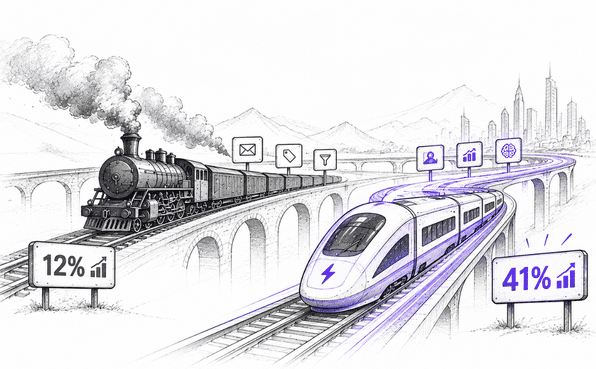
Most Salesforce Marketing Cloud accounts have a Journey Builder full of the basics: a welcome series, an abandoned cart flow, maybe a birthday email. These work, but they're not built for retention, and retention is where the real money sits.
Even small improvements in retention rate can have a greater impact on profit than acquiring new customers.
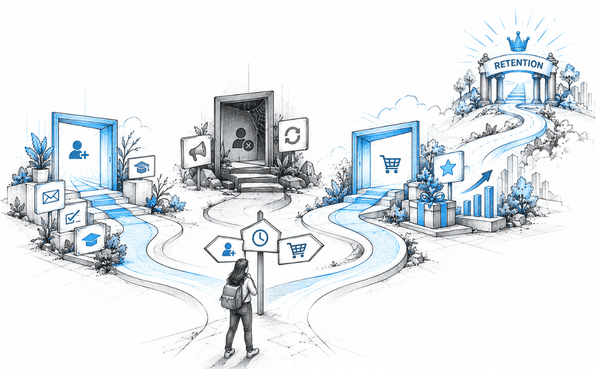
The three strategies below offer simple ways to turn one-size-fits-all journeys into personalized experiences that keep your customers around.
What Actually Makes a Journey "Advanced"
Before we start, let’s understand one thing quickly to establish a baseline. A basic journey is linear: trigger → email → wait → email. An advanced journey uses three things a basic journey doesn't:
Behavioral and predictive entry sources: Journeys triggered by real signals (engagement scores, product usage, CRM changes), not just a form fill or a date.
AI-powered decision points: Using capabilities like Engagement Scoring, Send Time Optimization, and content selection to route contacts differently based on how likely they are to engage or churn.
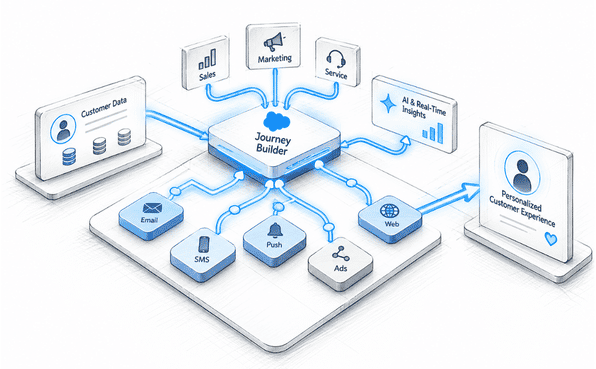
Cross-channel orchestration with Data Cloud: Pulling in unified customer data so email, SMS, push, and even paid ads coordinate instead of firing in isolation.
If you want a deeper look at how Journey Builder works and how its different components fit together, read our guide to Marketing Cloud Journey Builder
Blueprint 1: Build Strong Customer Relationships From Day One
After the deal is done, the first 90 days decide a lot. That's the window where a new customer either figures out your product or quietly starts to disengage. A standard welcome series can't tell who's already using it from who's about to give up, because it's built around a schedule, not around what each person is actually doing.
How it works:
Entry source: Start the journey when a new customer or account is added to Salesforce CRM, or when a purchase or product-usage event adds the customer to a Data Extension. This allows onboarding to begin as soon as the customer enters the lifecycle.
To understand how Journey Builder connects with Marketing Cloud Next, read our detailed guide on Journey Event-Triggered Flows.
First engagement check: Once someone is in the journey, look at how they've responded so far and what other customer data is available. That's enough to tell whether they need the standard path, a bit more education, or hands-on support.
Engaged customer path: For customers who are actually opening and clicking, there's no reason to keep re-explaining the basics. This path moves faster into advanced features, relevant add-ons, or ways to expand how they're using the product.
Low-engagement path: Customers who are not interacting with the journey can receive shorter, more focused messages with a single clear action. The goal here with these customers is removing friction, not repeating the same sequence louder.
Milestone-based onboarding: Rather than sticking to a fixed calendar, tie messages to what the customer actually does: first login, first purchase, adopting a key feature, finishing setup. Those moments decide what comes next, not a day counter.
Continuous adjustment: After each milestone, check the customer's latest behavior before moving them forward. Someone who becomes active can progress toward adoption and expansion, while someone who remains inactive can receive additional education or be routed to a sales or support team.
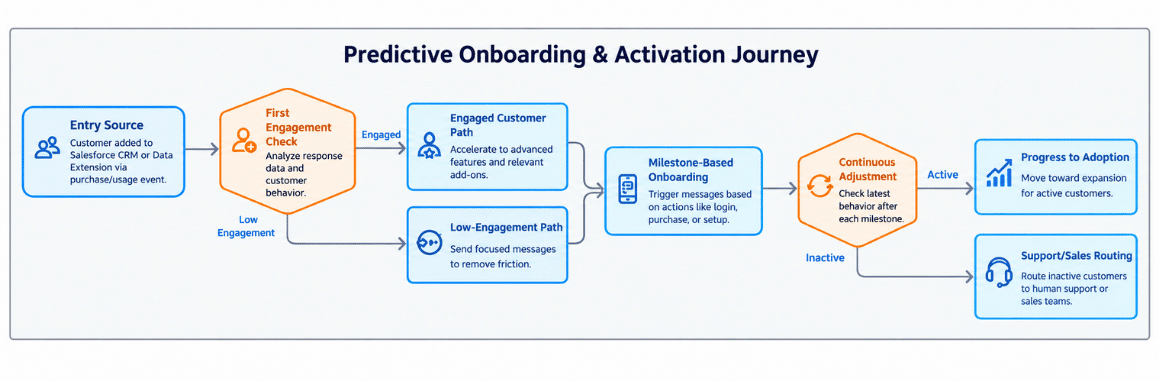
Why it drives retention: A fixed welcome sequence treats every new customer the same, regardless of how they're actually behaving. This one doesn't. Engaged customers get to value faster; customers who are struggling get caught early, while there's still time to help. Either way, the goal is the same: fewer reasons to leave before the relationship has really started.
Blueprint 2: Turn Inactive Customers Into Active Customers
Customers often show signs of disengagement before they actually cancel or stop purchasing. If you wait until a customer leaves, the opportunity to bring them back may already be gone. A win-back journey uses changes in customer behavior to reach out while there is still an opportunity to re-engage them.
How it works:
Entry source: Start with a Data Extension that is regularly updated with customers who have become inactive. The criteria could include no recent purchase, no product activity, or no engagement with recent emails. This gives the journey a clear signal that a customer may need attention.
Decision Split, Customer behavior: Once a customer enters the journey, use available customer data to determine what may be behind the inactivity. For example, a customer who has stopped using the product can receive an adoption-focused message, while a customer with a recent support issue can be handled differently.
Path A, Usage has dropped: Send useful content that helps the customer get more value from the product. This could include a feature they have not used, a quick how-to guide, or a use case related to their previous activity. The goal is to give them a reason to return rather than immediately offering a discount.
Path B, Recent service issue: If the customer recently had a support issue, avoid sending a generic promotional email. Instead, pause the marketing communication and trigger a follow-up from the service team so the customer can receive help before being asked to engage again.
Path C, no clear reason: These customers get a short, low-pressure re-engagement sequence. If they respond, they fold back into the regular journey based on how they engaged. If they don't, give them a real choice: update their communication preferences or opt out from receiving messages
Re-evaluate the customer: After each interaction, check whether the customer has returned to the desired behavior. Someone who becomes active again can leave the win-back journey and continue into a regular customer journey, while someone who remains inactive can move toward a preference or suppression process.
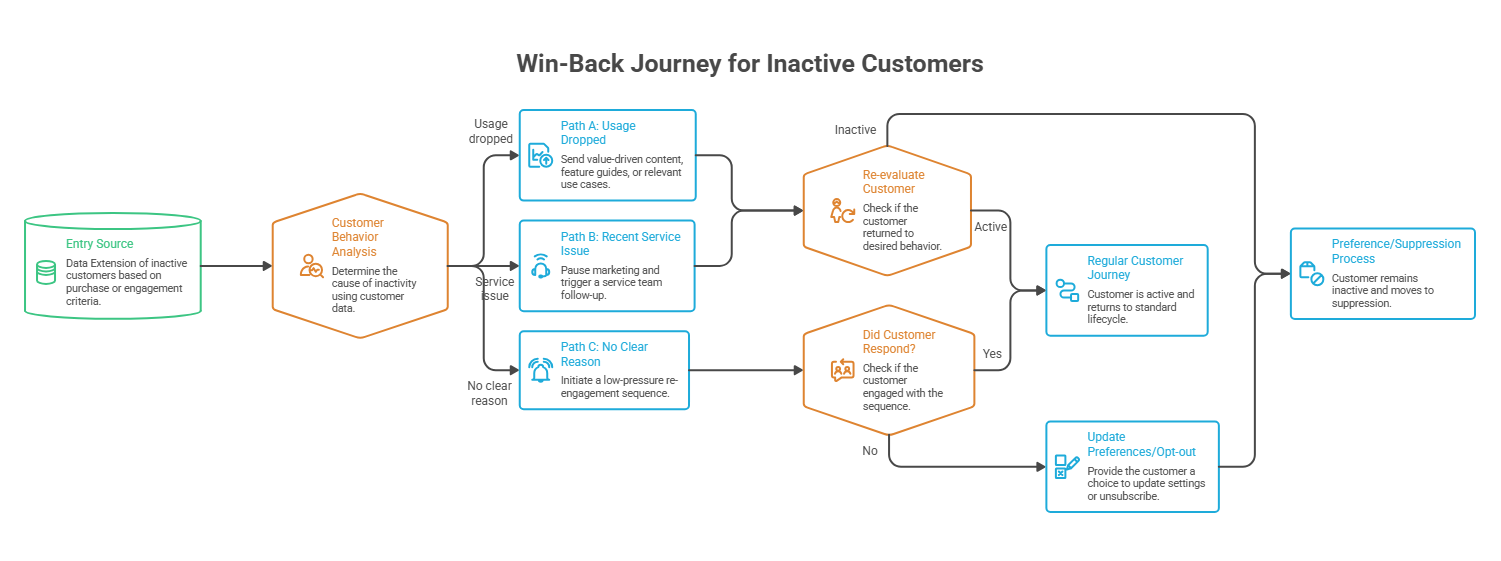
Why it drives retention: Nobody gets the same generic "we miss you" email here. Someone who's stopped using the product gets help getting back to value. Someone with a service issue gets a person, not a promotion. Someone with no obvious reason gets a low-pressure nudge rather than being written off. That specificity is what turns a win-back campaign into something that actually catches churn before it happens, instead of apologizing for it after.
Blueprint 3: Build Loyalty That Drives Repeat Purchases
Once someone's bought something, the real question becomes whether they'll buy again. This journey is built around that; mixing personalized recommendations, rewards, and well-timed reminders so the relationship doesn't just quietly end after the first purchase.
Steps:
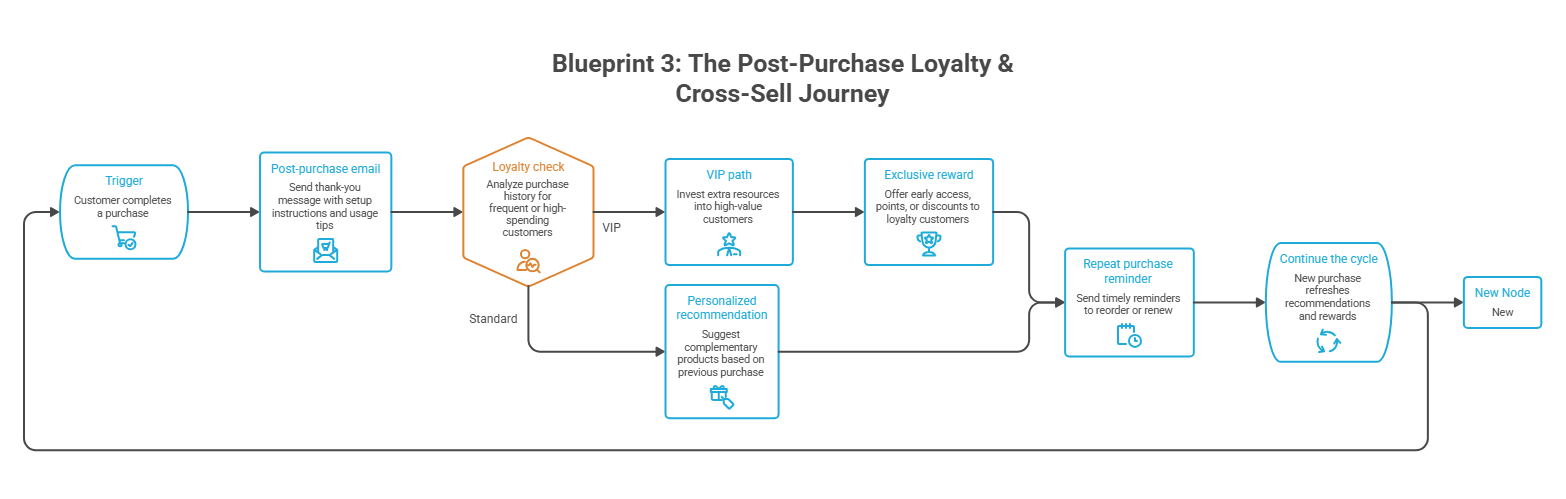
Trigger: The journey begins when a customer completes a purchase.
Post-purchase email: Send a thank-you message along with useful information about the product, such as setup instructions, usage tips, or related content.
Loyalty check: Look at purchase history to spot the customers who buy often or spend more than average. Route them into a VIP path; these are the people worth investing extra in.
Personalized recommendation: Recommend complementary or relevant products based on the customer's previous purchase. This gives the customer a reason to explore something that matches what they already bought.
Exclusive reward: For loyalty customers specifically, offer something that actually feels exclusive; early access, points, free shipping, a discount reserved for them and not blasted to everyone.
Repeat purchase reminder: When it is appropriate for the product or service, send a reminder encouraging the customer to reorder, renew, or make their next purchase.
Continue the cycle: Every new purchase feeds back into the journey, refreshing the recommendations and rewards based on what's changed since the last one.
Putting It All Together
These journeys aren't separate campaigns competing for a customer's attention; they cover three different moments where a relationship is either won or lost. If handled well, a customer feels more valued at each of those moments, and that's what ultimately moves them toward the outcome you want: retention.
What connects them isn't the AI tooling, even though that's what makes the targeting possible. It's the underlying shift from broadcasting on a schedule to responding to what a customer is actually doing. That's a harder journey to build than a linear welcome series, and it takes more than a static template. But with the right Salesforce Marketing Cloud experts like Concretio, you can see the difference between a Journey Builder that sends emails and one that's actually doing the work of keeping customers around.
Frequently Asked Questions
-
Use a campaign for a one-time message that everyone gets the same way, like a sale or a newsletter. Use Journey Builder when the message needs to unfold over time and adapt based on what the customer actually does, such as onboarding, win-back, or post-purchase follow-up.
-
You can measure customer retention by tracking metrics such as repeat purchase rate, customer retention rate, churn rate, customer lifetime value, and engagement over time. These metrics help determine whether your retention journeys are keeping customers active and encouraging them to continue buying or using your products.
-
Yes, Journey Builder can orchestrate SMS, push notifications, in-app messages, and even paid ad audiences alongside email, all within the same journey. That's part of what makes it "advanced": a customer's path can shift channels based on behavior, not stay locked to a single one.
-
Start with the customer behavior or lifecycle event you want the journey to address. Entry criteria could include a recent purchase, a period of inactivity, a change in customer status, or a specific engagement event. The criteria should be specific enough to identify customers who need the journey while preventing irrelevant contacts from entering it.
Related Readings
Let’s Talk

Drop us a note, we’re happy to take the conversation forward 👇🏻