How Salesforce's Acquisition of m3ter Will Transform Revenue Cloud
Key Summary:
Salesforce's acquisition of m3ter is set to strengthen Salesforce Revenue Cloud with advanced usage-based billing capabilities.
M3ter brings enterprise-scale metering, rating, and consumption-based pricing to support modern monetization models.
The acquisition aligns with Salesforce's vision for AI-driven revenue management and flexible pricing strategies.
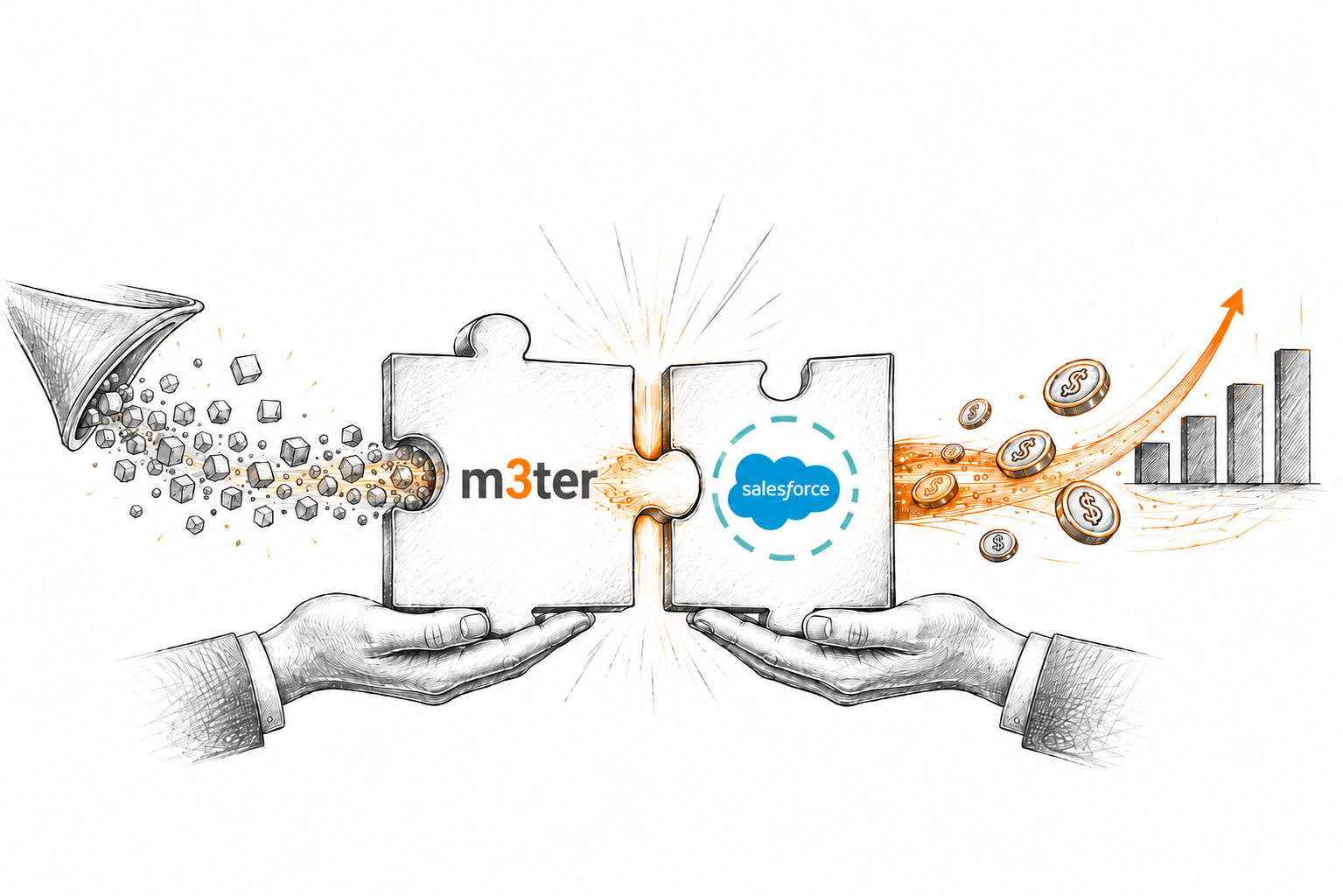
On June 8, 2026, Salesforce announced its agreement to acquire m3ter, a leading consumption-based billing platform designed for modern monetization models. The acquisition comes as businesses increasingly move beyond traditional subscriptions and adopt usage-based and outcome-based pricing strategies.
As Meredith Schmidt, EVP and GM of Agentforce Revenue Management at Salesforce, noted, companies want more options available for monetizing their products due to the rapid evolution of AI and its impact on the software industry.
By bringing m3ter's advanced metering, rating, and consumption billing capabilities into its ecosystem, Salesforce aims to help businesses launch, track, and bill for modern pricing models while strengthening the capabilities of Revenue Cloud and Agentforce Revenue Management.
As usage-based pricing becomes a competitive necessity rather than an emerging trend, the addition of m3ter could significantly influence how Revenue Cloud evolves in the years ahead.
What is m3ter?
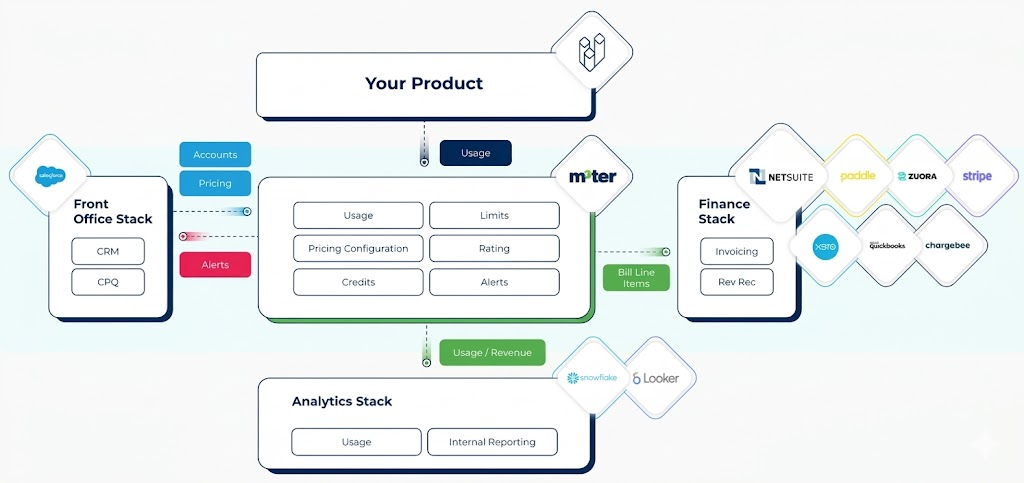
Image source: m3ter
M3ter is a usage-based billing platform that helps businesses charge customers based on actual product or service usage rather than fixed subscription fees. It enables companies to track consumption, apply flexible pricing models, and automate billing processes at scale.
According to Griffin Parry, Founder and CEO of m3ter, the company was created to solve some of the toughest challenges in usage-based pricing. The platform is designed to handle large volumes of usage data while supporting consumption-based monetization, enterprise billing, and flexible pricing models that modern software companies increasingly require.
This expertise is one of the key reasons Salesforce chose to acquire m3ter. By integrating its capabilities into Revenue Cloud, Salesforce aims to help businesses adopt consumption-based and outcome-based pricing models more efficiently.
How Does m3ter Work for Usage-Based Billing?
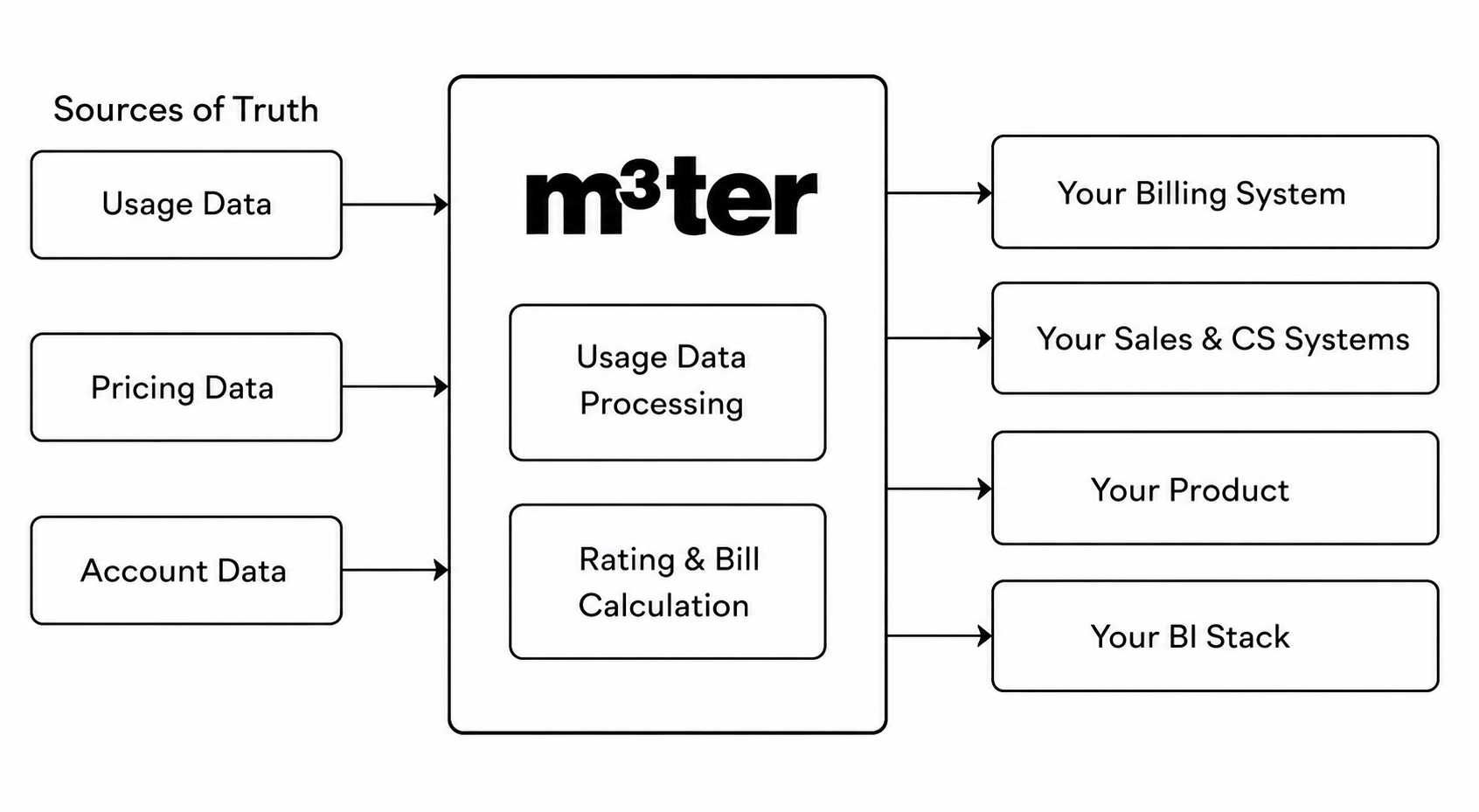
M3ter simplifies usage-based billing by helping businesses collect usage data, apply pricing rules, and automate billing workflows. The process typically works as follows:
1. Process Usage Data
m3ter continuously ingests complex, unaggregated usage data from products and services. This allows businesses to capture customer consumption accurately, whether it's based on API calls, transactions, storage usage, AI interactions, or other usage metrics.
2. Calculate Charges with Precision
Once the usage data is collected, m3ter applies configurable aggregation, pricing, and rating rules to calculate charges. This enables businesses to support a variety of pricing models, including pay-as-you-go, tiered pricing, prepaid credits, and hybrid subscription-plus-usage models.
3. Integrate with Existing Revenue Systems
m3ter connects with quote-to-cash, finance, CRM, and ERP platforms such as Salesforce and NetSuite. This helps organizations streamline revenue operations and improve data consistency across the monetization process.
4. Generate Billing and Revenue Insights
The processed usage and billing data can then be shared with finance, reporting, and analytics systems, giving businesses greater visibility into customer consumption patterns, revenue performance, and monetization opportunities.
Why M3ter Became a Strategic Acquisition for Salesforce
As businesses move toward usage-based and outcome-based pricing, they face several billing and monetization challenges. m3ter was built to address these issues:
Revenue Leakage – Software companies with complex pricing models can lose 4–7% of revenue due to under-billing. m3ter helps ensure billing accuracy by reliably capturing and monetizing usage data.
Operational Inefficiencies – Manual billing and revenue processes can make monthly close cycles slow, stressful, and prone to errors. m3ter automates billing workflows to improve efficiency and reduce compliance risks.
Limited Pricing Flexibility – Traditional billing systems often struggle to support modern pricing models. m3ter enables businesses to launch usage-based, consumption-based, and hybrid pricing structures more easily.
Delayed Product Launches – New products and pricing plans can be delayed when billing systems cannot adapt quickly. m3ter helps organizations introduce new offerings faster without billing becoming a bottleneck.
Lack of Usage Visibility – Customer usage and billing data are often scattered across multiple systems. m3ter makes this information available across sales, customer success, finance, and analytics teams in near real time.
Together, these capabilities help businesses modernize revenue lifecycle management while supporting the flexible monetization requirements of SaaS and AI-driven organizations.
How m3ter Will Improve Revenue Cloud
The acquisition of m3ter has the potential to significantly enhance Salesforce Revenue Cloud by bringing advanced usage-based billing and monetization capabilities directly into the Salesforce ecosystem. As businesses increasingly adopt consumption-based and outcome-based pricing models, Revenue Cloud will need to support more complex billing requirements, real-time usage tracking, and scalable monetization strategies. This is where m3ter's expertise can make a meaningful impact.
Native Usage-Based Billing
One of the most significant improvements is the addition of native usage-based billing capabilities. Rather than relying solely on subscription-based pricing, businesses will be able to support pricing models based on actual customer consumption.
This is especially important for SaaS, cloud, and AI-driven businesses that charge customers based on product usage rather than fixed monthly fees. This strengthens Revenue Cloud billing capabilities by enabling businesses to align pricing directly with customer usage.
Enterprise-Scale Metering and Rating
According to Salesforce, m3ter brings high-volume mediation, metering, and rating capabilities designed for enterprise-scale operations. These capabilities allow organizations to collect large amounts of usage data, process it efficiently, and convert it into accurate billing information. As a result, businesses can improve billing accuracy while reducing revenue leakage.
Support for Flexible Pricing Models
Modern organizations increasingly require pricing flexibility. Customers may be charged through subscriptions, usage-based fees, prepaid credits, or outcome-based pricing structures. By integrating m3ter's technology, Revenue Cloud could support a broader range of monetization models, enabling businesses to adapt their pricing strategies as customer expectations evolve.
Better Alignment with AI Monetization
The rise of AI-powered products and services is changing how businesses generate revenue. Traditional subscription models are often insufficient for AI offerings, where value may be tied to usage, outcomes, or consumption levels. Salesforce has highlighted this shift as a key reason behind the acquisition, positioning Revenue Cloud to better support AI-driven monetization strategies.
Improved Integration Across Revenue Systems
m3ter is designed to work alongside CRM, ERP, and quote-to-cash systems, enabling a seamless flow of contract, usage, billing, and revenue data. This integration can help organizations automate monetization workflows, reduce manual processes, and create a more connected revenue management experience across the Salesforce ecosystem.
Real-World Business Outcomes
The value of m3ter extends beyond technical capabilities. Existing customers have reported measurable business benefits from adopting the platform:
Onfido recovered tens of thousands of dollars in lost revenue each month.
Sift reduced its monthly billing cycle by more than two days.
ClickHouse launched a new product three times faster.
These examples demonstrate how modern usage-based billing infrastructure can improve revenue capture, operational efficiency, and business agility.
A Stronger Foundation for Revenue Cloud
By adding m3ter's metering, rating, and consumption-based monetization capabilities, Salesforce is strengthening Revenue Cloud for the next generation of pricing and revenue models. The acquisition reflects the growing demand for flexible monetization strategies as businesses increasingly adopt AI-powered products and usage-based services.
The Future of Salesforce Revenue Cloud After the M3ter Acquisition
According to Salesforce, the acquisition of m3ter is intended to strengthen Agentforce Revenue Management with native consumption billing capabilities. The move reflects a growing shift from traditional subscription pricing to usage-based and outcome-based monetization models.
With m3ter, Salesforce aims to:
Bring high-volume metering and rating capabilities into its ecosystem.
Support usage-based and outcome-based pricing models.
Enable businesses to launch, track, scale, and bill modern products more effectively.
Provide greater monetization flexibility as AI reshapes how businesses generate revenue.
The transaction is expected to close during the second quarter of Salesforce's fiscal year 2027, subject to customary closing conditions.
Conclusion
Salesforce's acquisition of m3ter highlights the growing importance of usage-based billing, consumption-based pricing, and AI-driven monetization. By bringing advanced metering and rating capabilities into Revenue Cloud, Salesforce is positioning its platform to support the evolving revenue needs of modern businesses.
If you're exploring Salesforce Revenue Cloud, Agentforce Revenue Management, or modern monetization strategies, our Salesforce consulting services can help you plan, implement, and optimize the right solution for your business.
Frequently Asked Questions
-
Subscription billing charges customers a fixed recurring fee, while usage-based billing charges customers based on actual product or service consumption.
-
Usage-based billing is commonly used by SaaS companies, cloud service providers, AI platforms, fintech organizations, telecommunications providers, and businesses offering digital services.
-
Consumption-based pricing aligns costs with customer usage, provides greater pricing flexibility, improves scalability, and allows businesses to monetize products based on the value delivered.
-
m3ter is designed to work with CRM, ERP, finance, and quote-to-cash systems, helping businesses automate the flow of usage, billing, and revenue data.
Related Reading

Let’s Talk

Drop us a note, we’re happy to take the conversation forward 👇🏻