Why "English-Only" Salesforce Support is Costing You Global Revenue in 2026

Key Summary:
English-only workflows create a hidden language bottleneck that limits global revenue.
Language friction slows key metrics but stays invisible since it isn’t tracked.
Multilingual support is a system fix-use detection and translation tools.
The year 2026 has brought a new reality to the business world. About 76% of customers now prefer to buy from brands that speak their language. This is true even for people who speak English quite well. Why? Because when a customer has a problem, they are often stressed. Stress makes it harder to communicate in a second language.
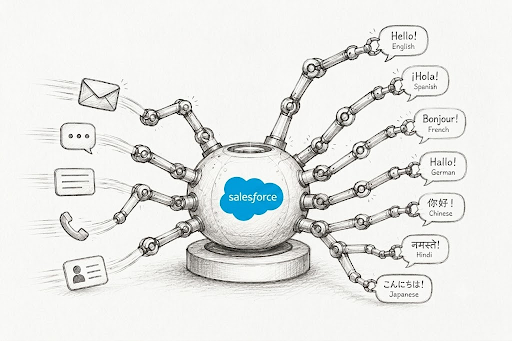
Many companies invest millions in Salesforce. They use it to track service, marketing, sales, and whatnot. But then they force every customer into an English-only support queue. This creates a "language bottleneck". It feels like a high-tech store with a locked front door. Today, one language support is a silent killer of growth. If your Salesforce support only speaks one language, it is costing you global revenue every single hour. In this article, we will exactly understand why and how you fix that.
The Growing Language Expectation Gap in Global Customer Experience
The fastest-growing revenue opportunities in 2026 are not in English-speaking markets. Southeast Asia, Latin America, MENA, and Eastern Europe are where deals are accelerating. Buyers in these regions are sophisticated, well-funded, and have high expectations for vendor experience.
Here's the uncomfortable part: those expectations include language. Not just translated marketing copy but actual support, in their language, when they need it. Studies consistently show that a large majority of buyers prefer to receive customer service in their native language, and many will abandon a purchase if support isn't available in it.
Now look at what most Salesforce orgs actually have. The Salesforce platform itself is beautifully localized, available in over 30 languages. But the workflows running inside it? English-only. Case comments, email-to-case templates, Knowledge articles, Service Cloud support. In most orgs, all of it is built and maintained exclusively in English. That gap between platform capability and organizational reality is where revenue disappears.
How English-Only Salesforce Support Is Draining Your Global Revenue
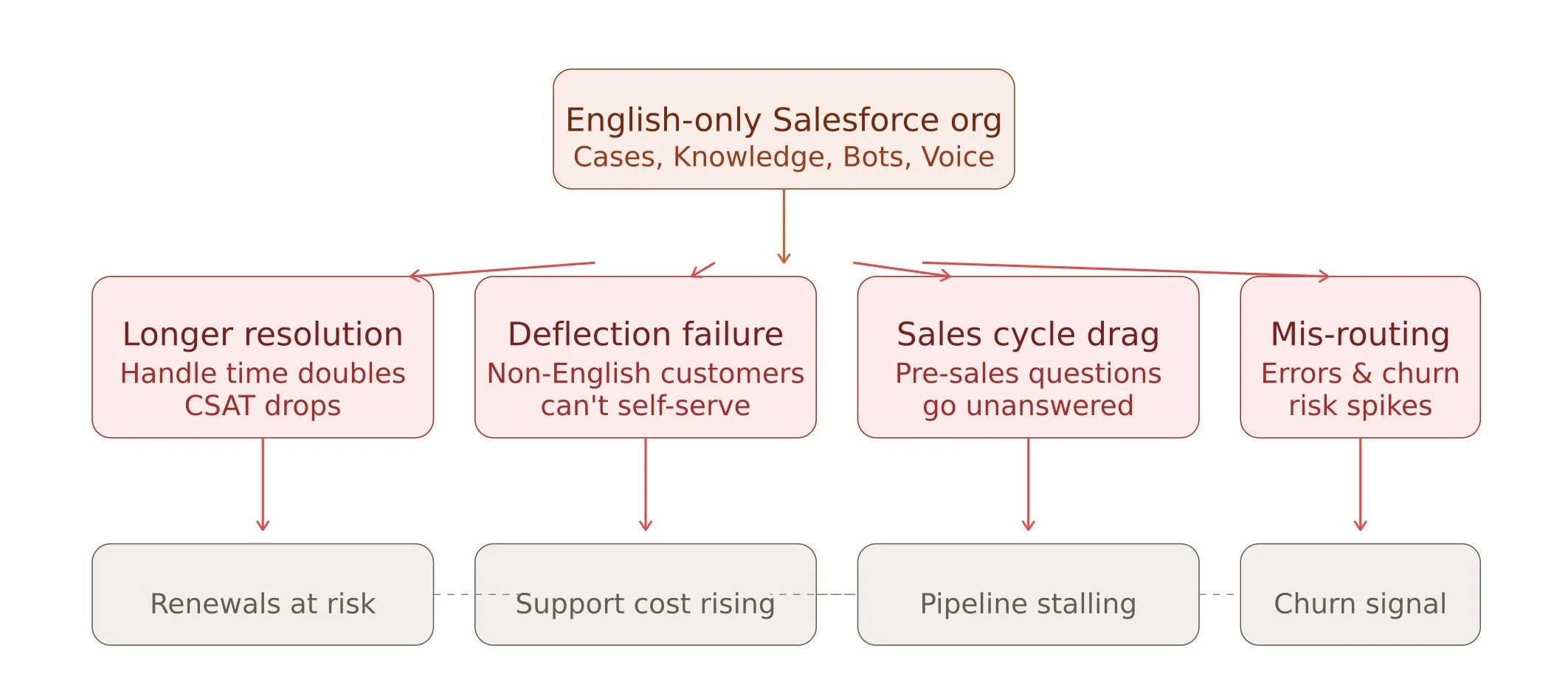
Language friction doesn't show up as a line item in your P&L. It hides inside metrics you're already tracking and makes them worse in ways that are easy to misattribute. Here's where it actually hurts:
1. Longer time-to-resolution:
When an agent receives a case in a language they can't fully understand, everything slows down. They spend time translating, paraphrasing, or escalating. Handle times go up. CSAT scores go down. In SaaS businesses where renewal depends on customer health scores, this directly affects revenue.
2. Case deflection failures:
One of the biggest ROI drivers in Salesforce Service Cloud is Knowledge-based deflection. It is about getting customers to self-serve instead of opening a case. But deflection only works when the article is in a language the customer actually reads. An English Knowledge base deflects almost nothing for your Spanish or Arabic-speaking customers.
3. Sales cycle drag:
Pre-sales support questions often flow through the same queues as post-sales cases. When a prospect can't get a clear answer in their language, deals stall. This is rarely captured as "language barrier" in your opportunity notes. It just shows up as deal velocity slowing in certain regions.
4. Agent errors and mis-routing:
Agents handling cross-language cases without proper tooling make mistakes. Cases get closed incorrectly, escalated unnecessarily, or resolved with the wrong solution. Every one of those errors is a churn risk signal you're generating yourself.
Why Most Salesforce Orgs Still Run English-Only Support
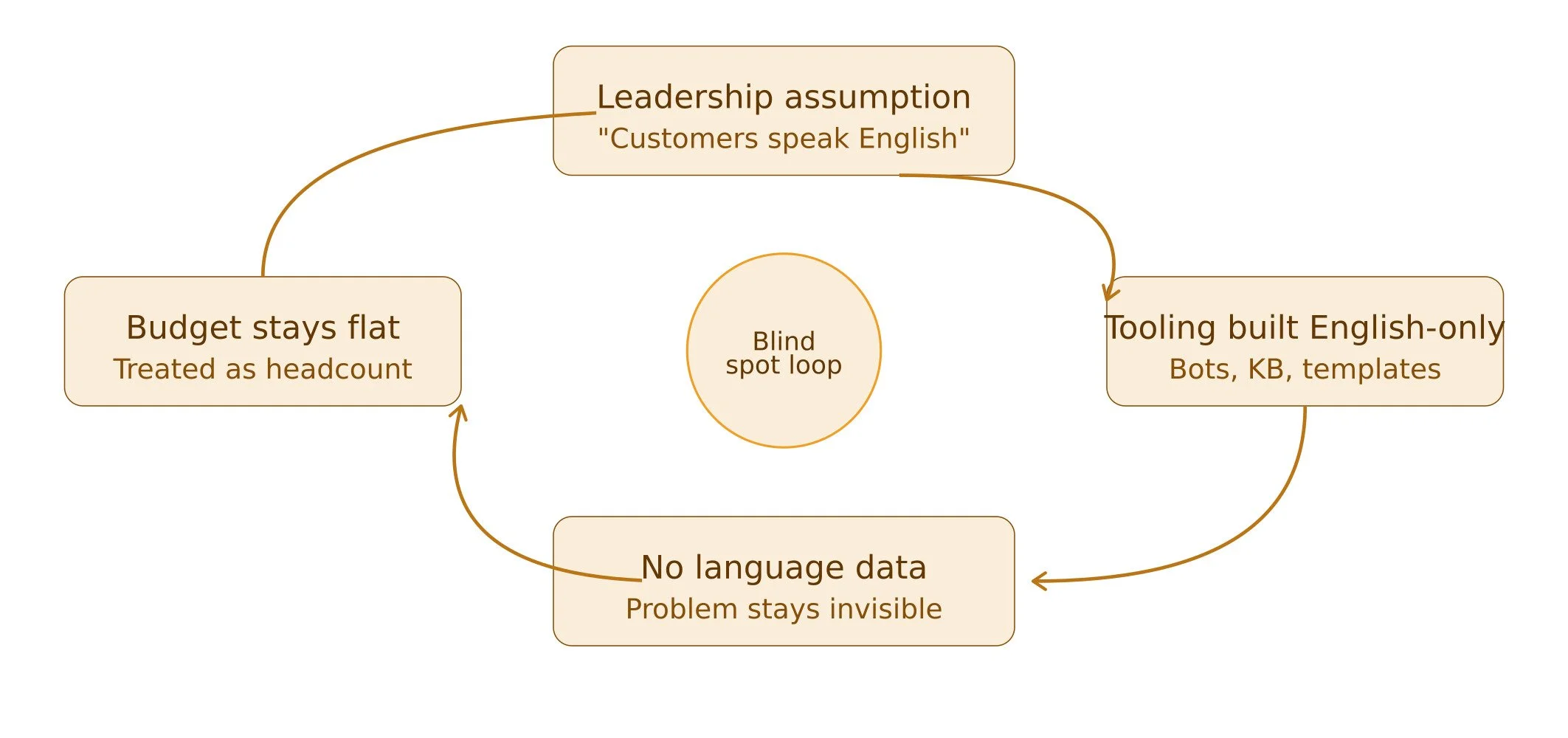
Most RevOps and CX leaders are not ignoring this problem out of indifference. They are unaware, and here's why:
1. The first reason is a quiet organizational assumption: "our customers will communicate in English." This belief often lives at the leadership level and trickles down into system design. It's rarely written down. It just shapes every decision made when building out Salesforce workflows, and it survives until a major regional deal is visibly lost.
2. The second reason is a tooling misunderstanding. Teams see that Salesforce supports multiple languages and assume their support operation is covered. But Salesforce's language settings control the UI your agents see, not the content your customers receive. Those are two very different things.
3. The third reason is data invisibility. If you haven't tagged Language as a field on your Case object, you have no data. No data means no dashboard. No dashboard means no QBR conversation. The problem stays invisible at exactly the level where budget decisions get made.
4. Finally, when the issue does surface, it tends to get treated as a headcount problem. "we need to hire more bilingual agents." That's expensive, slow, and often impossible at scale. The better answer is a systems problem with systems solutions.
Salesforce Multilingual Support: Practical Fixes You Can Implement
The good news is that you don't need to rebuild your entire support org. Most of the fixes live inside tools you already have. Here's what to prioritize.
Language detection and routing
Use Salesforce Flow or Einstein Classification if you have it. It helps you detect the language of an incoming case and route it to the right queue or bot path automatically. This is a quick win that can go live in days, not months. Start with your top three non-English languages by case volume.
Multilingual Knowledge
Salesforce Knowledge supports language variants natively. The work is in the content, not the configuration. Build a translation workflow, even a lightweight one using AI-assisted drafts reviewed by a native speaker for your top 20 most-deflecting articles. That alone can meaningfully move your deflection rate in target markets.
Translation integrations
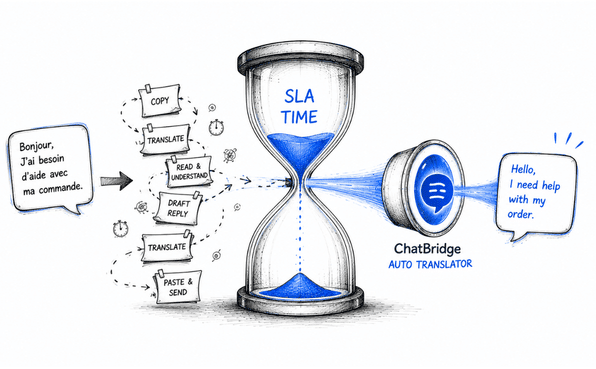
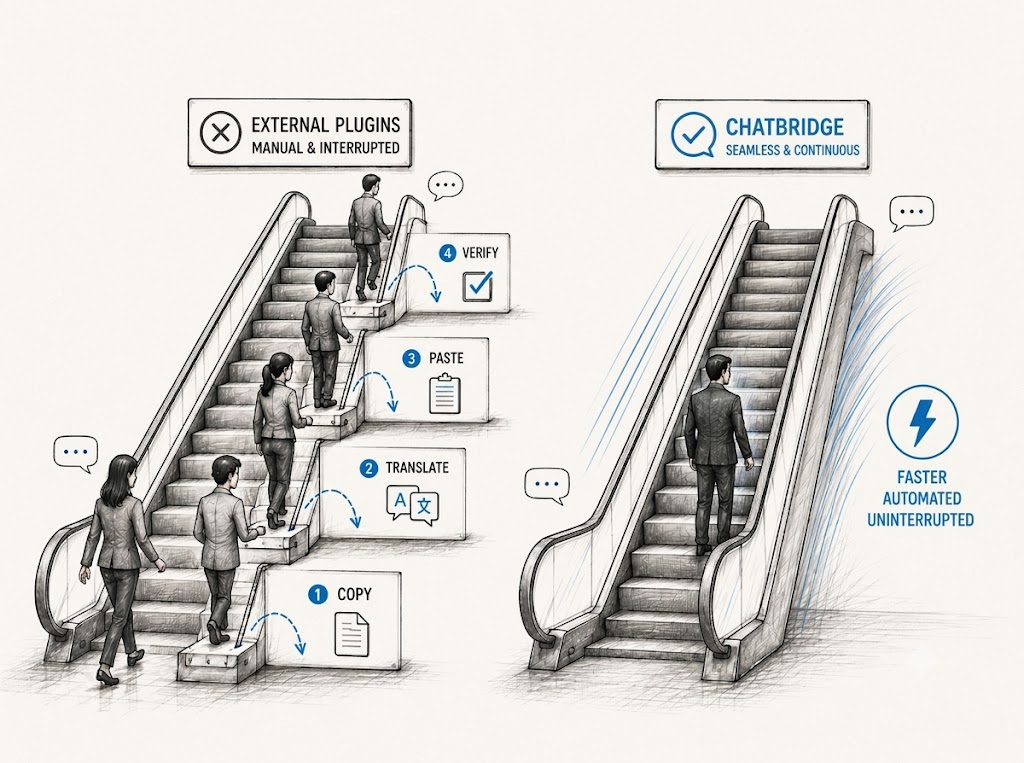
If you need real-time translation within the agent console, look at AppExchange solutions. These integrate directly into the Service Cloud interface and let agents respond in English while the customer receives their native language and vice versa. Evaluate based on language pair coverage, translation accuracy for your industry's terminology, and volume pricing.
Reporting and tagging
Before anything else, add Language as a picklist field on your Case object. Start populating it, manually at first if you have to. Within a quarter, you'll have baseline data. Then build a simple dashboard: resolution time by language, CSAT by language, escalation rate by language. Now the problem is visible, and you can make a business case for fixing it.
The Final Words
In 2026, the argument for English-only support is harder to make than it's ever been. The translation quality has improved dramatically. The AppExchange has mature, proven solutions. The platform you're already paying for can do most of what you need. What's left is organizational will and data to make the case internally.
Start small. Add the language field to your case object this week. Pull a regional breakdown of your CSAT and resolution time next week. You'll know within a month whether language friction is a meaningful problem in your org. Chances are, it is. Multilingual Salesforce support isn't just a localization project. It's a revenue protection strategy. And in a market where your competitors are already moving on it, inaction has a price, too.
Frequently Asked Questions
-
If you only offer support in English, it can be hard for international customers to understand you. This leads to more mistakes, slower help, and unhappy customers. Over time, this makes it harder to grow your business and earn revenue in other countries.
-
Multilingual support makes it easier for local teams and customers to interact with Salesforce in their preferred language. This improves usability, boosts adoption rates, enhances productivity, and ensures better alignment with regional business needs.
-
Companies that don't offer local language support risk losing customers to competitors who do. Without localization, you might see more people leaving your service. In today's global market, not speaking your customers' language can hurt your brand's reputation and your profits.
-
You can use built-in Salesforce features and tools that translate text in real-time. It also helps to set up workflows designed for different languages. Partnering with Salesforce experts also helps design scalable multilingual strategies tailored to different regions and customer segments.
Related Reading
Let’s Talk

Drop us a note, we’re happy to take the conversation forward 👇🏻