

Key takeaways:
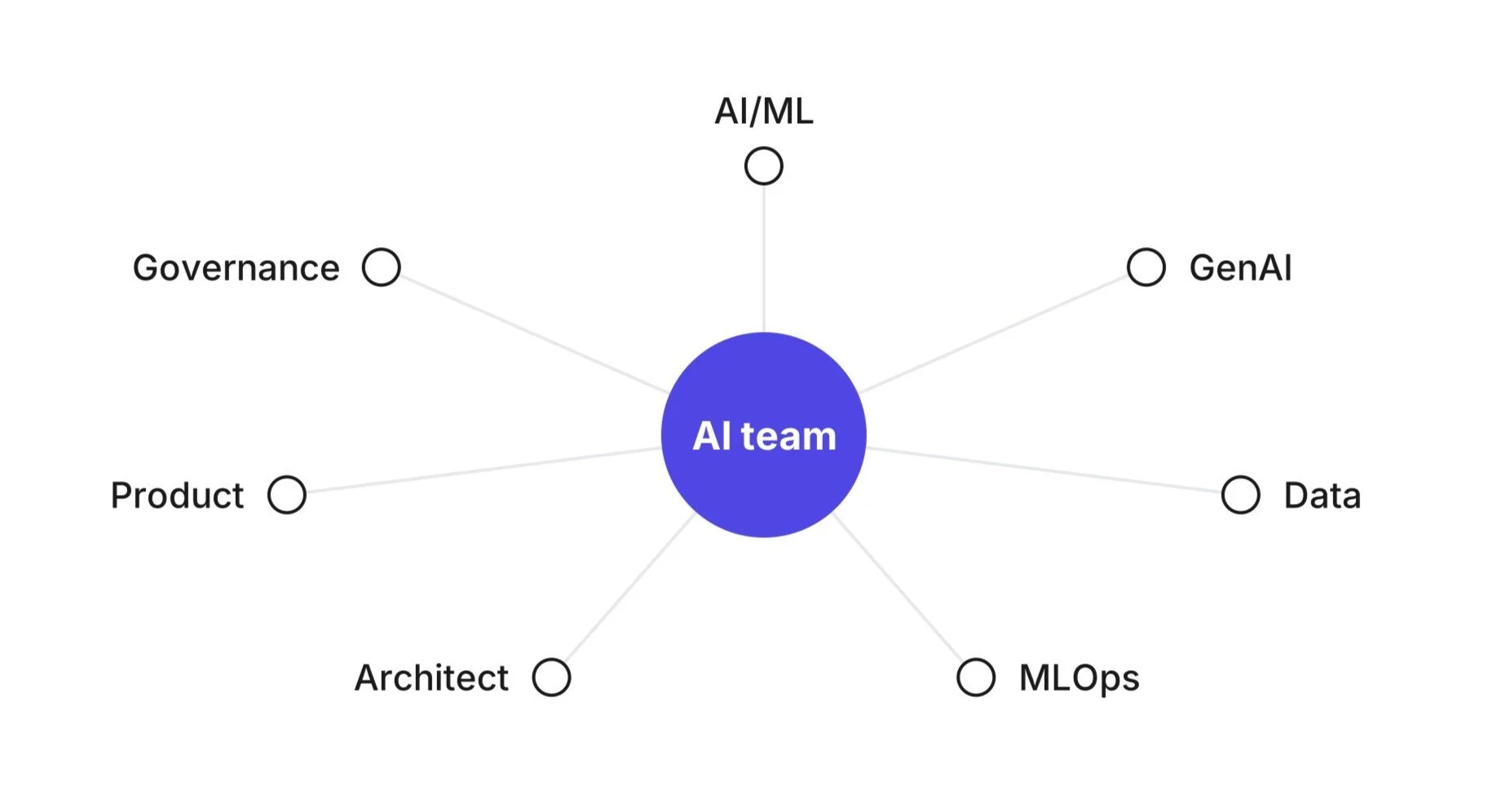
Building successful AI capabilities requires AI/ML engineers, generative AI specialists, data engineers, architects, and governance professionals.
Choose the right staffing model. Direct hiring, AI development partners, and hybrid staffing models offer different ways to build engineering teams.
Continuous upskilling, strong governance, and knowledge sharing help organizations build sustainable AI engineering teams.
Global Capability Centers (GCCs) are evolving beyond traditional IT support, back-office operations, and service delivery. Today, enterprises increasingly expect these centers to contribute to product development, digital transformation, and technological innovation.
Artificial intelligence is accelerating this shift. As organizations adopt generative AI, machine learning, and intelligent automation, they need engineering teams that can build, deploy, and manage AI-powered solutions at scale.
This is driving the emergence of AI-first GCCs, where AI is not simply an additional technology capability but a core part of how the organization operates and innovates.
However, establishing an AI-first GCC requires more than setting up infrastructure or hiring a few AI specialists. Organizations need the right mix of engineers, data professionals, architects, product leaders, and governance experts.
Building this team requires a well-defined staffing strategy that accounts for both immediate project requirements and long-term AI capabilities. This article explores the key roles, team structures, hiring approaches, and considerations involved in staffing an AI engineering team in India.
What Is a Global Capability Center (GCC)?
A Global Capability Center (GCC) is an offshore or nearshore unit established, owned, and operated by a multinational organization to manage its core business, technology, research, and operational functions. It acts as an extension of the parent company, allowing it to access global talent, build specialized capabilities, and support business operations across different markets.
India has become a preferred destination for multinational companies looking to establish GCCs. With its large pool of skilled professionals, India offers an environment for building dedicated teams. By setting up a GCC in India, global organizations can strengthen their technology capabilities, support international operations, and build long-term innovation centers that contribute directly to their business objectives.
What Is an AI-First GCC?
An AI-first GCC is an offshore or nearshore center established, owned, and operated by a multinational organization to develop and manage artificial intelligence capabilities. It functions as an extension of the parent company's global operations, taking ownership of AI-led product development, engineering, business automation, and technology innovation.
Unlike outsourced AI development teams, an AI-first GCC builds long-term internal capabilities. It brings together engineering talent, infrastructure, business knowledge, and governance practices to develop, deploy, and manage AI solutions that support the organization's global objectives.
For example, an AI-first GCC might work on:
Developing generative AI applications and enterprise copilots.
Building AI agents to automate repetitive business processes.
Creating machine learning models for forecasting and predictive analytics.
Integrating LLMs with enterprise applications and internal data sources.
Developing AI-powered customer support and service solutions.
Establishing infrastructure for deploying and monitoring AI applications.
An important part of this model is the AI center of excellence (CoE). It provides centralized expertise, technical standards, reusable frameworks, and governance practices that support AI adoption across different business units.
Key AI Engineering Roles an AI-First GCC Needs
Building an AI-first GCC requires a multidisciplinary team. Enterprise AI applications involve several interconnected components, including data infrastructure, application development, deployment, and security. Here are the key roles organizations should consider when building their AI workforce.
1. AI/ML Engineers
AI and machine learning engineers develop, train, test, and deploy machine learning models. They build predictive models, recommendation systems, and classification solutions while optimizing model performance and integrating AI capabilities into existing applications.
2. Generative AI Engineers
Generative AI engineers develop applications powered by large language models (LLMs). They work on enterprise chatbots, AI copilots, intelligent assistants, and AI agents.
Their expertise typically includes prompt engineering, retrieval-augmented generation (RAG), vector databases, model fine-tuning, and enterprise integrations.
3. Data Engineers
Data engineers build and maintain the infrastructure that supports AI applications. They develop data pipelines, manage data warehouses and lakes, integrate enterprise information, and ensure that AI models have access to reliable data.
4. MLOps Engineers
MLOps engineers manage the deployment and ongoing operation of machine learning models. They handle model versioning, automated testing, monitoring, and performance optimization to ensure reliable production environments.
5. AI Architects
AI architects design the technical foundation of enterprise AI solutions. They select appropriate models and frameworks, define system architecture, and consider scalability, security, integrations, and infrastructure costs.
6. AI Product Managers
AI product managers connect business objectives with engineering initiatives. They identify AI use cases, define requirements, prioritize development activities, and coordinate between technical and business stakeholders.
7. AI Security and Governance Specialists
These specialists manage AI-related risks through data protection, model security, compliance, and responsible AI practices. They help establish controls for transparency, accountability, and human oversight.
How to Structure an AI Engineering Team for a GCC
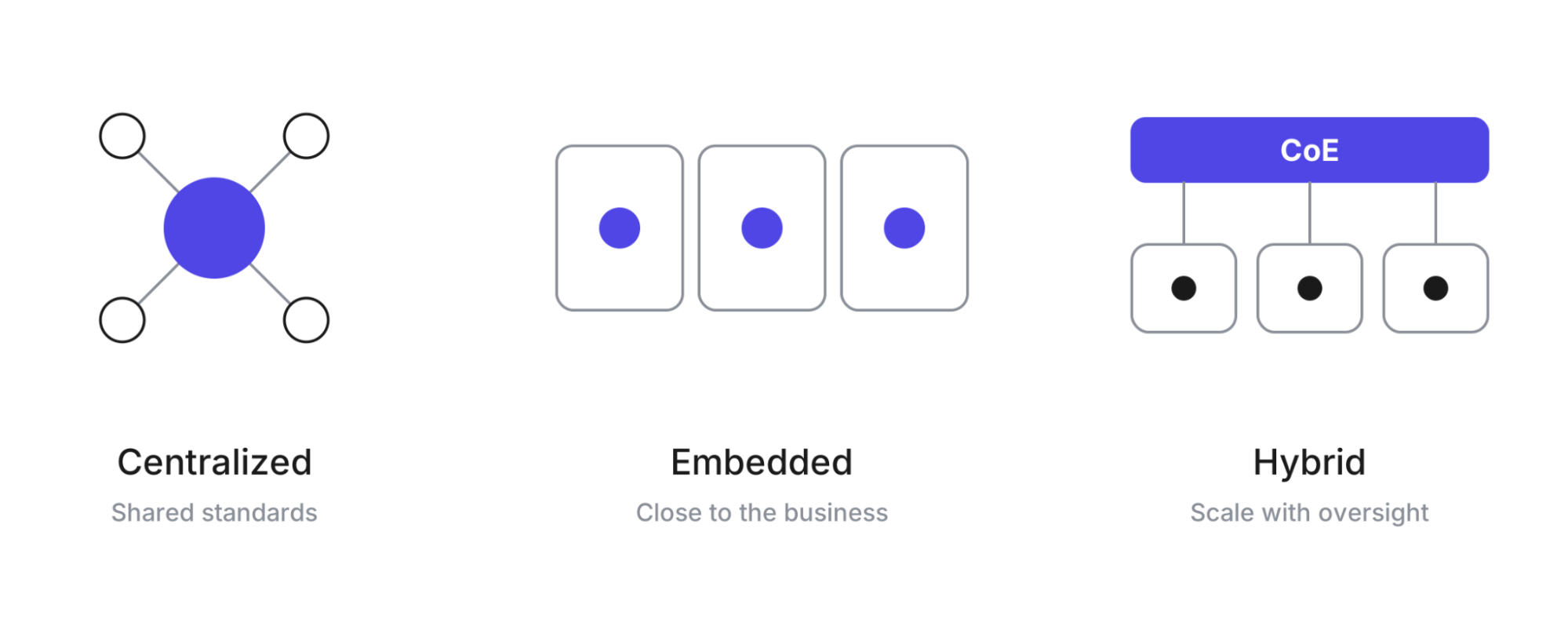
Once organizations identify the required roles, they need to decide how these professionals should work together. Within a GCC, AI engineering teams can be organized in different ways depending on how the center collaborates with the parent organization and supports its global business units. The right structure depends on business priorities, AI maturity, and the number of ongoing projects. There are three common approaches.
1. Centralized AI Team
A centralized team manages AI development, infrastructure, architecture, and governance across the organization. It acts as a shared resource for different business units. For example, the team might develop a common AI agent framework that multiple departments can use.
When to use it: This model works well for organizations starting their AI journey or looking to maintain consistent technical standards.
2. Embedded AI Teams
In this structure, AI engineers work directly with individual product teams or business units. For example, engineers might develop intelligent support assistants for customer service or AI-powered forecasting solutions for finance.
When to use it: Embedded teams are useful when different business units have specialized AI requirements and need dedicated engineering support.
3. Hybrid Team Structure
A hybrid structure combines centralized AI capabilities with specialized engineering teams. A central AI center of excellence manages architecture, shared infrastructure, governance, and reusable frameworks, while individual teams develop applications for specific business requirements.
When to use it: This model is suitable for larger enterprises that want to scale AI development while maintaining centralized oversight.
How to Staff an AI Engineering Team for a GCC in India
Staffing an AI-first GCC requires a hiring strategy that balances specialized expertise, long-term ownership, and flexibility. Organizations can approach GCC staffing in India through three common models.
1. Direct Hiring and In-House Recruitment
Direct hiring involves recruiting AI engineers and specialists as permanent employees of the GCC. It gives organizations greater control over their engineering teams, intellectual property, and development processes. However, building an in-house team can take time due to specialized skill requirements, competition for experienced professionals, and employee retention challenges.
2. Partnering with AI Engineering Service Providers
Organizations can work with specialized AI development companies to access experienced engineering professionals. These partners can fill skill gaps, accelerate development, and provide expertise in generative AI, machine learning, AI agents, and enterprise integrations.
This approach is useful when companies need specialized capabilities quickly without spending months building an entire team internally.
3. Building Through a Hybrid Staffing Model
A hybrid staffing model combines permanent employees with external specialists and contract-based resources. Organizations can retain strategic roles such as AI architects, engineering leads, and product managers internally while engaging external professionals for specialized development requirements.
This provides flexibility while allowing organizations to maintain long-term ownership of their AI capabilities. Clearly defined responsibilities, security requirements, and knowledge transfer processes are essential for making this model work.
Common Staffing Challenges When Building an AI-First GCC
Even with a clear hiring strategy, building an AI-first GCC comes with several challenges. Organizations need to anticipate these issues to avoid delays and create a sustainable engineering operation.
Shortage of Specialized AI Talent
Finding professionals with practical experience in LLMs, RAG, AI agents, model deployment, and enterprise AI architecture can be challenging.
Many candidates may understand AI concepts but have limited experience building and maintaining production-ready apps.
Organizations should therefore evaluate practical implementation experience rather than relying entirely on academic qualifications or theoretical knowledge.
High Competition for Experienced Professionals
Experienced AI engineers are in demand across technology companies, startups, and established GCCs. This competition can increase hiring timelines and make it difficult to attract specialized professionals.
Organizations need to offer meaningful technical opportunities, competitive compensation, and clear career development paths to attract suitable candidates.
Skill Gaps Across AI Technologies
AI development involves multiple technologies and disciplines. A professional experienced in traditional machine learning may not necessarily have the expertise required to develop LLM-based applications or AI agents. Similarly, a generative AI developer may lack experience in production infrastructure or enterprise security.
This makes it important to assess skills based on specific project requirements rather than treating all AI roles as interchangeable.
Employee Retention
AI engineers often look for opportunities to work on challenging projects and emerging technologies. If employees spend most of their time maintaining legacy systems or performing repetitive tasks, they may seek opportunities elsewhere.
Organizations should provide opportunities to experiment, contribute to meaningful AI initiatives, and develop deeper technical expertise.
Balancing Experimentation and Execution
AI-first GCCs need professionals who can explore new technologies while also delivering reliable business applications. However, experimentation does not always translate into production-ready solutions.
Organizations need teams that understand the complete development lifecycle, including testing, deployment, monitoring, security, and maintenance.
A Practical Roadmap for Staffing an AI-First GCC in India
Building an AI-first GCC is a gradual process. The following roadmap provides a practical approach.
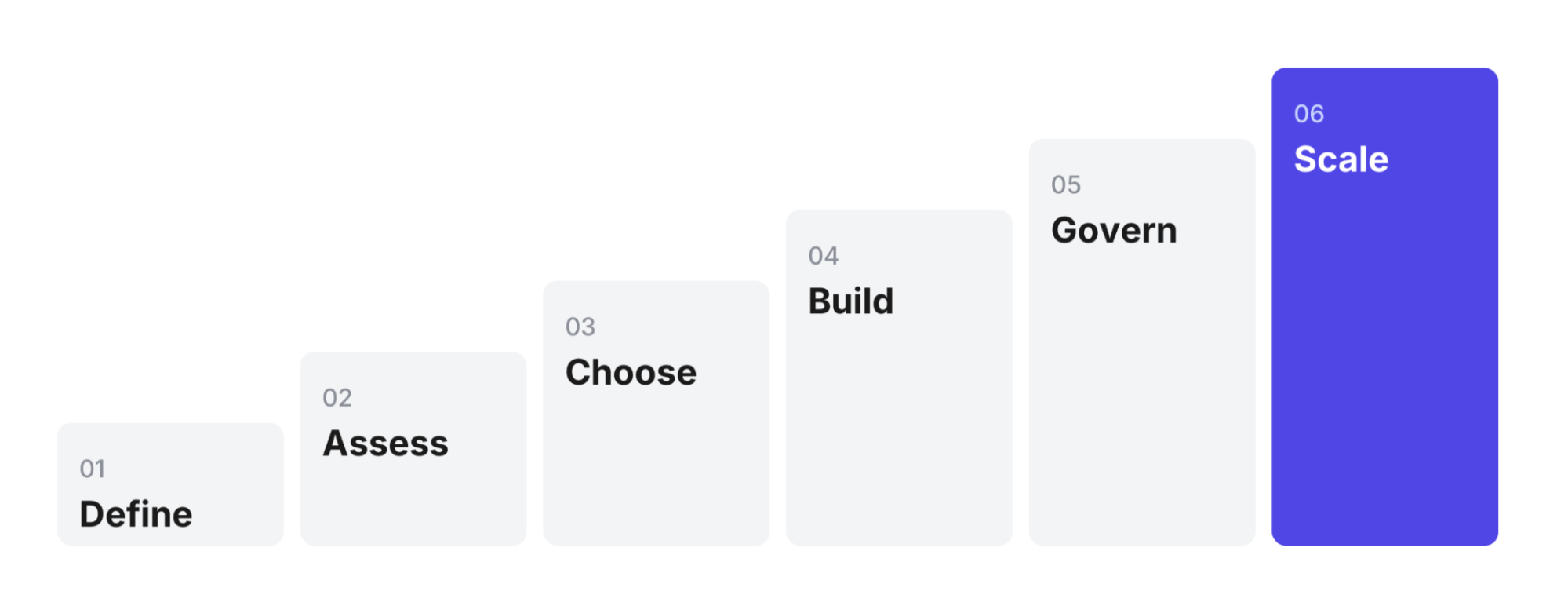
Phase 1: Define the GCC's Mandate and Operating Model
Begin by defining the role the India-based GCC will play within the parent organization. Identify the business functions, technology capabilities, and AI initiatives the center will own. Establish its reporting structure, decision-making responsibilities, operational scope, and collaboration model with headquarters and global business units. This provides a clear foundation for the AI objectives, team structure, and resources the center will need.
Phase 2: Define AI Objectives
After defining the GCC's mandate, identify the business problems the center is expected to solve. Determine whether the initial focus will be on generative AI applications, intelligent automation, predictive analytics, AI agents, or AI-powered product development. Clearly defined objectives will help determine the team's initial composition and technical requirements.
Phase 3: Assess Talent Requirements
Identify the roles and expertise needed to execute the planned AI initiatives. For example, an organization developing enterprise AI assistants may initially require generative AI engineers, data engineers, AI architects, and application developers. Prioritize essential roles instead of attempting to hire every possible AI specialization at once.
Phase 4: Choose a Staffing Model
Decide whether to build the team through direct recruitment, an external engineering partner, or a hybrid approach. Consider factors such as hiring timelines, budget, project complexity, internal expertise, and long-term ownership requirements. The selected model should support both immediate development needs and future expansion.
Phase 5: Build the Core Team
Begin with a core group of experienced professionals who can establish the technical foundation of the GCC. This may include an AI architect, engineering lead, data engineering specialists, AI/ML engineers, and generative AI engineers.
Once the initial team is operational, expand into specialized roles based on the organization's project pipeline.
Phase 6: Establish Infrastructure and Governance
Set up the infrastructure required for AI development, testing, and deployment. This includes cloud environments, data pipelines, model access, development tools, security controls, monitoring systems, internal systems, and collaboration processes. Establish governance standards, reporting responsibilities, and operational procedures early so that new AI projects follow consistent development and security practices across the GCC and the wider organization.
Phase 7: Scale Capabilities
As the GCC takes on more AI initiatives, expand the engineering team and introduce specialized capabilities. Continue investing in employee development, reusable AI frameworks, technical collaboration, and knowledge sharing. Organizations should also refine their operating model as the GCC takes greater ownership of AI products and enterprise-wide innovation.
What Is the BOT Model for Setting Up a GCC?
The Build, Operate, and Transfer (BOT) model is an approach organizations can use to establish a GCC with support from a specialized local partner. Under this model, the partner helps set up and initially manage the center before transferring its ownership and operations to the parent organization. The process typically involves three stages:
1. Build: The service provider handles the initial setup, including entity establishment, infrastructure, recruitment, compliance, and operational planning.
2. Operate: The partner manages the center's day-to-day operations, supports team development, and establishes the processes required to run the GCC effectively. During this stage, the parent organization can gradually become more involved in strategic decisions and operational oversight.
3. Transfer: Once the center reaches the agreed level of operational maturity, the partner transfers the business entity, employees, infrastructure, and operational responsibilities to the parent organization, subject to the agreed contractual and legal arrangements.
Upskilling and Retaining AI Engineering Talent
Recruiting experienced professionals is only one part of building an AI-first GCC. Organizations must also invest in developing existing employees and helping them adapt to the changing AI landscape.
Continuous learning is particularly important because AI frameworks, models, development tools, and implementation practices evolve rapidly. Here are some ways organizations can strengthen their internal AI capabilities.
1. Establish continuous learning programs: Provide structured training opportunities covering machine learning, generative AI, LLM development, AI agents, and cloud technologies. Encourage employees to pursue relevant certifications and technical learning paths.
2. Create internal AI labs: Give engineering teams dedicated environments to experiment with new models, frameworks, and AI use cases. This allows employees to develop practical experience without affecting production systems.
3. Encourage hands-on projects: Training becomes more effective when employees apply their knowledge to real business problems. Encourage teams to build prototypes, internal copilots, and workflow automation solutions.
4. Build clear technical career paths: Define growth opportunities for AI engineers, data specialists, architects, and MLOps professionals. Employees should have opportunities to advance into senior technical and leadership positions without necessarily moving away from engineering.
5. Promote knowledge sharing: Encourage collaboration between teams through internal workshops, technical documentation, code reviews, and shared learning sessions.
A strong learning culture helps organizations develop a more capable AI workforce while reducing their dependence on external hiring for every new technology requirement.
Final Thoughts
An AI-first GCC is more than an offshore engineering team or an extension of an organization's existing IT operations. It is a strategic, internally owned and operated part of the parent organization, with the talent, infrastructure, and responsibility required to develop and manage AI capabilities over the long term.
Establishing this model requires more than recruiting a few AI specialists. Organizations need a well-defined operating structure, a balanced team of AI engineers, data professionals, architects, product managers, and governance experts, and close collaboration with global business and technology teams.
With the right approach, organizations can establish an AI-first GCC in India that contributes directly to global product development, enterprise automation, and technological innovation while building scalable, secure, and production-ready AI solutions.
Planning to set up a GCC in India? Concretio can help you build an AI-ready GCC with the right talent, technology, and strategy. Get expert support to simplify your GCC setup in India and accelerate business growth.
Let's Talk

Drop us a note, we’re happy to take the conversation forward 👇🏻