
Top HubSpot CRM Trends Every Business Must Know
If you use HubSpot CRM, 2026 is an exciting year. The way businesses manage customers is changing fast. A CRM is no longer just a tool to store contacts. It is now a smart system. It helps you better understand your customers. It also automates your daily work, allowing your business to grow much faster.
HubSpot is leading this change with new features. These focus on AI, automation, and data. You must understand these HubSpot CRM trends to stay competitive.
15 HubSpot CRM Trends in 2026 You Can’t Miss
Are you a business and using HubSpot as your go-to CRM tool? You'd better not miss these HubSpot trends in 2026.
1. AI Is No Longer Optional, It Is the Core
AI has emerged as one of the crucial features in CRM. HubSpot is no different. AI features aren't just nice to have. They are defining how CRM works and takes experience to another level. The AI introduced by HubSpot is Breeze AI. It acts as a smart assistant in CRM.
It can help automate a range of tasks. From writing emails, preparing for meetings, analyzing customer data, and to name a few. More importantly, AI agents are helping teams to close deals faster. As a matter of fact, the businesses that have used AI-powered CRM features have seen up 48% reduction in time to close deals. So, AI doesn't replace your team; it empowers them. It works alongside the team for smarter and faster.
2. AI Agents Are Becoming Your New Teammates
AI has come a long way to not only assist but also take action. HubSpot is powered by AI agents. Once activated, these agents handle tasks on their own. The tasks can be assigned in natural language. These AI agents can help respond to customer queries, find leads, and update CRM records.
These tools work around the clock and reduce the workflows. So, modern CRM platforms are moving towards agent-based systems. This is where AI takes action without constant human effort. Experts also predict that 40% of business apps will include AI agents by 2026. So, consider CRM more of a team member instead of just a software.
3. Hyper-Personalization at Scale
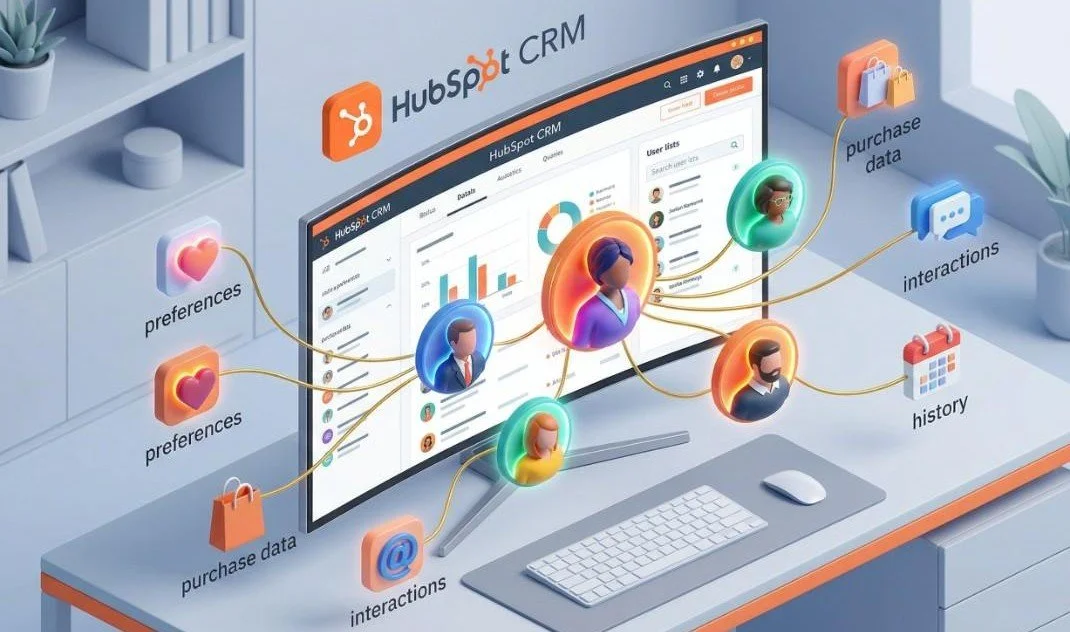
Customers want personalized experiences. They don't want conversations that don't feel personal. So, another HubSpot trend will be about hyper-personalization. HubSpot is making it scalable with AI-powered personalization. The system studies customer behavior and automatically adjusts communication. For example:
Emails change based on user activity.
Offers match customer interests.
Content feels more relevant.
That's what we call the hyper-personalization. It is becoming a standard feature in CRM systems. Want to know the result? The result is enhanced engagement, higher conversions, and happier customers.
4. Unified Data Is Becoming the Foundation
Dispersed data is one of the top problems that businesses address. So, one of the HubSpot CRM trends will be about data unification. The reason is clear. Different teams use different tools. Marketing, sales, and support teams work differently. Therefore, confusion and poor customer experience could be possible. HubSpot is solving this by acting as a single source of truth. Moving forward, CRM systems will have a great focus on: Centralized customer data.Real-time updates.Cross-team visibility.As a result of the unified data, the teams can make better decisions. Customers get consistent experiences. The reporting gets easier. Therefore, this trend has led to the rise of revenue operations or RevOps. It allows all teams to work together using shared data.
5. Revenue Operations (RevOps) Is a Must
RevOps is no longer just a hype. Businesses have implemented in their customer relationship management. The good news? RevOps aligns marketing, sales, and customer support. So, no more working separately. All teams now use the same CRM data and processes. HubSpot has created its CRM with this approach. All the departments can now feel connected. This helps businesses to:
Improve efficiency.
Increase revenue.
Reduce miscommunication.
Companies with RevOps are more likely to see better results. So, keeping everything connected is the new way forward.
6. Automation Is Getting Smarter
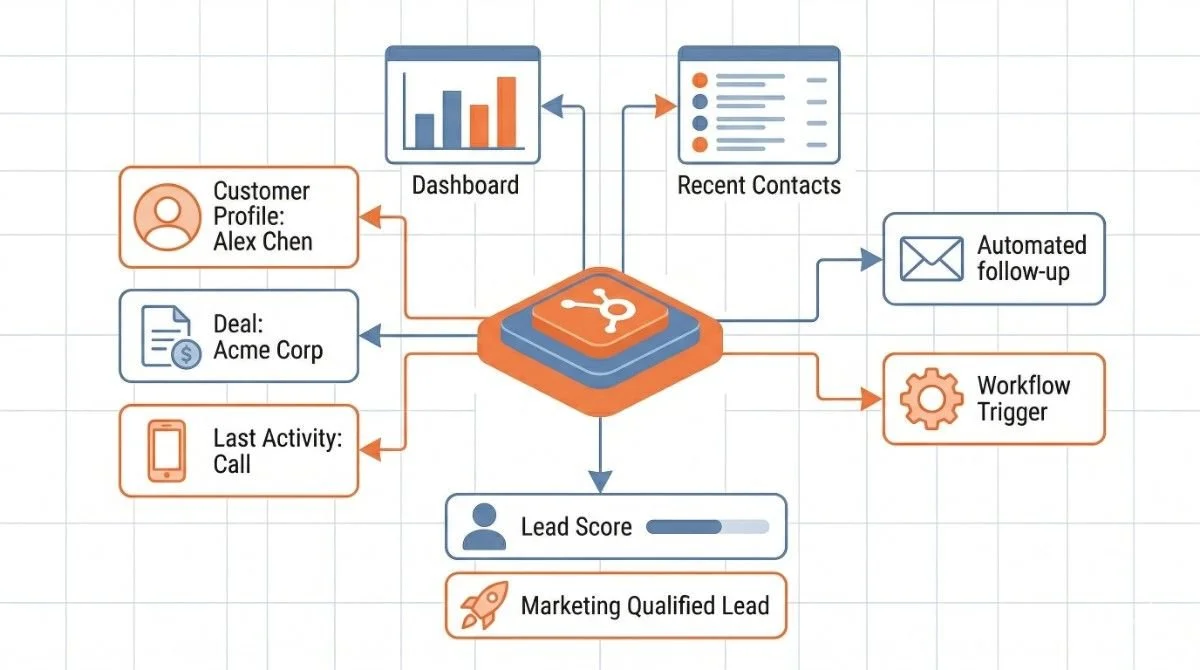
Automation is not new. There is a significant growth in automation in 2026. We all can see it grow even smarter. Automation used to be rule-based. You had to set conditions manually. Now, AI handles it dynamically.
For example:
Deals move stages automatically.
Follow-ups can be done at the right time.
Tasks are assigned without manual input.
Tracking activities has become easier. Thanks to the CRM powered by AI. AI can also help update records. So, it saves time significantly without any errors. Your team can now focus on creating a strategy and building relationships instead of focusing on daily chores.
7. Social CRM Is Growing Fast
People are spending more time on social media. Because of this, sales and marketing are moving there too. Social channels now get better response rates than email. HubSpot CRM is adapting by adding features for:
Tracking social media activity.
Selling directly on social platforms.
Chatting with customers anywhere online.
This shift is known as Social CRM. In 2026, businesses are going to where their customers already are. They no longer force people to use old-fashioned communication tools.
8. Omnichannel Is the New Standard
Customers now talk to businesses in many different ways. They use email, chat, and social media. They expect a smooth experience every time. It should not matter which one they choose. HubSpot CRM is focusing on connecting all these conversations. Everything stays in one place.
This means a sales rep can see chat logs. The support team can check a user's email history instantly. Everything stays organized in a single system. Modern CRMs are built to create this unified experience. This helps companies build trust. It also helps them avoid any confusion.
9. Real-Time Insights and Predictive Analytics
CRM does more than track past data. It now predicts the future. HubSpot uses AI to analyze how customers behave. It can predict if a deal will close. So, you can take the next steps better. For example, it identifies which leads will likely convert. It flags which deals are currently at risk. It even tells you exactly when to follow up. AI also summarizes calls and captures key points automatically. This helps teams make faster decisions. It also helps them make better ones.
10. Integration with AI Ecosystems
HubSpot is not working alone anymore. It is becoming part of a larger AI ecosystem. It now integrates with major AI platforms. These integrations allow businesses to:
Use external AI tools inside CRM.
Build custom workflows.
Enhance automation.
A lot of businesses have done the integrations. The productivity gain has clearly gone up for them. It shows that CRM is becoming more open and flexible. Here are some examples of the AI integrations.
Example 1. AI Agent Collaboration (HubSpot + Slack)In this "Multi-Agent" setup, HubSpot no longer works in a silo. A HubSpot Prospecting Agent autonomously identifies a high-value lead and "hands it off" to a Slack AI Agent. Instead of just sending an alert, the Slack Agent automatically organizes an internal brainstorming session, creates a dedicated channel, and briefs the account team. This turns the CRM into an active teammate that coordinates human action across different platforms.
Example 2. Deep Research (ChatGPT + HubSpot Context)This integration allows executives to query complex CRM data using natural language. A CEO can ask ChatGPT Search, "Which UK deals are at risk from the new tax changes?" The Deep Research Connector allows the AI to securely "read" live HubSpot data and cross-reference it with real-world news. The result is a strategic summary delivered instantly, saving the executive from digging through manual reports or dashboards.
11. Data Privacy and Trust Are Becoming Critical
Data and AI make one thing very important. That thing is trust. Customers want to know how you use their data. They want to know if it is secure. They want to know if AI decisions are reliable. HubSpot is focusing on permission-based access. They are building secure systems. They are making processes transparent. In 2026, businesses that build trust will stand out. Those who ignore it may lose customers.
12. Human & AI Collaboration Is the Future
AI is not replacing humans. It is working with them instead. HubSpot is promoting a new model. AI handles the boring work. Humans focus on creativity. They also focus on relationships. This balance is very important.AI can help with a lot of content. But the human touch would still be needed. Too much automation can reduce trust. This happens if it is not handled well. The goal is to use AI as a helper. It should never be a replacement.
13. CRM as a Growth Platform
CRM used to be just for managing contacts. Now it is a complete growth platform. HubSpot is leading this change. It combines marketing and sales tools. It also includes customer service and AI.This means businesses can attract new leads. They can convert those leads into customers. They can also support and keep them. Everything happens in one place. This shift helps companies grow faster. It also makes them much more efficient.
14. Data-Driven Decision Making
In 2026, businesses no longer rely on guesswork. Decisions are now based on facts. Companies focus on key metrics to build their CRM strategies, such as:
Lead quality to find the best prospects.
Conversion rates to see what is working.
ROI to measure total profit.
Customer acquisition cost to track spending.
HubSpot provides clear dashboards and reports. These tools make it easy to track performance. They also help teams improve their strategies quickly. Learn more about the HubSpot auditing here.
15. CRM Is Becoming Easier to Use
Finally, one of the most important trends is simplicity. Despite all these advanced features, HubSpot is working to make CRM:
Easy to use.
User-friendly.
Accessible to small businesses.
AI is playing a big role here. No more depending on the complex tools. Users can simply ask AI to do tasks. This makes CRM more accessible to everyone, not just experts.
Benefits of Adopting HubSpot CRM Trends
Adopting the latest HubSpot trends is more than just using new tech. You can improve how your business works. It helps your teams perform better. Also, it improves how customers see your brand. These trends bring clear benefits that drive growth.
Faster Sales Cycles
AI handles tasks like follow-ups and data updates. This lets your sales team focus on closing deals. It reduces delays and moves prospects through the pipeline faster.
Better Customer Experience
Personalization and omnichannel tools ensure timely messages. This makes every interaction smoother. It also helps build trust and long-term relationships.
Increased ROI
Efficient processes lead to better targeting. You get better results from your marketing and sales efforts. This means higher returns without spending much more.
Improved Team Productivity
Automation cuts down on boring, repetitive tasks. Centralized data makes it easier to work together. Teams can focus on strategy instead of routine chores.
Stronger Team Alignment
Marketing, sales, and support all share the same data. This reduces confusion across the board. It ensures everyone is working toward the same goals.
Final Thoughts
HubSpot CRM in 2026 is very different from what it was a few years ago. It is no longer just a CRM but a smart one. An AI-powered platform that businesses connect better with customers in ways that we can’t imagine.
To stay ahead, you must embrace these changes now. Start small with new tools. Experiment with different features. Keep learning as the platform grows. Businesses that adapt early will gain a huge advantage. Feeling left behind? Get professional support from HubSpot experts. Concret.io has the certified HubSpot development team that works smart for businesses to make the most of their CRM. Custom integrations, successful implementations, you name it, and we have got your back.
Frequently Asked Questions
-
AI is making HubSpot CRM smarter with automation. AI agents can now automate a range of tasks. This can include automated data entry, updating customer records, lead scoring, or personalizing emails. AI can also provide insights for it to make quicker and better decisions.
-
Personalization has been really helpful for businesses. They can send context-aware emails. That means sending the right message to the right customer at the right time. The result? Better customer experience, higher trust, and more conversions.
-
Yes. HubSpot is designed for ease of use. It is a scalable solution for small teams. You can begin with essential tools. Then, you can upgrade as needed. This allows you to adopt AI and automation over time.
-
Businesses can start by organizing and cleaning their CRM data. Remember, accurate data is the foundation for AI and automation. It's better to train the teams on the new features. Start small automation workflows. Gradually, get into advanced tools. When preparing, also focus on keeping all teams on the same page, whether it is marketing, sales, or support. Don't forget to review performance regularly. It can ensure a smooth transition and better results.
-
Automation is about managing repetitive tasks. Be it sending emails, assigning leads, or updating records. The benefits are about saved time, reduced errors, and allowing teams to focus on more important work.
-
You can automate the audit by using a tool known as Diffspot. It’s an auditing app dedicated to HubSpot users. The tool provides instant insights into your HubSpot portal’s architecture. This makes it easier to review each area systematically instead of searching manually.
Related Reading
Let’s Talk

Drop us a note, we’re happy to take the conversation forward 👇🏻