
Why the Best AI/Vibe Coding IDE Is the One You Can Walk Away From

You pick an AI coding tool, standardize your team on it, and wire it into your workflow.
Few months later the vendor gets acquired.
Overnight, the data policy can change, the bill can change, and the model behind the editor can change.
You did not switch tools. The ground moved under the one you chose.
That is not a hypothetical.
In the twelve months to June 2026, two of the most-loved AI coding tools on earth were absorbed by mega-corps, and a third vendor rebuilt its own editor twice.
The deals look like ordinary acquisitions. They are not.
Read together, they expose what you are actually buying when you adopt one of these tools, and what you should test before you do. The lesson is not to avoid these tools. It is to choose the one you can walk away from.
Quick answer: When choosing an AI/Vibe coding tool in 2026, do not optimize for the model. Models are swappable and getting cheaper. Optimize for the layer you cannot easily replace: who controls your data, your bill, your roadmap, and your default model. That layer is the control plane, and the best tool is the one whose control plane lets you walk away.
What 18 months of consolidation proved
Three moves remade the AI IDE category in a year. Taken together they prove the market was mispriced, and that the part of these tools holding the value is not the part most buyers evaluate. The pattern rhymes with what happened one ecosystem over, where a wave of strategic acquisitions reshaped an entire AI agent platform: the buyers paid for capability and distribution, not features.
Windsurf Teams sold for parts
OpenAI tried to buy Windsurf for $3 billion first. That deal collapsed, with no confirmed public reason, and the regulatory explanation everyone repeated does not survive scrutiny.
Then Google moved, and not the way you would expect. It did not buy Windsurf. It ran a reverse acquihire: $2.4 billion, announced July 11, 2025, structured to take the people and leave the company.
| Where the $2.4B went | Detail |
|---|---|
| ~$1.2B to investors | Cash to the cap table |
| ~$1.2B in compensation | CEO Varun Mohan, co-founder Douglas Chen, and ~40 engineers, all into Google DeepMind |
| Technology license | Nonexclusive |
| Equity stake / product | None |
The product, brand, roughly 210 employees, and around 350 enterprise customers went elsewhere: to Cognition, the company behind Devin, for a reported $250 million. Cognition then raised a Series D at a $26 billion valuation, up from $10 billion nine months earlier.
“On June 2, 2026, Windsurf users opened their editor to an over-the-air update. It was now called Devin Desktop, with no warning and no migration window. The tool they chose became a different tool overnight. A team sold for parts, and every part appreciated. That is the tell that this market was mispriced, and the rebrand is the tell that the buyer sits last in line.”
Model vendors building the editor (Antigravity)
With the Windsurf team inside DeepMind, Google shipped Antigravity in November 2025. Within two months it reached 6% developer adoption, per the JetBrains AI Pulse survey of 10,000+ developers.
Then it did something odd. In May 2026, at Google I/O, it launched Antigravity 2.0, a second, separate app. Gergely Orosz of Pragmatic Engineer put it plainly:
“The original Antigravity came out in November 2025 as pretty much a clone of Windsurf. Antigravity 2.0 itself resembles a clone of Codex’s desktop app.”
In parallel, Google folded Gemini CLI and Gemini Code Assist for consumers into Antigravity. For a buyer that cuts procurement complexity. It also deepens lock-in, which is exactly what analysts flagged. Convenience and capture arrived in the same release.
Following table is from Official Google Blog. TBH, this is very confusing :(
| Feature | Antigravity 2.0 | Antigravity CLI | Antigravity IDE | Antigravity SDK |
|---|---|---|---|---|
| Interface | Desktop App | Terminal (TUI) | Desktop App | Python Code |
| Best For | Multiple simultaneous tasks | Command-line / Headless | Directly editing code | Building custom agents |
Distribution bought outright (Cursor / SpaceX)
On June 16, 2026, SpaceX agreed to acquire Anysphere, the parent of Cursor, for $60 billion in all-stock consideration. It is the largest acquisition in AI developer tooling history, and it preempted a $2 billion funding round, at a $50 billion valuation, that was hours from closing.
SpaceX has exercised the option to acquire @cursor_ai in an all-stock transaction with the goal of building the world’s most useful AI models.
— SpaceX (@SpaceX) June 16, 2026
For the past few months, SpaceXAI has been jointly training a model with Cursor, which will be released in Cursor and Grok Build soon.… https://t.co/X5mepgXgjJ
What $60 billion bought: 4 million active developers and $2B+ in ARR. The context is xAI, which launched Grok Build, a terminal coding agent, on May 25, 2026. A frontier model without distribution is a demo.
Cursor is the distribution xAI could not build from scratch.
Why the model is the part that does not matter?
In March 2026, Claude Code's full source code leaked by accident through its own npm package, and several teams read all 512,000 lines.
What they found reframes every tool in this story: 98.4% of it is not the AI.
It is everythingwrapped around the model, the permission checks, memory, safety limits, and the plumbing that lets it touch your files without breaking things.
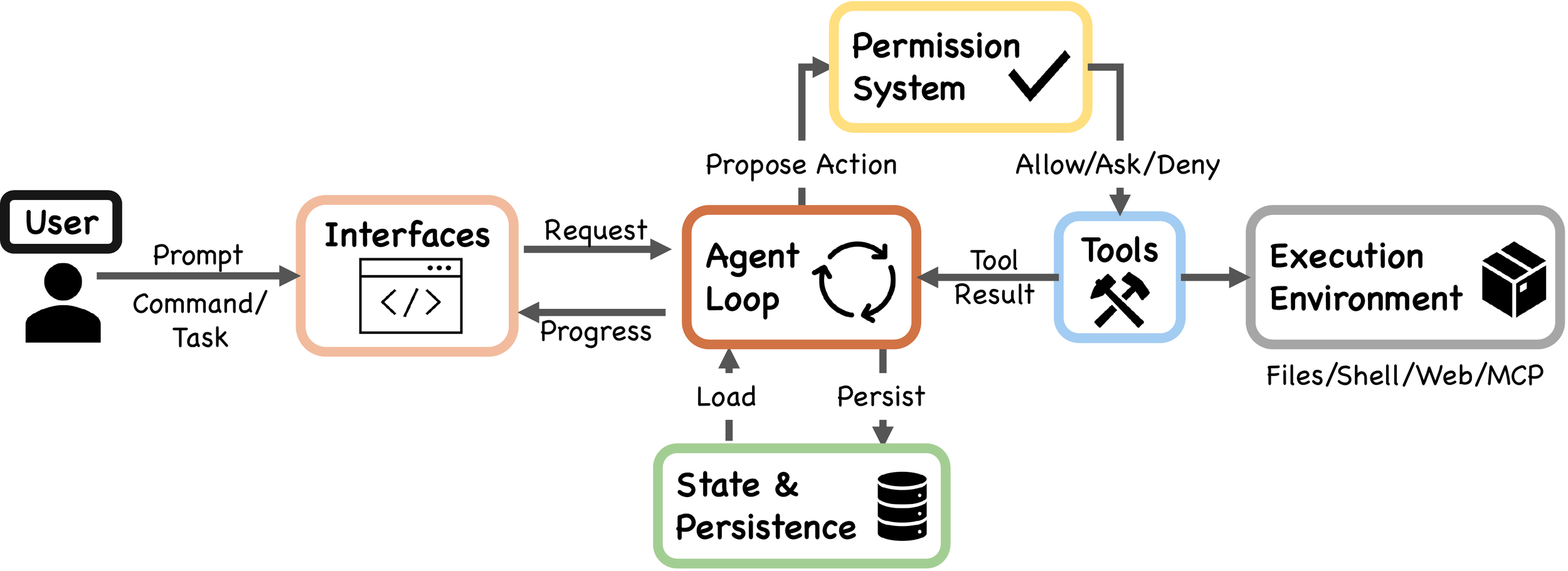
A comprehensive source-level architectural analysis of Claude Code via https://github.com/NeatNerdPrime/Dive-into-Claude-Code
That wrapper has a name. The harness. And it comes down to one line:
The model is interchangeable. The harness is not.
Swap in a different model and the tool still works. Rebuild the harness and you start over. Every major tool is converging on the same wrapper: Claude Code, Cursor, Copilot, Codex, Devin, Antigravity. Same parts underneath, different logos. The same logic is now showing up inside enterprise platforms, where the winning design ties agents, tools, and models together under a single governed control plane rather than around any one model.
Hold onto that “HARNESS” phrase.
Google bought a team to build the harness.
SpaceX bought the four million users sitting in front of one.
Both bought the control plane, from opposite ends. The model in the middle was never the prize.
Why Musk/SpaceX went for Cursor?
Run the live market through those four questions and the picture is clearer than the raw share numbers suggest.
Here is where adoption stood in the JetBrains AI Pulse survey of 10,000+ developers, January 2026:
| Tool | Work usage | Control-plane read |
|---|---|---|
| GitHub Copilot | 29% | Inside Microsoft, but still its own product |
| Cursor | 18% | Now SpaceX-owned; model-default risk rising |
| Claude Code | 18% | Independent (Anthropic); harness-led |
| Antigravity | 6% | Google-owned; quota and model menu tightening |
One caveat worth keeping: the JetBrains panel skews toward JetBrains-adjacent developers, and Stack Overflow's 2025 survey put Claude Code nearer 10% on a different method (Check Charts below)
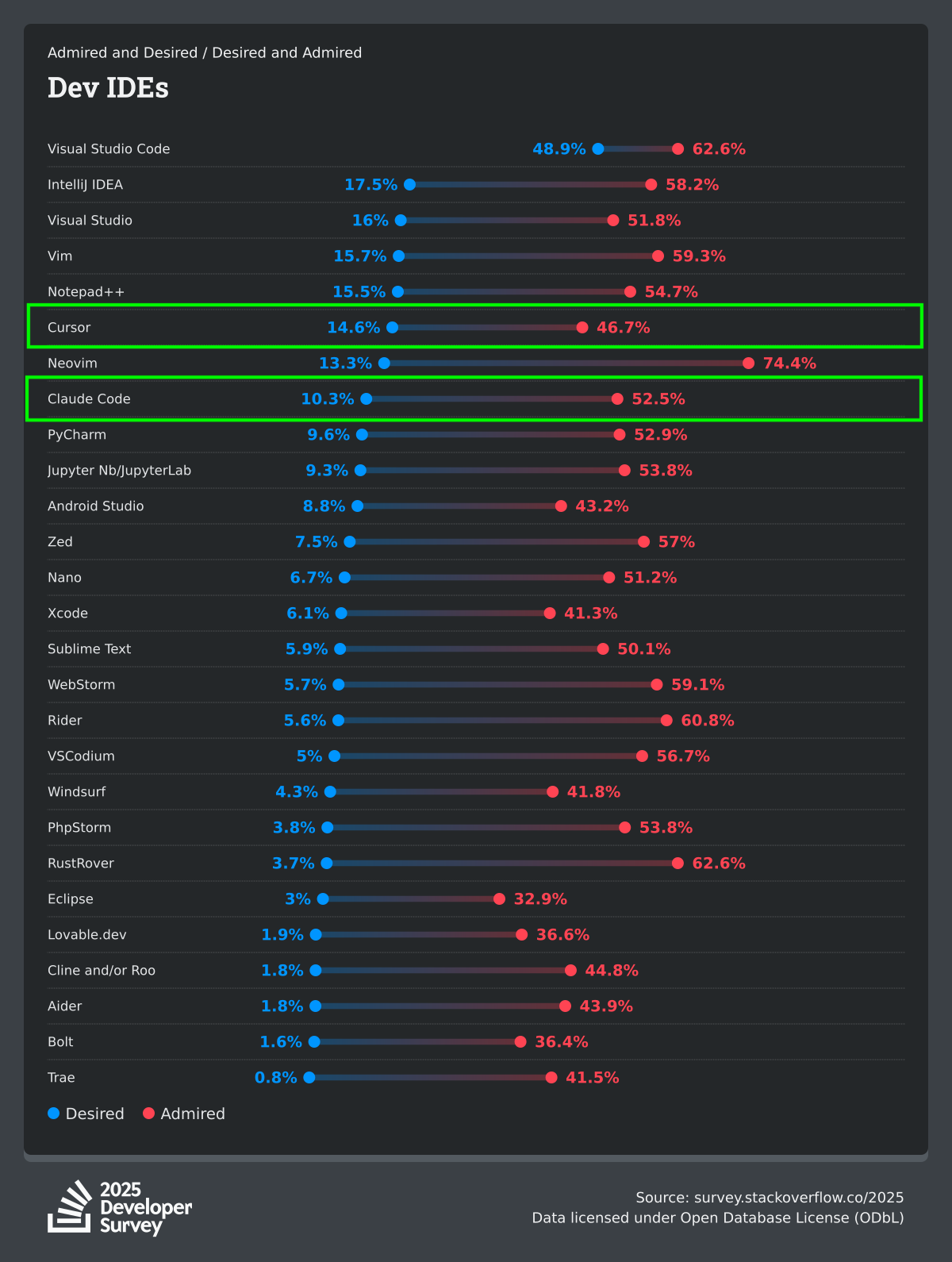
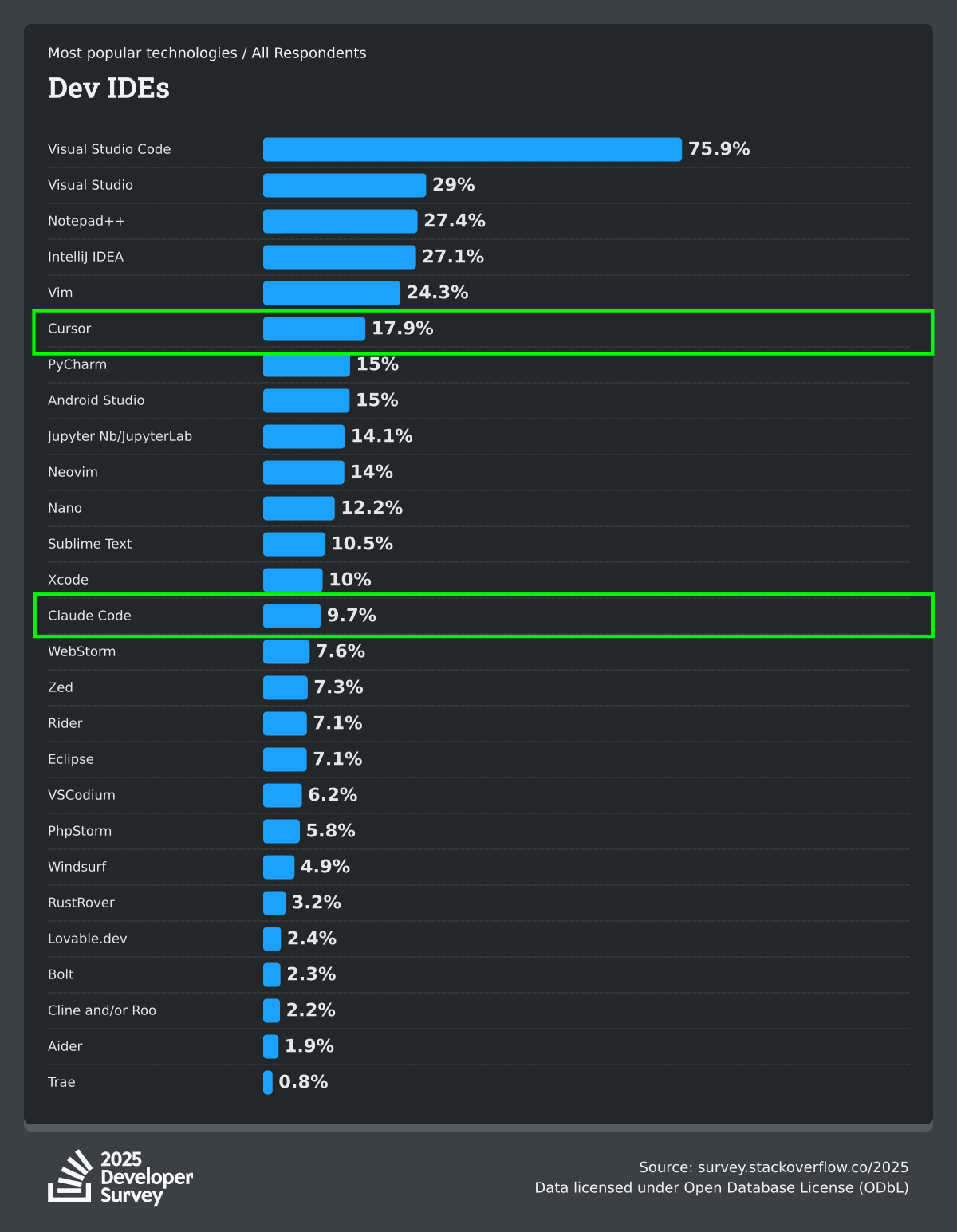
Hopefully, Grok forced/defaulted on Cursor, with other models silently or gradually fading away, help Grok find the ground, which it’s too behind to catch up now. You can check the % stats above to infer that on your own.
4 questions before you adopt Vibe/AI Coding IDE
If the model is the swappable part, then your evaluation should spend its time on the parts that are not. Before you standardize a team on any AI coding tool, answer four questions. None of them ask whether the tool is good. They ask who controls it, which is really the same question asked four ways: how hard is it to walk away?
| Question | What to check | Red flag |
|---|---|---|
| Who controls your data? | What it indexes, where context is sent, retention terms | Policy can change silently after an ownership change |
| Who controls your bill? | Pricing model, quota stability, what the quota is shared with | Metered credits pooled with non-coding products; sudden cuts |
| Who controls your roadmap? | Release cadence, owner incentives, forks | Acquirer slows, splits, or rebrands the tool |
| Who controls the default model? | Model menu, bring-your-own-key, what the default is | Owner makes its own model the default and quotas the rest |
#1 Who controls your data?
These tools index your codebase and send context to models. The question is not whether that is acceptable today. It is whether the policy you agreed to holds after the vendor is bought.
Cursor's case is live: an enterprise buyer from regulated industries should ask whether its indexing and data terms survive under SpaceX.
#2 Who controls your bill?
Pricing is where ownership shows first.
In June 2025, Cursor swapped a clean "500 fast responses" plan for raw API-rate billing, and bills spiked without warning. CEO Michael Truell had to apologize: "We recognize that we didn't handle this pricing rollout well and we're sorry."
Antigravity shows the deeper version. It launched in November 2025 with 250 free requests a day and premium quota refreshing every five hours. By March 2026 the free tier was 20 requests a day, a 92% cut, and premium models moved from a 5-hour refresh to a weekly one.
Worse, Antigravity is one tap on a shared Google "AI credit" pool that also feeds Gemini, Jules, Veo video, image generation, and YouTube Premium. Your coding quota competes with a media subscription. Developers said it plainly on Google's own forum:
"I was using Opus 4.6 and exhausted my quota in 3 exchanges. I'm on AI Ultra."
Windsurf, before it was carved up, sold the opposite: flat $20, no credit meter, no media bundle. Simple pricing for the one thing a developer actually does.
#3 Who controls your roadmap?
Big acquirers usually slow the tools they buy, or split them.
Antigravity is the live example: two apps, an unclear roadmap, and a launch post that recommended running its agent next to any editor you like, including a competitor's.
When the roadmap serves the owner's platform strategy, your workflow is a passenger.
We already saw what Google did by creating 2 AntiGravity IDEs for developers to choose from. It seems they are passing on their own confused IDE strategy to developers.
#4 Who controls the default model?
Antigravity already narrowed the menu to Gemini, Claude 4.6, and one OpenAI open-weight model, with no flagship GPT, no Mistral, no local models, and no bring-your-own-key.
Now apply the incentive: xAI's Grok division lost $6.35 billion in 2025, and every Cursor call routed to Anthropic is revenue leaving SpaceX. Nobody has to ban a rival model. They only have to make their own the default, price everything else behind a quota, and wait.
Most developers never change the default. The defensible position is a tool that keeps your coding rules portable across Cursor, Claude Code, and other editors, so the model stays a choice you make, not one the owner makes for you.
Cursor was never one model's app. Its Ultra tier, at $200/month, ran on simultaneous multi-year deals with OpenAI, Anthropic, Google DeepMind, and xAI. It was a router sitting on top of all of them.
That is the position worth protecting, and the one most at risk once a model vendor owns the editor.
It’s going to be a Grok wrapper.
— Karan (@sh_karan_sh) June 17, 2026
What Developers/CTOs/Architects actually do now?
I use Claude Code and Codex heavily and building my own agent-skills, agents and agents.md harness, which initially went heavy on Claude Code, which I regret at times, as agent-skills and agent front matters are pretty different across Claude, Codex, Gemini and others, the https://agentskills.io/ standard is pretty simple for basic skills. Claude is definetly offering very sophisticated syntax and features for both claude code terminal, desktop eco system, but again seeing the Fable episode, and other government regulations, I will be more mindful to avoid over investing in Claude based tooling.
So to state simply, keep your dev process and workflows in vendor neutral mechanics like
Agent Skills
Agents
Use Agents.MD, well adopted by most providers, avoid “Claude.MD” or make it point to AGENTS.MD.
With Agent and Skills, avoid keeping it heavy on a provider’s syntax.
Any other vendor specific hook, workflow, commands - try to learn neutral syntaxes, or be prepared to migrate one day. I love Claude Code, but Fable and other incidents are good reminder to stay neutral.
FAQ
Does the model matter when choosing an AI coding tool?
Less than buyers assume. The leaked Claude Code source showed that about 98.4% of the tool is the harness around the model, not the model itself. Models are swappable; the harness, your data terms, and your pricing are not. Evaluate those first.
What is the control plane in AI coding tools?
The control plane is the layer that governs your data, billing, roadmap, and default model, plus the auditability and continuity across model changes over time. It is the part of an AI coding tool you cannot easily replace, which is why it holds the value.
Is Cursor still independent?
No. On June 16, 2026, SpaceX agreed to acquire Cursor's parent, Anysphere, for $60 billion in all-stock consideration, pending antitrust clearance targeted for Q3 2026. Claude Code (Anthropic) and GitHub Copilot (inside Microsoft) remain the most prominent tools not owned by a frontier-model lab.
What is a reverse acquihire?
A deal structured to take a company's people while leaving the company behind. Google's $2.4 billion Windsurf transaction hired the founders and around 40 engineers into DeepMind under a nonexclusive license, with no equity stake and no product. The product and staff were sold separately to Cognition.