Salesforce Sales Cloud vs. Marketing Cloud: Important Distinctions Found!
Let's examine how these two Salesforce key drivers operate differently to increase scale, engagement, and revenue.
Did you know that in FY 2025, Salesforce generated a surprising $37.90 billion in revenue, of which over $35.7 billion came from tool subscription and support services?
And here we will talk about the best Salesforce tools, which have high retention rates. Let’s know about the key differences between them (Sales and Marketing Cloud)
What Exactly Is Salesforce Sales Cloud?
Salesforce Sales Cloud is a problem-solving sales automation solution designed to help businesses manage their complete sales processes more accurately. Along with other product features, it additionally provides features intended to improve forecasting, lead management, pipeline tracking, and overall sales performance.
The primary goal of Sales Cloud software is to streamline sales procedures by providing teams with the tools they require to close deals faster and more effectively.
I am giving you the breakdown so you can understand it quickly.
Salesforce Sales Cloud is a cloud-based CRM platform that is mostly used to manage sales activities and customer relationships.
It helps businesses to find and collect leads, contacts, and accounts altogether under one system.
Sales teams can manage opportunities and sales pipelines more easily.
It gives sales automation tools that reduce manual work, automate tasks, and save time.
Sales Cloud provides real-time analytics and reports to track performance and improve accordingly.
It uses AI-powered insights to forecast outcomes and recommend actions for smarter moves.
The platform improves team collaboration productivity, growth, and development.
It helps organizations to perform their task faster and increase revenue.
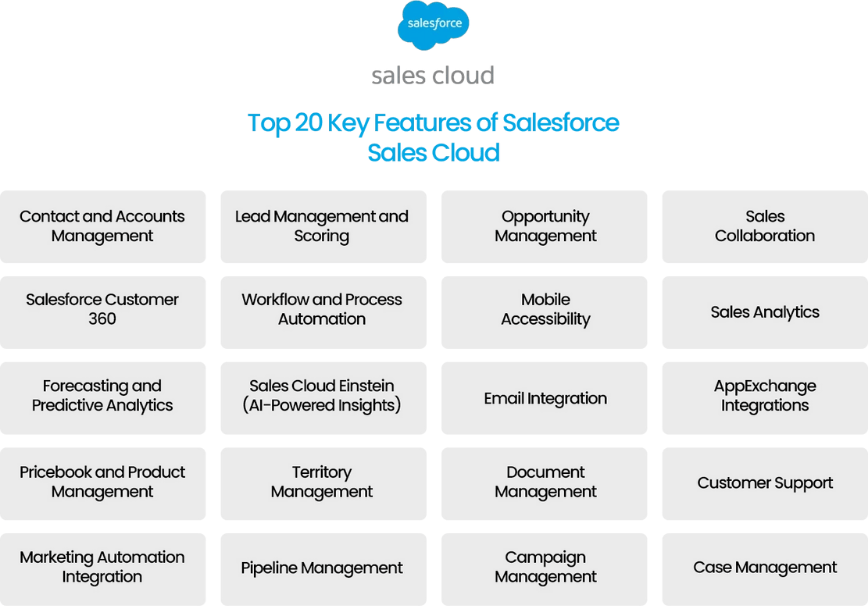
Key features of Sales Cloud
Let’s now move to
What is Salesforce Marketing Cloud all about?
Salesforce Marketing Cloud provides tools for businesses to connect with customers through various channels like email, SMS, social media, and mobile apps. It meets individual marketing needs based on customer behavior and preferences. Marketers can design automated customer journeys to increase activity volume. The platform offers real-time analytics and performance tracking for marketing campaigns. It also uses AI insights to optimize marketing efforts, helping businesses improve customer engagement, conversions, traffic, trust, and loyalty.
It helps businesses connect with customers across multiple channels such as email, SMS, social media, and mobile apps.
The platform meets individual requirements for data-driven marketing based on customer behavior and preferences.
Marketers can shape automated customer journeys to increase volume.
It provides real-time analytics and performance tracking for campaigns.
Salesforce Marketing Cloud uses AI-powered insights to optimize marketing efforts.
It helps businesses increase customer engagement, conversions, traffic, trust, and loyalty.
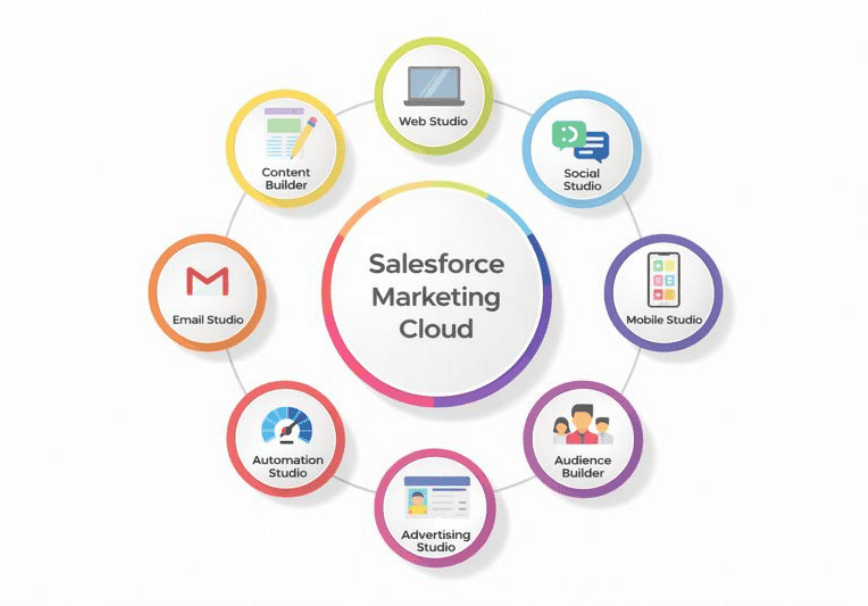
Key features of Marketing Cloud
Which One Do You Need?
I hope you can now clearly differentiate between their core roles, responsibilities, and features.
To pick the right one, you just need to know what Sales Cloud does and what Marketing Cloud does. Both help businesses, but in different ways.
It’s time to determine which Salesforce solution is best for your company. Although both platforms facilitate expansion, they are designed to manage distinct tasks throughout the customer engagement and sales process.
In short, Salesforce Sales Cloud is the ideal choice if your job involves tracking sales opportunities, managing leads, and closing deals. It’s best for sales teams who want to grow their sales and earn more money.
If your task is to create individual requirements for marketing campaigns, manage customers across multiple channels, and build long-term relationships, then Salesforce Marketing Cloud is a good option. It is good t for marketing teams that focus on traffic and brand communication.
| Aspect | Salesforce Sales Cloud | Salesforce Marketing Cloud |
|---|---|---|
| Purpose | Well-defined for sales management and revenue growth. | Well-defined for marketing automation, customer engagement, and brand loyalty. |
| Target Users | Sales teams, sales managers, and sales operations. | Marketing teams, digital marketers, and brand managers. |
| Key Features | Lead management, opportunity management, sales forecasting, and automation. | Email marketing, customer journey mapping, social media, and advertising. |
| Data Management | Manages sales data such as leads, opportunities, contacts, and accounts. | Manages marketing data such as customer behaviors, preferences, and engagement. |
| Integration | Integrates with sales tools like CPQ, e-signature, and telephony systems. | Integrates with marketing tools like email platforms, social networks, and CMS. |
| User Interface | Designed for sales processes with quick access to customer data. | Designed for marketing creativity with campaign management tools. |
| Reporting and Analytics | Provides insights into sales performance, revenue, growth, and forecasting. | Provides insights into campaign performance, customer engagement, and ROI. |
| Pricing | Based on the number of users and features selected. | Based on the scale of contacts, features, and selected modules. |
Above, I have differentiated into its overview and how both help to boost your sales and marketing practices.
Now, let’s understand it in detail.
Why Should Businesses Use Salesforce Sales Cloud?
Salesforce Sales Cloud offers a wide range of benefits that help improve sales activities and team performance. Let’s take a closer look at what factors make Sales Cloud a powerful solution for modern businesses.
Well-organized Sales Process and Improved Team Communication
Salesforce Sales Cloud defines the entire sales cycle, from lead capture to deal closure, by automating key processes.
Features such as lead and opportunity management help sales representatives track prospects efficiently and focus on high-priority deals.
By providing a single platform where the team can work together, Sales Cloud also enhances communication within teams, allowing members to share updates, discuss progress, and stay aligned, which helps avoid confusion and keeps this running smoothly.
Real-Time Analytics and Reporting To Help Make Better Decisions
Sales Cloud gives strong analytics and reporting tools that offer real-time visibility into sales performance.
Teams and managers can track essential metrics such as conversion rates, revenue forecasts, and ongoing sales tasks to make informed decisions quickly. They help businesses understand trends, improve plans, and adapt to market change.
Reduce Manual Work to Improve Sales Productivity
Salesforce Sales Cloud increases productivity by automating repetitive and time-consuming tasks.
Tasks like administrative work, such as data entry, follow-up reminders, and lead nurturing, are handled through workflow automation and process builder tools. This allows sales professionals to spend more time on strategic activities such as customer engagement and closing deals, ultimately improving overall team productivity.
How does the Salesforce Marketing Cloud Benefit Businesses?
Salesforce Marketing Cloud offers a powerful suite of tools that enables businesses to create automated and personalized marketing campaigns with better results.
Salesforce Marketing Cloud allows businesses to deliver highly personalized marketing experiences to their customers.
By leveraging data from multiple sources, such as customer behavior, preferences, and past interactions, marketers can create tailored content that resonates with individual users.
It helps increase customer engagement, along with strengthening brand loyalty and building long-term relationships.
Automating Multichannel Campaigns for Better Return on What You Spend
The most useful strength of Salesforce Marketing Cloud is its ability to automate campaigns across multiple channels, including email, social media, mobile apps, and more.
By using automated workflows and ensuring consistent messaging at the right time, businesses can reduce manual effort and improve efficiency.
And the result is higher conversion rates, more effective campaigns, and ultimately a stronger return on investment (ROI).
Advanced Analytics to Measure and Optimize Campaign Performance
Similar to the sales cloud, Salesforce Marketing Cloud also provides advanced analytics and reporting tools that allow businesses to track and evaluate campaign performance in real time.
For the right marketing approaches, we need detailed dashboards and reports with actionable insights into customer engagement, behavior patterns, and overall campaign success.
These insights help marketers improve strategies quickly, optimize ongoing campaigns, and continuously improve marketing outcomes.
Summary and Insights
Salesforce Sales Cloud focuses on simplifying sales processes, improving lead and team productivity, opportunity management, and helping the sales team work better and faster. It is ideal for organizations aiming to track sales performance, manage pipelines effectively, and close deals faster.
Salesforce Marketing Cloud is designed to enhance customer engagement through data-driven insights, automation, and personalized marketing campaigns. It helps businesses deliver the right message to the right customer at the right time across multiple channels.
The choice between Sales Cloud and Marketing Cloud depends on whether your primary goal is sales optimization or marketing effectiveness.
Understanding the unique strengths of each platform enables businesses to make informed, goal-aligned decisions.
Let us together align your requirements and implement the perfect Salesforce setup for your goals. Reach out to our Salesforce consulting partners today.
Frequently Asked Questions
-
Businesses should consider Sales Cloud over Marketing Cloud if their goal is to:
1. Manage leads and customers in one place.
2. Track sales calls, emails, and meetings.
3. Monitor sales performance and deal progress.
4. Help the sales team close more deals.
5. Speed up the sales process with reminders and follow-ups. -
The best budget friendly CRM platforms in 2026 are:
salesforce
Hubspot
Zoho CRM
-
Yes, Salesforce offers solutions for both sales and marketing purpose which can automate repetitive tasks and improve day to day workflow.
Let’s Talk

Drop a note below to move forward with the conversation 👇🏻