
Marketing Cloud Engagement vs Marketing Cloud Account Engagement
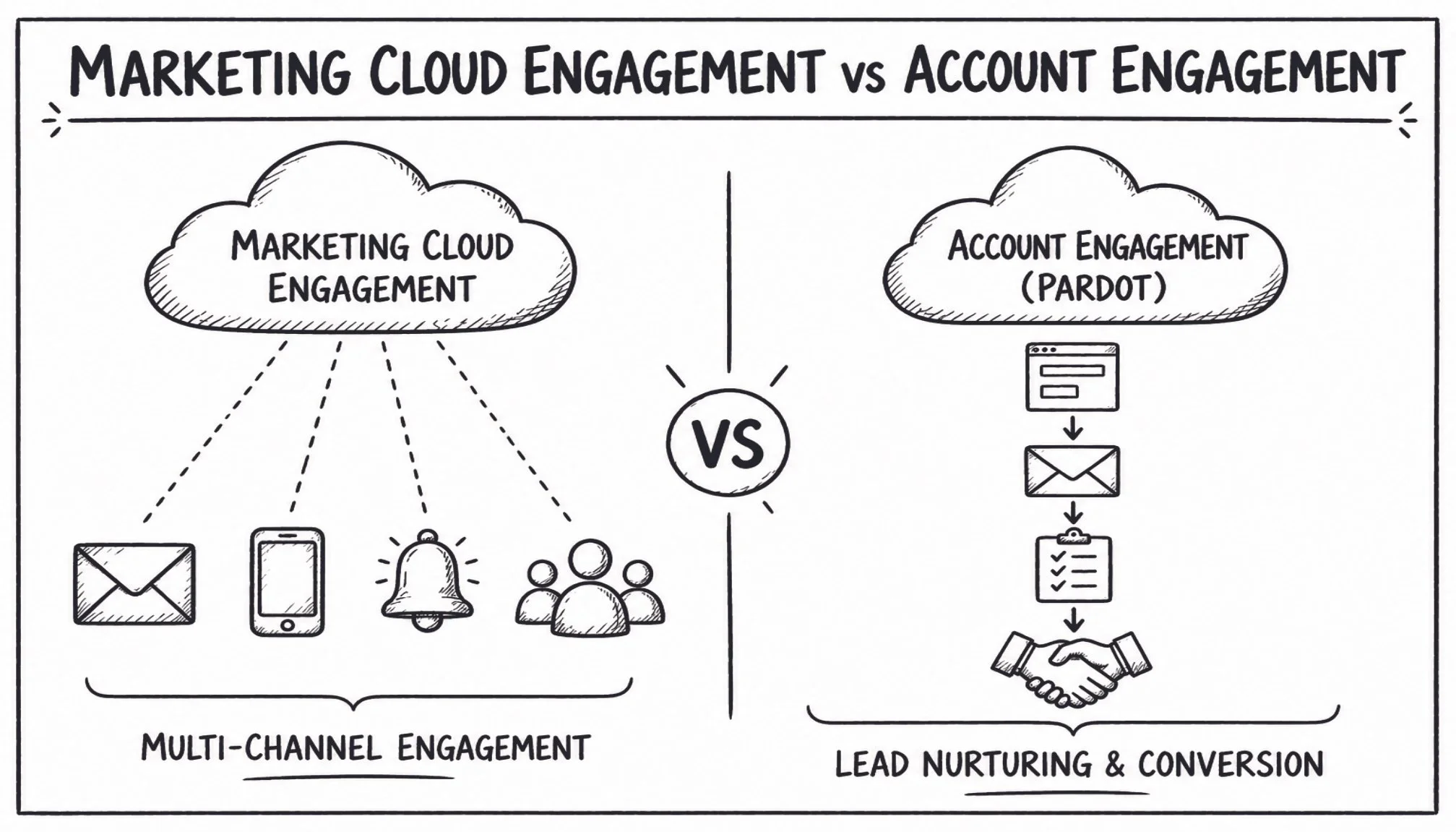
Key Summary:
Marketing Cloud Engagement focuses on B2C customer journeys.
Account Engagement (Pardot) supports B2B lead generation.
The key difference is audience: consumers vs businesses.
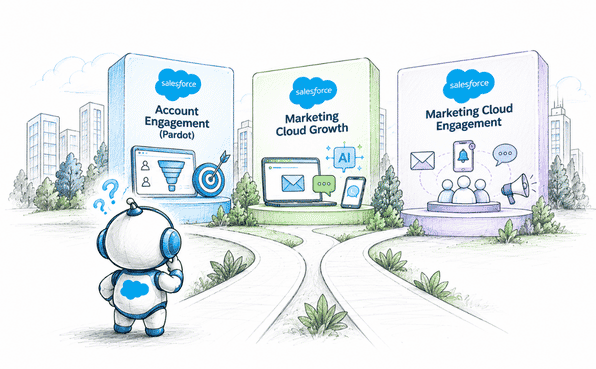
Many businesses exploring Salesforce marketing tools often get confused when comparing Pardot vs Marketing Cloud Engagement. Both platforms are part of the Salesforce ecosystem and offer marketing automation capabilities, which makes it difficult for companies to understand which solution fits their needs. It’s also important to note that Pardot is now known as Marketing Cloud Account Engagement, so both names refer to the same product.
Organizations face this confusion when deciding which platform better supports their B2B or B2C marketing needs.
To clarify this topic, we’ll explore Pardot and Marketing Cloud Engagement and understand when to use Marketing Cloud Engagement and Marketing Cloud Account Engagement.
What Is Salesforce Marketing Cloud Engagement?
Salesforce Marketing Cloud Engagement is a premier marketing platform designed to help businesses deliver personalized 1:1 customer journeys, especially for B2C marketing. It enables organizations to build a unified view of their customers by combining data from multiple sources.
With Marketing Cloud Engagement, businesses can:
Connect known and anonymous profiles to create a unified customer view.
Use data and Einstein AI to deliver more relevant interactions.
Enable real-time, two-way customer engagement across channels.
Track and optimize marketing performance and customer loyalty.
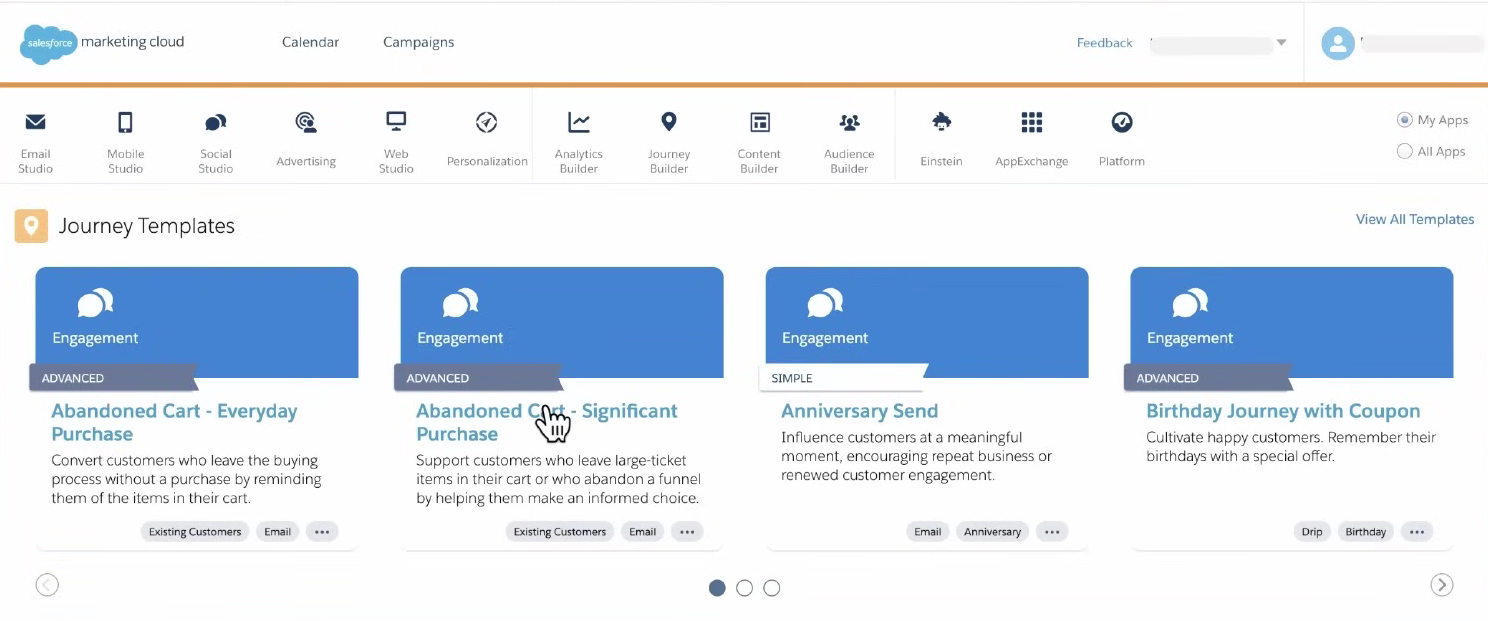
Salesforce Marketing Cloud Engagement Products
Salesforce Marketing Cloud Engagement offers multiple tools to create personalized campaigns across channels. The table below highlights some of its key products.
| Product | How It Supports Marketing |
|---|---|
| Advertising Studio | Connect CRM data with advertising platforms to deliver targeted ads across channels like Google and social media. |
| Marketing Cloud Intelligence | Analyze marketing performance by bringing together data from different platforms and generating insights. |
| Email Studio | Create personalized email campaigns using customer data and automation. |
| Google Analytics 360 | Integrate analytics data to understand customer behavior across marketing channels. |
| Marketing Cloud Personalization | Deliver real-time personalized experiences based on customer interactions and behavior. |
| Google Analytics 360 | Integrate analytics data to understand customer behavior across marketing channels. |
| Mobile Studio | Send SMS, push notifications, and messaging campaigns to engage customers on mobile devices. |
| Journey Builder | Design automated, multi-channel customer journeys throughout the customer lifecycle. |
Now that we’ve explored Marketing Cloud Engagement, let’s move on to understand what Marketing Cloud Account Engagement is.
What Is Marketing Cloud Account Engagement (Formerly Pardot)?
Marketing Cloud Account Engagement is Salesforce’s marketing automation platform designed specifically for B2B marketing teams.
Unlike Marketing Cloud Engagement, which focuses on consumer engagement, Account Engagement is designed to generate leads, nurture prospects, and align marketing with sales teams.
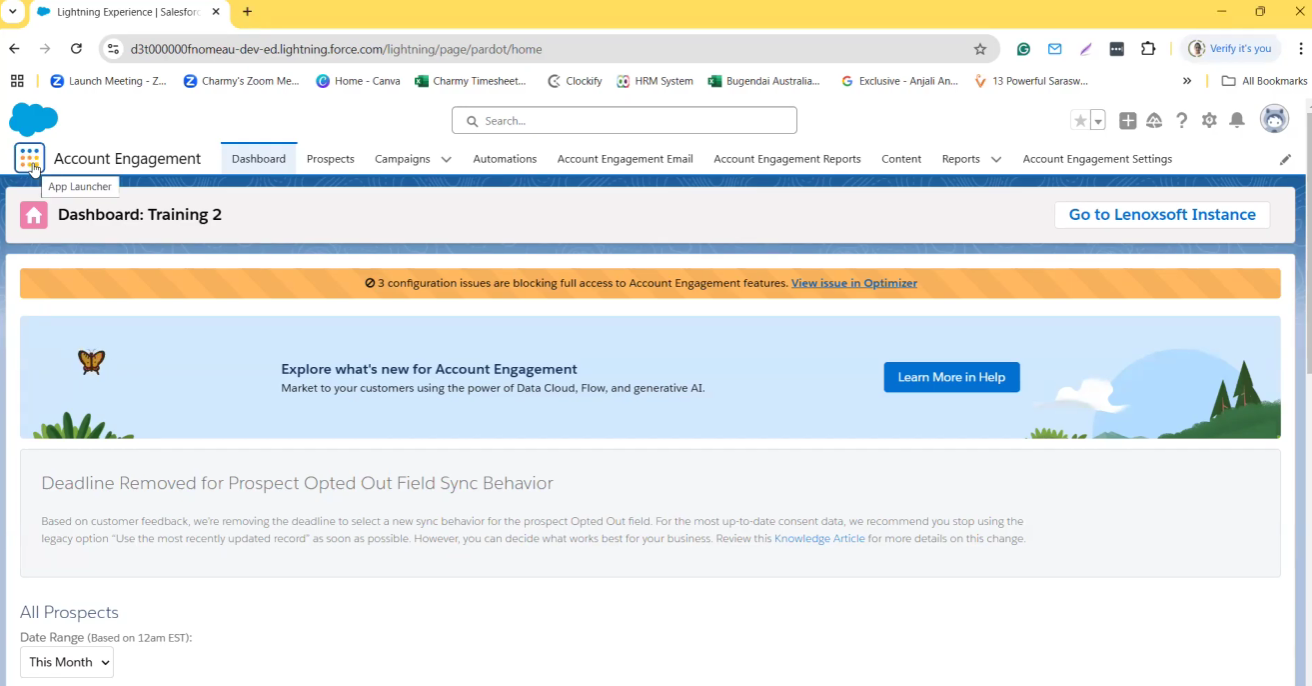
The platform provides several powerful tools, including:
Lead scoring and grading to identify high-quality prospects
Engagement Studio for automated B2B marketing journeys
Email marketing automation for nurturing campaigns
Landing page and form builders for lead capture
Deep integration with Salesforce CRM for sales visibility
These features allow marketing teams to track prospect behavior, measure engagement, and prioritize leads that are most likely to convert.
Industries that commonly use Account Engagement include:
SaaS companies
Professional services firms
Manufacturing organizations
Technology providers
For businesses with longer sales cycles and complex decision-making processes, Account Engagement provides the automation needed to nurture prospects effectively.
With a basic understanding of Marketing Cloud Account Engagement, we can now explore the key differences.
How Marketing Cloud Differs from Marketing Cloud Account Engagement
Trying to understand the difference between Marketing Cloud Engagement and Marketing Cloud Account Engagement?
Many businesses exploring Salesforce marketing tools often ask questions like:
Do both platforms serve the same purpose?
Is Account Engagement part of Marketing Cloud?
Are they designed for different types of businesses?
The short answer is no. While both belong to the Salesforce ecosystem, they support different marketing strategies and audiences. The table below highlights their key differences.
| Feature | Marketing Cloud Engagement | Marketing Cloud Account Engagement |
|---|---|---|
| Primary Focus | B2C marketing and customer engagement | B2B marketing automation and lead nurturing |
| Main Goal | 1-to-1 customer journeys across multiple channels | Lead generation, nurturing, and Sales alignment |
| Target Audience | Large consumer audiences | Business prospects and leads |
| Key Channels | Email, SMS, Push Notifications, Social, Ads | Email, Landing Pages, Forms, Webinars |
| Sales Cycle | Short, transactional, high-volume | Long, relationship-driven, multi-touch |
| Salesforce Integration | Integrates via Marketing Cloud Connect | Natively built on the Salesforce core platform |
| Database Model | Highly customizable, relational databases (Data Extensions) | Lead and Contact-based, directly mirroring Sales Cloud |
| Best For | Retail, eCommerce, travel, media | SaaS, consulting, technology companies |
When Should You Choose Marketing Cloud Engagement or Account Engagement?
Which platform to choose, Marketing Cloud Engagement or Marketing Cloud Account Engagement, depends on your marketing objectives and business requirements.
Choose Marketing Cloud Engagement if your organization:
Targets large B2C audiences
Uses multiple marketing channels
Needs advanced customer journey automation
Runs high-volume marketing campaigns
Choose Marketing Cloud Account Engagement if your company:
Operates in a B2B environment
Focuses on lead nurturing and qualification
Needs tight integration with Salesforce CRM
Relies on marketing to support sales pipelines
Many businesses consult experienced Salesforce consulting partners to evaluate their marketing requirements and implement the right solution.
Can Marketing Cloud Engagement and Account Engagement Work Together?
Yes. Some organizations use both platforms together to create a complete marketing ecosystem.
For example:
Marketing Cloud Engagement manages customer marketing campaigns and omnichannel communication.
Marketing Cloud Account Engagement manages B2B lead nurturing and sales alignment.
Companies that operate both B2B and B2C business models often integrate the two platforms to support different marketing strategies.
When implemented correctly, this combined approach allows businesses to deliver personalized customer experiences while also improving lead conversion and sales efficiency.
Conclusion: A Quick Recap of Salesforce Marketing Cloud Engagement and Account Engagement
At first glance, Marketing Cloud Engagement and Marketing Cloud Account Engagement may seem similar, but each platform serves a different purpose within the Salesforce marketing ecosystem. Understanding how these platforms fit into your marketing ecosystem helps businesses drive better engagement and maximize marketing ROI.
By leveraging the strengths of each platform, organizations can create more effective and scalable marketing strategies.
Frequently Asked Questions
-
Marketing Cloud Account Engagement is commonly used by B2B companies such as SaaS providers, technology firms, and professional services organizations.
-
Yes, Marketing Cloud Engagement supports multi-channel campaigns, including email, SMS, push notifications, social media, and digital advertising.
-
It helps sales teams by tracking prospect activity, scoring leads, and sharing insights through Salesforce CRM integration.
-
Its main purpose is to help businesses deliver personalized, multi-channel customer experiences at scale.
Related Reading
Let’s Talk

Drop us a note, we’re happy to take the conversation forward 👇🏻