
Who Gets the Keys to Your Computer? Comparing AI Agent Trust Models
Over the past 90 days, at least five companies independently built variations of the same product.
OpenClaw blew up on GitHub. Perplexity shipped something called Computer.
Anthropic fired back with Dispatch.
Then NVIDIA looked at the security mess this created and built an entire product to fix it.
Nobody planned this convergence.
I spend my weeks evaluating enterprise tools and advising teams on architecture decisions. When I started pulling this thread, I expected a feature comparison. What I found instead was a trust problem that nobody's putting in one place.
What are AI agents that use your computer? These are autonomous software systems that can read your files, control your browser, execute commands, and complete multi-step tasks on your desktop, either locally or via cloud infrastructure, with varying levels of human oversight.
What Actually Happened in Early 2026?
Here's the timeline that nobody seems to be connecting:
| When | What | Price |
|---|---|---|
| Nov 2025 | Peter Steinberger releases "Clawdbot" (later renamed OpenClaw) | Free |
| Mar 2025 | Manus AI goes viral as a cloud-based autonomous agent | $39/mo |
| Feb 25, 2026 | Perplexity launches Computer with 19-model orchestration | $200/mo |
| Mar 16, 2026 | NVIDIA announces NemoClaw at GTC (security layer for OpenClaw) | Free |
| Mar 17, 2026 | Anthropic ships Claude Dispatch as a research preview | $20/mo (Pro) |
Also in the wave: Microsoft Copilot Cowork, OpenFang (a security-focused Rust alternative), Agent S2/S3 from Simular for GUI control, and dozens of smaller projects.
Jensen Huang put it bluntly at GTC:
He's not wrong about the direction. But the "strategy" part is where things get complicated.
The Three Architectures, Explained
Most comparison articles I've read this week line up features in a table and declare a winner. They're comparing the wrong thing. The real divide is architectural.
| Local-First | Cloud-Orchestrated | Hybrid-Sandboxed | |
|---|---|---|---|
| Examples | OpenClaw, NemoClaw, OpenFang | Perplexity Computer, Manus AI | Claude Dispatch |
| Runs on | Your machine | Provider's cloud | Your desktop via provider's infra |
| AI models | Any (model-agnostic) | Provider's models (19 for Perplexity) | Claude only |
| Data stays | Local (unless you connect APIs) | With the provider | Local, routed through Anthropic |
| Who manages security | You | Provider | Provider sandboxes, you grant access |
What Does OpenClaw Actually Do?
OpenClaw is free, open-source, and the one that started this entire wave. Created by Austrian programmer Peter Steinberger in November 2025, it crossed 250,000 GitHub stars before any competitor shipped. Fireship's viral breakdown of the project has 1.8 million views. His Lex Fridman interview crossed a million.
The core idea: connect any AI model to your messaging app (WhatsApp, Telegram, Slack, Discord, iMessage, Teams) and let it control your computer. On a trip to Morocco, Steinberger sent a photo of a tweet to WhatsApp, and his agent checked out the repository, committed a fix, and replied to the original poster on Twitter. All from his phone.
In a recent interview on OpenAI's channel, Steinberger described the philosophy: "The more access you give it, the more tools and skills you give it, the more impressed you can become." His GitHub shows 90,000 contributions across 120+ projects in the past year. One person built this, with AI agents doing the heavy lifting.
In February 2026, Steinberger joined OpenAI. The project moved to an open-source foundation. Meanwhile, in China, OpenClaw triggered a cultural phenomenon. Robotics companies like Ecovacs and AgileX integrated it into physical robots. Then the Chinese government restricted state agencies from running it.
That last detail matters. A lot.
What Does Perplexity Computer Actually Do?
Perplexity Computer launched on February 25, 2026, and it's the most ambitious entry in this wave. According to TechCrunch's coverage, it coordinates 19 AI models simultaneously, matching each task to the best model for the job. VentureBeat reported that the enterprise version targets Microsoft Copilot and Salesforce directly. It supports 400+ app integrations and can run workflows for hours or months autonomously.
It exists in two forms: the cloud-based Computer ($200/month with Perplexity Max) and the Personal Computer, announced March 11, which runs on a dedicated Mac mini for always-on local access. PYMNTS reported that the enterprise version "completed 3.25 years of work in four weeks." I'd take that claim with skepticism, but even at half the stated efficiency, the ROI math gets interesting.
Important context on pricing: $200/month sounds steep next to Dispatch's $20/month, but these aren't comparable products. One coordinates 19 models across 400+ integrations. The other connects your phone to a single Claude session. Apples and aircraft carriers.
What Does NemoClaw Actually Do?
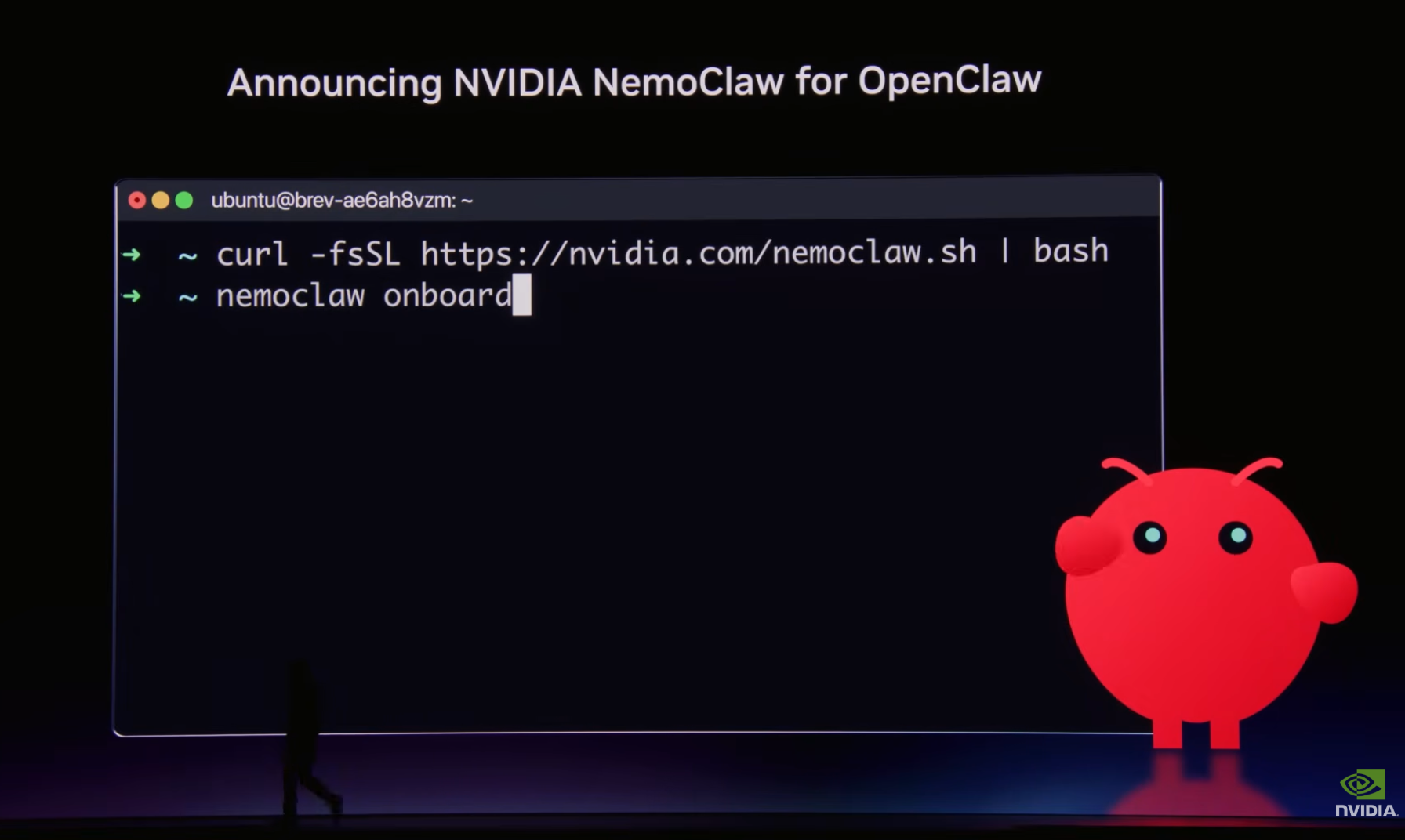
On March 16, 2026, Jensen Huang took the GTC stage and announced NemoClaw: NVIDIA's open-source reference stack for running OpenClaw securely. As TechCrunch framed it, NVIDIA set out to solve OpenClaw's biggest problem: security.
NemoClaw isn't a competitor to OpenClaw. It runs OpenClaw inside it. The stack installs NVIDIA's OpenShell runtime, which adds kernel-level sandboxing via Linux network namespaces and filesystem restrictions. The critical innovation is out-of-process policy enforcement: security policies execute outside the agent's address space, meaning even a fully compromised agent cannot modify the constraints governing it.
It also includes a privacy router: sensitive tasks run on local Nemotron models, while capability-intensive work routes to cloud frontier models. Hardware agnostic. Runs on RTX PCs, DGX Spark, or any dedicated platform. Currently in early alpha.
Steinberger endorsed it: "With NVIDIA and the broader ecosystem, we're building the claws and guardrails that let anyone create powerful, secure AI assistants."
Why does NemoClaw matter for this story? Because NVIDIA, a company worth over $4 trillion, looked at the agentic AI landscape and decided the single most important problem to solve wasn't capability. It was trust.
What Does Claude Dispatch Actually Do?
One day after NVIDIA's GTC keynote, Anthropic shipped Dispatch on March 17, 2026. It pairs your phone to a persistent Claude session running on your desktop. You message Claude from your phone, it works on your computer, you come back to finished work.
What makes it interesting is the permission model. During setup, you grant folder-level access, not full-system access. Claude can touch your Downloads folder without seeing your SSH keys. The sandboxing runs through Anthropic's infrastructure, which means commands route through their servers before executing locally. Ethan Mollick noted that Dispatch "covers 90% of what I was trying to use OpenClaw for."
Available on Pro ($20/mo) and Max ($100/mo) plans. Research preview, not production-ready. No notifications when tasks complete, no multi-thread support, no scheduling. Your desktop must stay powered on. As one Reddit user framed it: "Anthropic split OpenClaw's idea into two products: Dispatch for normies, Channels for developers."
The Trust Question Nobody Is Asking
So what's actually happening here with security? The evidence is specific, and it's not pretty.
In February 2026, the ClawHavoc supply chain attack hit OpenClaw: 341 malicious skills disguised as legitimate tools were uploaded to steal API keys and plaintext credentials. Over 9,000 installations were compromised. CVE-2026-25253 flagged a separate remote code execution vulnerability. China banned it from government systems. Cisco called it a "security nightmare."
| OpenClaw | NemoClaw | Claude Dispatch | Perplexity Computer | |
|---|---|---|---|---|
| Data routing | Local only | Local + privacy router | Through Anthropic servers | Through Perplexity cloud |
| Sandboxing | None by default | Kernel-level (OpenShell) | Folder-level permissions | Cloud isolation |
| Default permissions | Full OS access | Policy-enforced restrictions | User-granted per folder | Provider-managed |
| Audit trail | None | Yes | Conversation history | Yes (kill switch + logs) |
| Enterprise governance | None | SOC 2 pathway | Admin controls (preview) | Enterprise tier |
Steinberger acknowledged the tension in his OpenAI interview:
"I realize I cannot stop people from using it in ways it was not intended. So my big focus now is to support all these use cases and help people not shoot themselves in the foot."
But here's what balances this picture. The openness that creates risk also enables community fixes. NemoClaw exists because OpenClaw is open-source. OpenFang, a Rust-based alternative shipping as a single 32MB binary with a 180ms cold start, exists for the same reason. The open-source immune system is working. The question is whether it works fast enough.
Your computer is about to have a permanent AI occupant. The question is who holds the keys.
Who Should Use What?
| If you are... | Consider | Why |
|---|---|---|
| Developer wanting maximum flexibility | OpenClaw (free) | Model-agnostic, messaging-app UI, full control |
| Developer needing security guardrails | NemoClaw (free) | OpenClaw's flexibility + kernel-level sandboxing |
| Non-technical user in Claude's ecosystem | Claude Dispatch ($20/mo Pro) | Simplest setup, phone-to-desktop, folder sandboxing |
| Enterprise team needing multi-model power | Perplexity Computer ($200/mo Max) | 19 models, 400+ integrations, enterprise governance |
| Budget-conscious security-first builder | OpenFang (free) | Rust-based, 32MB binary, security-first design |
A note on "free." OpenClaw costs nothing to install, but you'll pay for API calls ($5-1000s/month depending on usage), and you'll likely need a dedicated machine. The hidden cost is your time: configuring messaging platforms, managing API keys, and hardening security. That's a real investment.
My Take: Trust First, Features Second
Here's the thing: when NVIDIA builds a product specifically to add trust to OpenClaw, that tells you what the market's real bottleneck is. It's not features. Every one of these products can organize your files, draft emails, and manage calendars. Features converge. Trust architectures don't.
The architecture you choose today locks you into a trust model that's harder to change later. Going local-first with OpenClaw means you own the security burden. Going cloud with Perplexity means you trust their infrastructure with your data. Going hybrid with Dispatch means you trust Anthropic's sandbox.
Yes, features matter. But I'd argue the winning bet depends on which trust model people are actually willing to accept in practice, not in theory. My assessment (subject to change as this space moves weekly): the hybrid model has the best chance of winning the mainstream, but the local-first model will dominate among developers and power users who need control.
The Base Line
The AI agent race of early 2026 isn't really about which product has the best feature set. It's about trust. Who controls the sandbox. Who sees your data. Who bears the liability when something goes wrong.
NemoClaw's existence is the strongest signal: we've moved past "can AI agents use your computer?" to "should we let them, and under what constraints?" That's the right question. The "X kills Y" headlines will keep coming. Ignore them. Pick your trust architecture, not your feature winner.
Thoughts?
Evaluating AI agents for your enterprise team? Let's talk.
Further Reading
Official Sources:
NVIDIA Announces NemoClaw - NVIDIA Newsroom
Introducing Perplexity Computer - Perplexity AI
OpenClaw GitHub Repository - Official source code
Personal Computer by Perplexity - Official launch video
Deep-Dives:
Builders Unscripted: Peter Steinberger - OpenAI, interview with the OpenClaw creator
OpenClaw: The Viral AI Agent (Lex Fridman Podcast #491) - 3-hour deep dive with Peter Steinberger
OpenClaw in 100 Seconds - Fireship, 1.8M views
Nvidia's OpenClaw could solve its biggest problem: security - TechCrunch
Raise a Lobster: How OpenClaw Is Transforming China's AI Sector - Fortune
OpenClaw Creator: Why 80% Of Apps Will Disappear - Y Combinator interview